🎉 PG Combo Special - Litti Chokha + Lassi • ₹50 OFF
Total Recipes
4.7
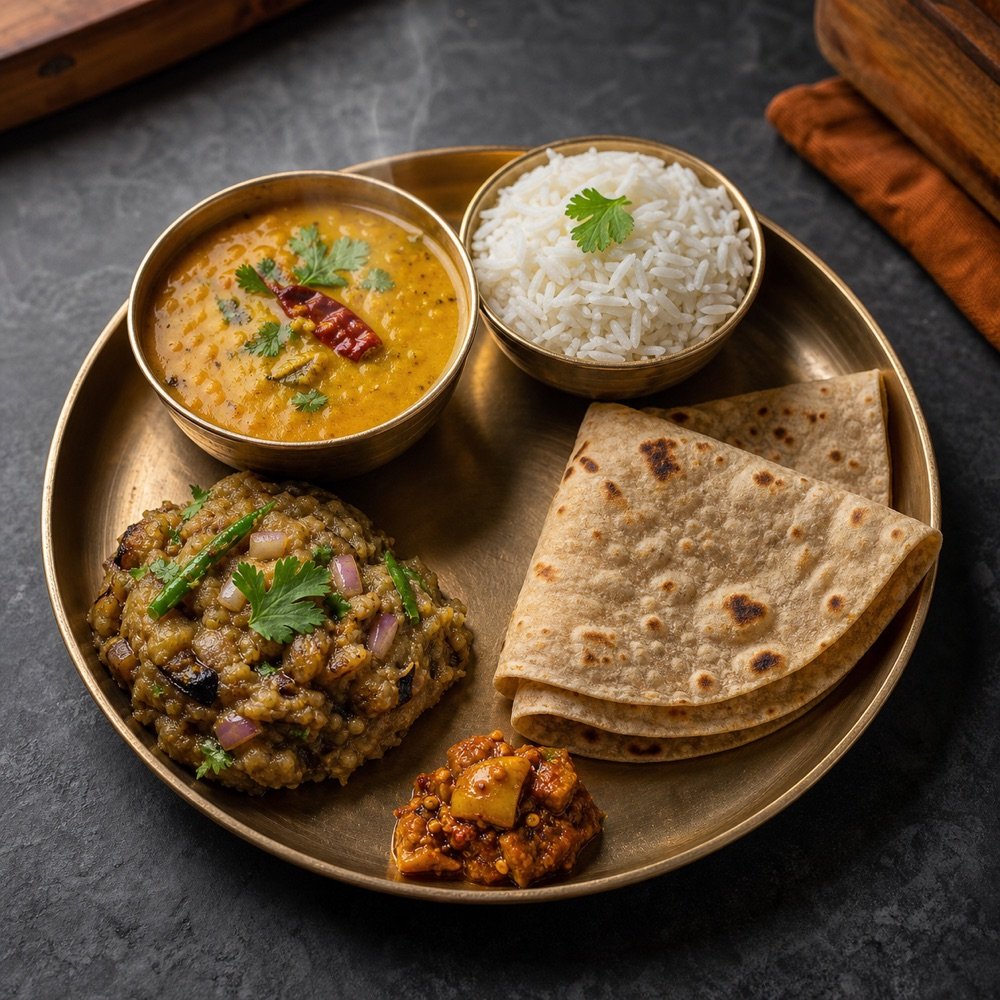
Steamed rice with lentil curry and mashed roasted vegetables (chokha)
The quintessential meal of Bihar - a trinity that has nourished generations. Farmers would return home to this simple yet complete meal after long days in the fields. The combination of protein-rich dal, energy-giving rice, and vitamin-packed chokha represents balanced nutrition discovered through centuries of wisdom. In every Bihari household, the aroma of roasted eggplant and tomatoes signals the evening meal. This is comfort food that tells the story of resilience, hard work, and the beauty of simplicity.
📍 Origin: Bihar, Eastern Uttar Pradesh
🍽️ Traditional Serving: Served in a thali with ghee drizzled on rice
1 cup basmati rice
1/2 cup arhar dal (pigeon pea lentils)
2 large eggplants
3 tomatoes
2 green chilies
1 onion, finely chopped
3 cloves garlic, minced
2 tbsp mustard oil
1 tsp cumin seeds
Fresh coriander leaves
Salt to taste
Lemon juice
Cook rice: Wash rice thoroughly and cook with 2 cups water until fluffy. Set aside.
Prepare dal: Pressure cook arhar dal with turmeric and salt for 3-4 whistles. Temper with cumin, garlic, and red chili.
Make chokha: Roast eggplants and tomatoes directly on flame until charred. Peel and mash them together.
Season chokha: Mix mashed vegetables with chopped onion, green chilies, mustard oil, salt, and lemon juice.
Garnish: Add fresh coriander to both dal and chokha.
Serve hot: Arrange rice, dal, and chokha in a thali with a dollop of ghee on top.
4.5
Whole wheat rotis with your choice of seasonal vegetable curry
The everyday meal that unites all of North India. From village homes to city apartments, the sight of fresh rotis puffing up on the tawa is universal. This simple combination allows the seasonal vegetables to shine - in winter it might be sarson ka saag, in summer bhindi masala, in monsoon arbi curry. The beauty lies in its adaptability and the skill of making perfect rotis - soft, warm, and slightly charred. Every household has their secret to the perfect roti, passed down through mothers and grandmothers.
📍 Origin: Pan North India
🍽️ Traditional Serving: Rotis served hot from the tawa, wrapped in cloth
2 cups whole wheat flour (atta)
Water as needed
Salt
3 potatoes OR seasonal vegetables
2 tomatoes, pureed
1 onion, finely chopped
1 tsp cumin seeds
1/2 tsp turmeric
1 tsp coriander powder
1/2 tsp red chili powder
2 tbsp oil
Fresh coriander
Ginger-garlic paste
Make dough: Knead wheat flour with water and salt into soft, pliable dough. Rest for 15 minutes.
Prepare sabzi: Heat oil, add cumin seeds, then onions. Sauté until golden.
Add spices: Add ginger-garlic paste, tomatoes, and all spices. Cook until oil separates.
Cook vegetables: Add chopped vegetables with water. Cover and cook until tender.
Roll rotis: Divide dough into balls, roll into thin circles using dry flour.
Cook rotis: Heat tawa, cook rotis on both sides until brown spots appear. Apply ghee.
Serve: Stack hot rotis wrapped in cloth, serve with sabzi and pickle.
4.9
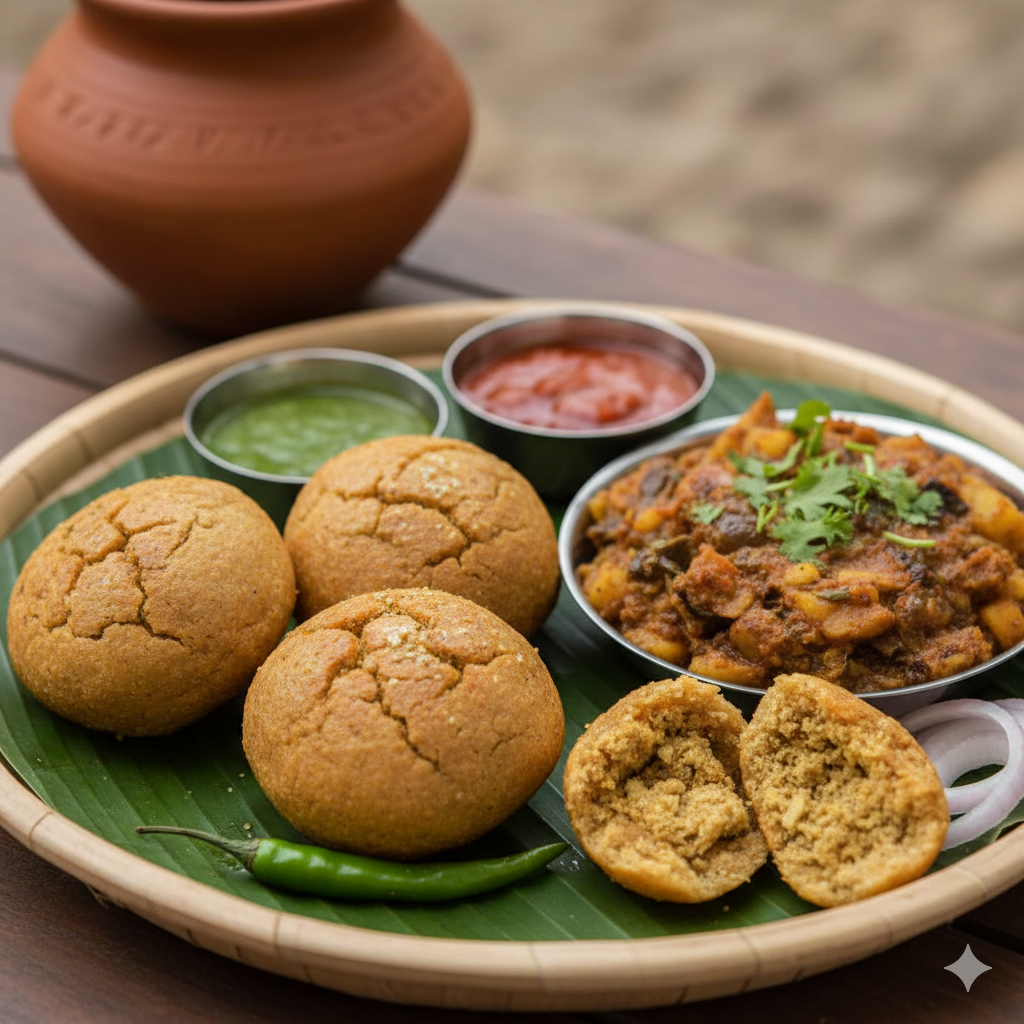
Three littis served with chokha and a side of tangy chutneys
Bihar\
📍 Origin: Magadh region, Bihar
🍽️ Traditional Serving: Served in leaf plates with ghee poured into cracked litti
2 cups whole wheat flour
1 cup sattu (roasted gram flour)
2 tbsp mustard oil for dough
3 tbsp mustard oil for stuffing
1 tsp ajwain (carom seeds)
1 tsp kalonji (nigella seeds)
2 green chilies, finely chopped
1 tsp ginger paste
1 tsp garlic paste
Fresh coriander
Lemon juice
3 eggplants for chokha
4 tomatoes for chokha
Pickle masala
Ghee for serving
Make sattu filling: Mix sattu with mustard oil, pickle masala, ajwain, kalonji, green chili, ginger-garlic paste, and lemon juice. Add water to form crumbly mixture.
Prepare dough: Knead wheat flour with oil, salt and water into stiff dough.
Stuff littis: Make small dough balls, create cavity, fill with sattu mixture, seal completely.
Roast littis: Bake in oven at 200°C for 20-25 minutes until golden and crispy. Traditionally roasted on coal.
Make chokha: Roast eggplants and tomatoes on direct flame until charred. Peel, mash, and season with mustard oil, salt, and chopped onions.
Finish: Crack open hot littis, stuff with ghee. Serve with chokha and chutneys.
4.6
Fluffy pooris served with spicy potato curry and pickle
The breakfast of celebrations! Whether it\
📍 Origin: Uttar Pradesh, Bihar
🍽️ Traditional Serving: Served on leaf plates with pooris stacked high
2 cups whole wheat flour
1 tsp semolina (for crispy pooris)
Salt
Oil for frying
4 large potatoes, boiled
2 tomatoes, chopped
1 onion, chopped
1 tsp cumin seeds
1/2 tsp turmeric powder
1 tsp red chili powder
1 tsp coriander powder
1/2 tsp garam masala
Fresh coriander
2 green chilies
Make poori dough: Mix wheat flour, semolina, salt with water. Knead into firm dough, rest 20 minutes.
Prepare bhaji: Heat oil, add cumin seeds, then onions. Sauté until pink.
Add spices: Add tomatoes, turmeric, chili powder, coriander powder. Cook until mushy.
Cook potatoes: Mash boiled potatoes roughly, add to masala with water. Simmer for 5-7 minutes.
Season: Add garam masala and fresh coriander. Keep bhaji slightly dry, not watery.
Fry pooris: Roll small balls into thin circles. Deep fry in hot oil until puffed and golden.
Serve immediately: Serve hot pooris with piping hot bhaji and pickle.
4.7
Rice and lentil porridge served with yogurt-based curry
The ultimate comfort food - when you\
📍 Origin: Gujarat, Rajasthan, Bihar
🍽️ Traditional Serving: Served in bowls with kadhi poured over, accompanied by papad
1/2 cup rice
1/2 cup moong dal (split yellow lentils)
1 tsp ghee
1/2 tsp turmeric
1 tsp cumin seeds
Salt to taste
1 cup yogurt (for kadhi)
2 tbsp gram flour (besan)
1/2 tsp fenugreek seeds
1/2 tsp mustard seeds
Curry leaves
2 dried red chilies
Hing (asafoetida)
Green chilies
Ginger, chopped
Cook khichdi: Wash rice and moong dal together. Pressure cook with turmeric, cumin, salt, ghee and 3 cups water for 3 whistles.
Make kadhi: Whisk yogurt with gram flour and water until smooth. Add turmeric and salt.
Cook kadhi: Simmer yogurt mixture on low heat, stirring continuously to prevent curdling. Add chopped green chilies.
Temper kadhi: Heat ghee in separate pan, add mustard seeds, fenugreek seeds, dried red chilies, curry leaves and hing. Pour over kadhi.
Combine: Let khichdi become mushy and soft. The consistency should be porridge-like.
Serve: Pour hot kadhi over khichdi. Top with fresh coriander and serve with papad.
4.8
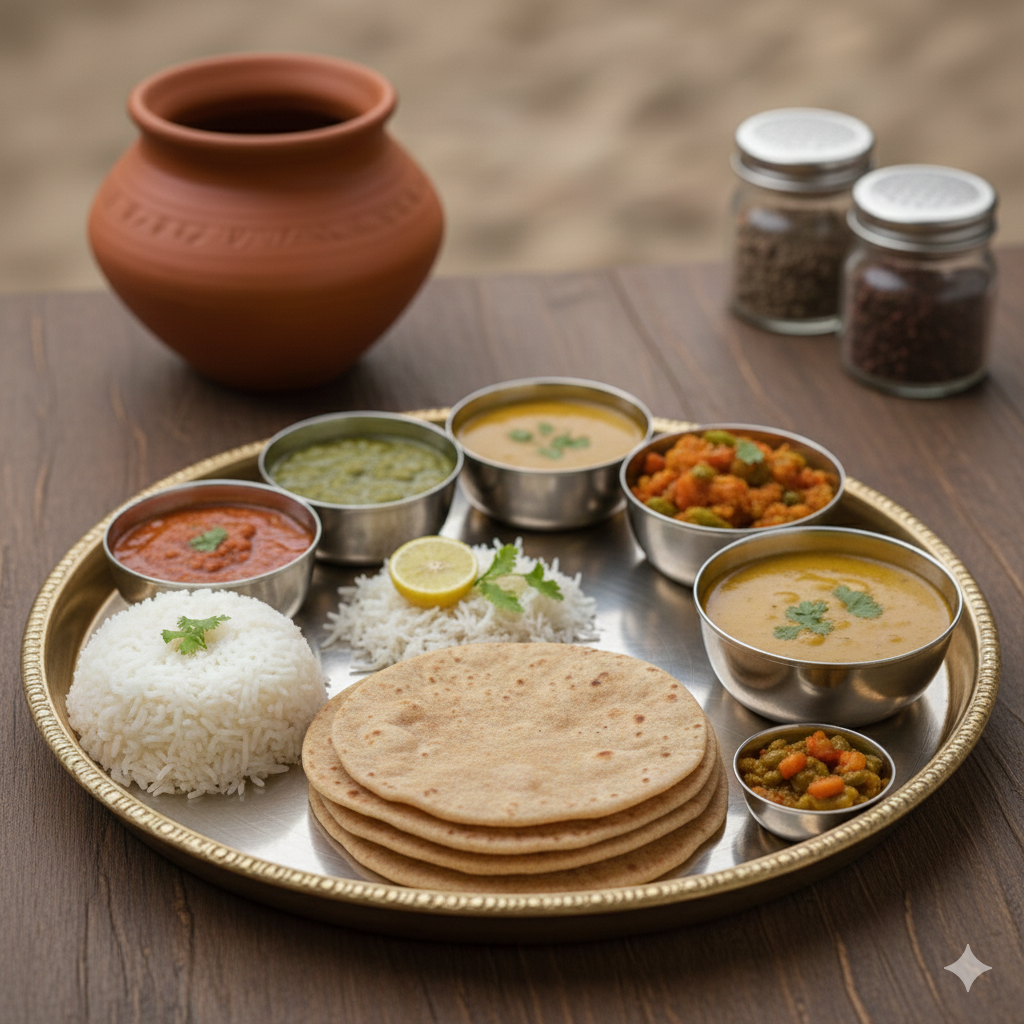
Rotis, rice, dal, sabji, raita, and pickle – a complete meal
The thali is not just a meal - it\
📍 Origin: Pan-India with regional variations
🍽️ Traditional Serving: Served in kansa or steel thali with multiple katoris
4 rotis: 1 cup wheat flour
1 cup rice
1/2 cup dal (any variety)
Seasonal vegetable curry: potatoes, beans, cauliflower
1 cup yogurt for raita
1 cucumber, grated
Pickle (store-bought or homemade)
Papad
1 piece of jaggery or sweet
Green chutney
Spices: cumin, turmeric, chili powder, coriander
Ghee for serving
Salt to taste
Cook rice: Wash and cook basmati rice until fluffy.
Make dal: Pressure cook dal with turmeric. Temper with cumin, garlic, and whole spices.
Prepare sabzi: Make seasonal vegetable curry with onion-tomato base and traditional spices.
Make rotis: Knead soft dough, roll and cook rotis on tawa until spotted.
Prepare raita: Mix grated cucumber with yogurt, roasted cumin powder, and salt.
Roast papad: Roast papad on direct flame or microwave.
Arrange thali: Place all items in separate katoris on a large plate. Serve rice and rotis hot.
Final touch: Add a dollop of ghee on rice and dal. Serve pickle and green chutney on the side.
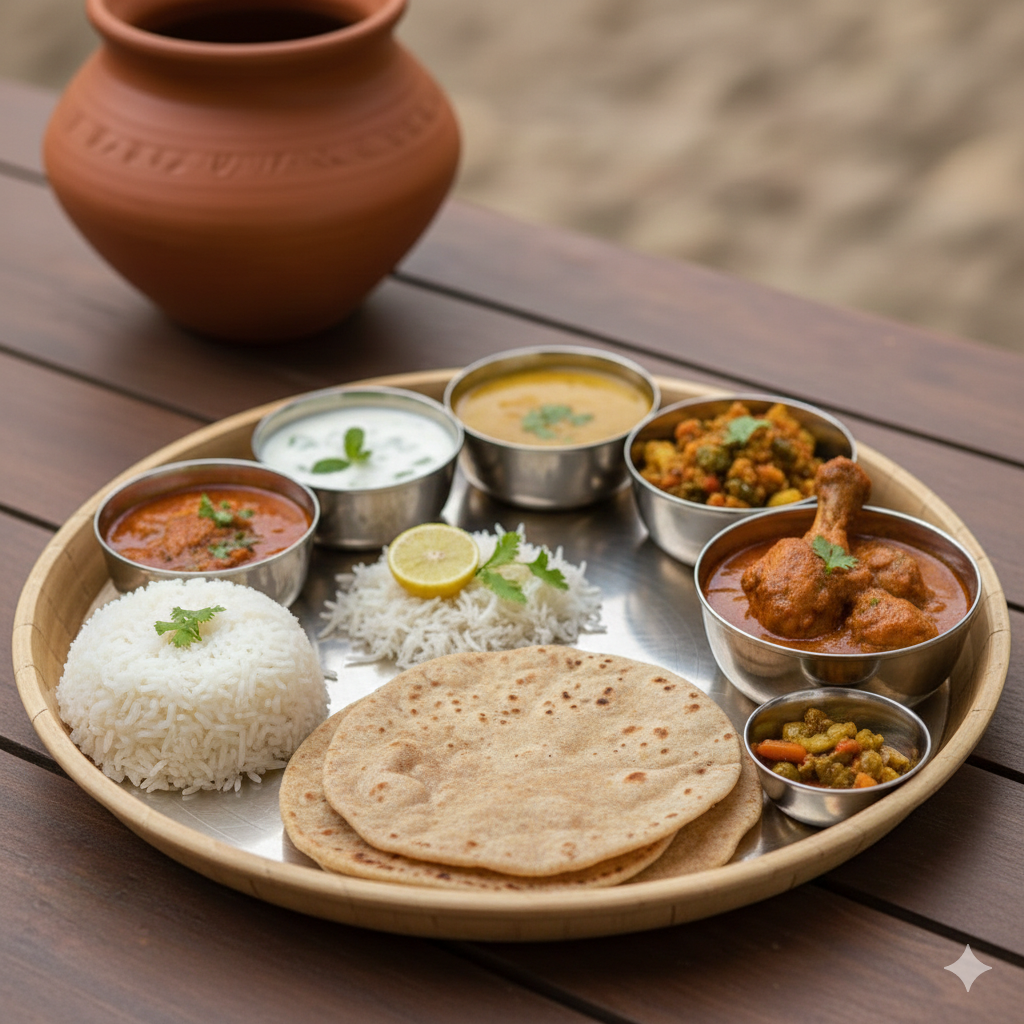
4.9
Rotis, rice, dal, sabji, chicken/mutton curry, raita, and pickle
The grand feast thali - where meat takes center stage alongside traditional accompaniments. In UP and Bihar, serving meat curry is reserved for special occasions, guests, and celebrations. The curry is slow-cooked with pride, using family recipes that have been perfected over generations. Whether it\
📍 Origin: Awadh (Lucknow), Patna
🍽️ Traditional Serving: Served in large thali with meat curry in a special bowl
4 rotis: 1 cup wheat flour
1 cup basmati rice
1/2 cup dal
Seasonal sabzi
300g chicken or 250g mutton pieces
2 onions, pureed
3 tomatoes, pureed
Whole spices: bay leaf, cinnamon, cardamom, cloves
Ginger-garlic paste
Yogurt
1 cup yogurt for raita
Fresh coriander
Kashmiri red chili powder
Garam masala
Ghee
Marinate meat: Mix chicken/mutton with yogurt, ginger-garlic paste, chili powder, salt. Rest 30 minutes.
Cook curry: Heat ghee, add whole spices. Add onion paste, cook until golden. Add tomato paste and cook until oil separates.
Add meat: Add marinated meat, sauté on high heat. Add water, cover and cook until tender (20 mins for chicken, 45 mins for mutton).
Finish curry: Add garam masala and fresh coriander. The gravy should be thick and aromatic.
Prepare sides: Make dal, rice, rotis, sabzi, and raita as in veg thali.
Assemble: Arrange all items in thali with meat curry as the centerpiece.
Serve hot: Meat curry should be piping hot with ghee floating on top.
4.6
Crispy pastry filled with spiced potatoes and peas
The undisputed king of Indian street food! Brought by Middle Eastern traders, the samosa became thoroughly Indianized with potato-pea filling and aromatic spices. Every region claims their version is the best - Bengali shingaras, Punjabi samosas, Hyderabadi lukhmi. The perfect samosa has a crispy, flaky outer layer with 33 layers of pastry and a spicy, well-seasoned filling. Chai and samosa is India's favorite combo, found everywhere from railway stations to Parliament canteens. The sound of samosas sizzling in kadhai and the aroma of frying pastry is the call of home for millions.
📍 Origin: Central Asia, adapted in North India
🍽️ Traditional Serving: Served hot with mint and tamarind chutneys
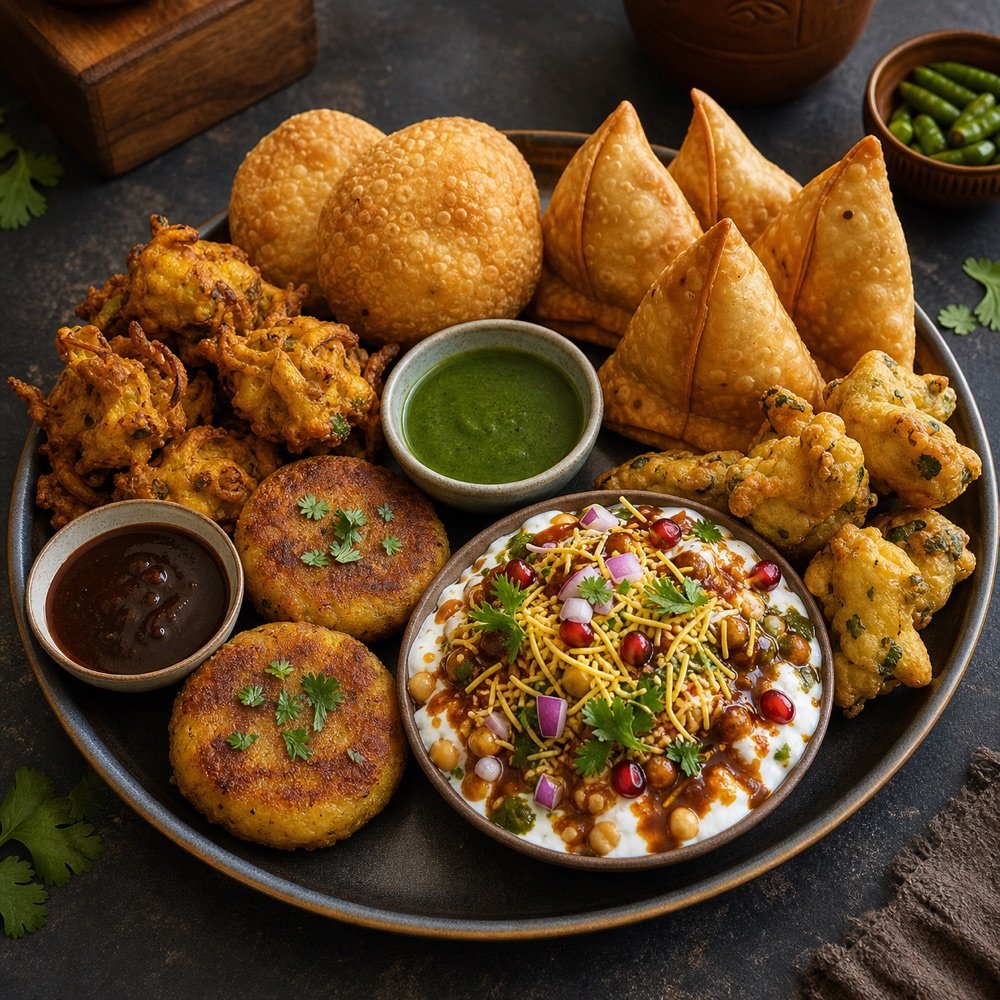
4.7
Flaky dough stuffed with spicy lentils, served with chutney
Rajasthan\
📍 Origin: Rajasthan, popular in UP and Bihar
🍽️ Traditional Serving: Served with aloo sabzi and chutneys
2 cups all-purpose flour
3 tbsp oil for dough
1 cup urad dal (black gram), soaked
1 tsp fennel seeds
1/2 tsp hing (asafoetida)
1 tsp coriander powder
1 tsp red chili powder
1/2 tsp garam masala
1 tsp amchur powder
Oil for deep frying
Salt to taste
Prepare dal filling: Coarsely grind soaked urad dal. Heat oil, add fennel and hing, then ground dal.
Cook filling: Roast dal on low heat until aromatic. Add all spices and cook until dry. Cool completely.
Make dough: Knead flour with oil, salt and water into stiff dough. Rest 20 minutes.
Shape kachoris: Make small balls, flatten, place filling in center, seal edges and flatten gently.
Fry: Heat oil to medium temperature. Fry kachoris, pressing gently with slotted spoon to puff them up.
Drain: When golden and crispy, remove and drain on paper.
Serve: Serve hot with green chutney and tamarind chutney.
4.8
Crispy hollow puris filled with spicy tamarind water and potato
Called by many names - golgappa in Delhi, puchka in Bihar and Bengal, pani puri in Mumbai - but the thrill is universal! The burst of tangy, spicy water in your mouth, the crunch of the puri, the sweet-sour explosion of flavors - it\
📍 Origin: Magadh region, Bihar
🍽️ Traditional Serving: Served fresh with separate bowls of different panis
25-30 ready-made puris
3 potatoes, boiled and mashed
1 cup boiled chickpeas
For pani: 1 cup tamarind pulp
1/2 cup mint leaves
1/2 cup coriander leaves
2 green chilies
1 tbsp roasted cumin powder
1 tsp chaat masala
1 tsp black salt
2 tbsp jaggery or sugar
Regular salt
Cold water
Make pani: Blend mint, coriander, green chilies with water. Strain.
Mix pani: Add tamarind pulp, cumin powder, chaat masala, black salt, sugar. Adjust spices. Add cold water and chill.
Prepare filling: Mix mashed potatoes with boiled chickpeas, chaat masala, and salt.
Assemble: Make small hole in each puri. Fill with potato-chickpea mixture.
Serve immediately: Fill puris with spicy pani just before serving.
Eating method: Pop entire puchka in mouth in one go for full flavor burst!
4.5
Crispy potato patties with chutneys and yogurt
Delhi\
📍 Origin: Delhi, now pan-India
🍽️ Traditional Serving: Served on leaf plates or paper plates with generous chutneys
5 potatoes, boiled and mashed
2 tbsp cornflour
1 tsp garam masala
1 tsp red chili powder
1 tsp amchur powder
1/2 tsp black pepper
Fresh coriander, chopped
Oil for shallow frying
Green chutney
Tamarind chutney
Yogurt for topping
Sev (gram flour noodles)
Pomegranate seeds (optional)
Salt to taste
Make mixture: Mix mashed potatoes with cornflour, all spices, coriander, and salt.
Shape tikkis: Make equal-sized balls, flatten into thick patties about 1/2 inch thick.
Shallow fry: Heat oil on griddle, place tikkis and cook on medium heat until golden and crispy on both sides.
Prepare toppings: Whisk yogurt with salt, keep chutneys ready.
Assemble chaat: Place 2-3 hot tikkis on plate, top with green chutney, tamarind chutney, and yogurt.
Garnish: Sprinkle with sev, pomegranate seeds, and coriander.
Serve immediately: Best enjoyed hot and crispy.
4.6
Assorted vegetables in gram flour batter, deep-fried until crispy
The ultimate monsoon companion! When the first drops of rain fall, India craves pakoras. The sizzle of fritters hitting hot oil, the aroma of gram flour and spices, the warmth of tea - this is the recipe for happiness. Every vegetable can become a pakora - potato, onion, spinach, cauliflower, even bread! Roadside stalls appear magically during rains, serving hot pakoras wrapped in newspaper. The art is in getting the batter consistency right - not too thick, not too thin. Crispy outside, soft inside, best enjoyed with green chutney and masala chai while watching the rain. In Bihar and UP, pakoras are mandatory during tea time gatherings and festivals.
📍 Origin: Pan-India
🍽️ Traditional Serving: Served hot in newspaper cones or on plates
1.5 cups gram flour (besan)
1 onion, sliced
1 potato, thinly sliced
1/2 cup spinach leaves
1/4 cauliflower, small florets
2 green chilies, chopped
1 tsp carom seeds (ajwain)
1/2 tsp baking soda
1 tsp red chili powder
1/2 tsp turmeric
1 tsp coriander powder
Fresh coriander, chopped
Oil for deep frying
Water as needed
Salt to taste
Make batter: Mix gram flour with all spices, ajwain, baking soda, and salt. Add water gradually to make thick, coating consistency batter.
Rest batter: Let batter rest for 10 minutes. It should coat vegetables but not be too runny.
Prepare vegetables: Slice all vegetables thinly for even cooking. Mix vegetables with batter.
Heat oil: Heat oil in deep kadhai until medium-hot. Test with a drop of batter - it should sizzle and rise.
Fry pakoras: Drop spoonfuls of batter-coated vegetables into hot oil. Don\
,
,
,
4.5
Bread slices stuffed with potato filling, coated in gram flour and fried
The ingenious fusion of British bread and Indian pakora! When bread came to India, creative cooks turned it into a beloved snack. Stuffed with spicy potato masala, dipped in besan batter, and fried golden - bread pakora became the king of evening snacks. Railway stations across India sell them to travelers. Street vendors serve them hot with pudina chutney, creating the perfect tea-time treat. The crispy coating gives way to soft bread and flavorful potato - it\
📍 Origin: North India, railway stations
🍽️ Traditional Serving: Served hot with mint chutney
8 bread slices
3 potatoes, boiled and mashed
1 onion, finely chopped
2 green chilies, chopped
1 tsp garam masala
1/2 tsp red chili powder
Fresh coriander, chopped
1 cup gram flour (besan)
1/2 tsp baking soda
1/2 tsp ajwain (carom seeds)
1/2 tsp turmeric
Oil for deep frying
Water for batter
Salt to taste
Prepare filling: Mix mashed potatoes with onion, green chilies, garam masala, chili powder, coriander, and salt.
Stuff bread: Place potato mixture on one bread slice, cover with another. Press edges lightly.
Make batter: Mix gram flour with turmeric, ajwain, baking soda, salt. Add water to make smooth, coating batter.
Dip bread: Cut stuffed bread into triangles or keep whole. Dip completely in batter, coating all sides.
Deep fry: Heat oil, carefully place battered bread. Fry on medium heat until golden brown on both sides.
Drain: Remove when crispy and golden, drain excess oil on paper towels.
Serve: Cut into pieces and serve hot with green chutney and tomato sauce.
4.4
Chickpea salad with onions, tomatoes, and tangy spices
The healthy street food that doesn\
📍 Origin: Delhi, popular in UP and Bihar
🍽️ Traditional Serving: Served in kulhad (clay cups) or leaf bowls
2 cups boiled chickpeas
1 onion, finely chopped
2 tomatoes, chopped
1 cucumber, chopped
2 green chilies, chopped
1 tsp chaat masala
1 tsp roasted cumin powder
1/2 tsp black salt
1/2 tsp red chili powder
Fresh coriander, chopped
Lemon juice
Sev for topping
Green chutney
Tamarind chutney
Salt to taste
Prepare chickpeas: If using dried chickpeas, soak overnight and pressure cook until soft but not mushy.
Mix vegetables: In a large bowl, combine chickpeas with chopped onion, tomato, cucumber.
Add spices: Sprinkle chaat masala, cumin powder, black salt, red chili powder, and regular salt.
Add tang: Squeeze fresh lemon juice generously. Mix well.
Add chutneys: Add green chutney and tamarind chutney to taste.
Garnish: Top with fresh coriander and generous sev for crunch.
Serve immediately: Best eaten fresh for maximum crunch and flavor.
4.7
Lentil fritters soaked in yogurt with sweet and spicy chutneys
The cooling champion of Indian chaat! Dahi vadas are pure comfort - soft, spongy lentil dumplings swimming in creamy yogurt, topped with sweet and tangy chutneys. The secret is in making vadas light and airy, then soaking them in water to make them super soft. Originally from Rajasthan, this dish has become a festival favorite across India. At weddings and celebrations, dahi vada counters attract long queues. The contrast of cool yogurt with warm spices, the interplay of sweet and spicy chutneys, the soft texture - it\
📍 Origin: Rajasthan, popular across India
🍽️ Traditional Serving: Served chilled in bowls with generous chutneys
1 cup urad dal (split black gram)
1 tsp cumin seeds
2-3 green chilies
Pinch of hing (asafoetida)
2 cups yogurt, whisked
2 tbsp sugar (for yogurt)
Green chutney
Tamarind chutney
1 tsp roasted cumin powder
1 tsp red chili powder
Sev for garnish
Fresh coriander
Oil for frying
Salt to taste
Soak dal: Soak urad dal for 4-5 hours. Drain well.
Grind batter: Grind dal with minimal water to make fluffy, thick batter. Add cumin seeds, green chilies, hing, salt.
Fry vadas: Heat oil, drop spoonfuls of batter to make vadas. Fry until golden brown.
Soak vadas: Soak fried vadas in warm water for 15-20 minutes until they become soft and double in size.
Prepare yogurt: Whisk yogurt with sugar and salt until smooth and creamy.
Assemble: Squeeze excess water from vadas gently, arrange in serving dish. Pour yogurt over them.
Top: Drizzle green and tamarind chutneys, sprinkle cumin powder, chili powder, sev, and coriander.
Chill: Refrigerate for 30 minutes before serving for best taste.
4.6
Cottage cheese cubes coated in spiced gram flour batter and fried
When paneer meets the pakora treatment, magic happens! This luxurious snack combines the richness of cottage cheese with the crispy spiced coating of gram flour. Popular in Punjab and Delhi, paneer pakoras are the vegetarian answer to meat fritters. The trick is to get paneer pieces just right - not too large, not too small. Some vendors add a spicy stuffing between two paneer slices before battering. At parties and celebrations, paneer pakoras disappear within minutes. The crispy exterior giving way to soft, warm paneer creates an irresistible contrast. Best enjoyed piping hot with mint chutney and a hot cup of chai on rainy evenings.
📍 Origin: Punjab, Delhi
🍽️ Traditional Serving: Served hot with mint chutney and lemon wedges
250g paneer, cut into rectangles
1 cup gram flour (besan)
2 tbsp rice flour (for crispiness)
1 tsp red chili powder
1/2 tsp turmeric
1 tsp ajwain (carom seeds)
1/2 tsp garam masala
1/4 tsp baking soda
2 green chilies, finely chopped
Fresh coriander, chopped
Oil for deep frying
Chaat masala for sprinkling
Water for batter
Salt to taste
Prepare paneer: Cut paneer into thick rectangular pieces (about 2 inches). Pat dry with paper towel.
Make batter: Mix gram flour, rice flour, all spices, ajwain, baking soda, green chilies, coriander, and salt.
Add water: Add water gradually to make smooth, thick coating batter. It should coat the back of a spoon.
Heat oil: Heat oil for deep frying on medium-high heat. Test with a drop of batter.
Coat paneer: Dip each paneer piece in batter, coating all sides evenly.
Fry: Carefully slide battered paneer into hot oil. Fry in batches, don\
,
,
4.5
Crispy potato and gram flour noodles with spices
The crispy companion to evening tea! Bhujia, especially the famous Bikaner wala, has been India\
📍 Origin: Bikaner, Rajasthan
🍽️ Traditional Serving: Served as loose snack with tea or mixed with other items
1 cup gram flour (besan)
1/2 cup rice flour
2 potatoes, boiled and mashed
1 tsp red chili powder
1/2 tsp turmeric
1 tsp ajwain (carom seeds)
1/4 tsp hing (asafoetida)
1/2 tsp black pepper
Oil for deep frying
Salt to taste
Make dough: Mix gram flour, rice flour, mashed potatoes, all spices, and salt.
Bind: Add water gradually to make a thick, smooth dough. It should be pipeable.
Prepare sev maker: Fill bhujia/sev maker with dough. Use fine-holed disc.
Heat oil: Heat oil in a wide kadhai for deep frying.
Press bhujia: Press dough directly into hot oil in circular motion to form nests.
Fry crispy: Fry on medium heat until golden and crispy, about 3-4 minutes.
Drain: Remove with slotted spoon, drain excess oil on paper towels.
Store: Cool completely and store in airtight container. Stays crispy for weeks.
4.7
Crispy crackers topped with potatoes, yogurt, and tangy chutneys
The king of chaats! Papri chaat is where crunch meets cream, sweet meets spicy, and soft meets crispy. Layers of crispy papri (crackers), boiled potatoes and chickpeas, smooth yogurt, tangy chutneys, and crunchy sev create a masterpiece. Old Delhi\
📍 Origin: Delhi, Old City lanes
🍽️ Traditional Serving: Served in kulhads or small plates
20-25 papri (store-bought or homemade)
2 potatoes, boiled and cubed
1 cup boiled chickpeas
1 cup yogurt, whisked
Green chutney
Tamarind chutney
1 tsp chaat masala
1 tsp roasted cumin powder
1/2 tsp red chili powder
Sev (fine and thick)
Fresh pomegranate seeds (optional)
Fresh coriander, chopped
Salt to taste
Prepare base: Arrange papris on serving plates.
Add potato-chickpea: Top each papri with boiled potato cubes and chickpeas.
Yogurt layer: Whisk yogurt with salt, drizzle generously over the papris.
Chutneys: Add spoonfuls of green chutney and sweet tamarind chutney.
Spice it up: Sprinkle chaat masala, cumin powder, and red chili powder.
Crunch factor: Add generous amounts of fine sev and thick sev.
Garnish: Top with pomegranate seeds and fresh coriander.
Serve immediately: Eat within 2-3 minutes before papris get soggy!
4.8
Nepalese dumplings with vegetable or chicken filling
The Himalayan gift to Indian street food! Momos traveled from Tibet through Nepal and conquered Indian hearts. What started as a specialty in Darjeeling and Shimla is now sold in every Indian city. The art of pleating momos is a skill - those perfect folds require practice. Street vendors steam dozens at a time, serving them piping hot with fiery red chutney. The debate between steamed vs fried momos is eternal - steamed is healthier, fried is crispier. College students, office goers, everyone lines up at momo stalls. The simple pleasure of biting into a hot momo and the burst of flavorful filling is unmatched. From fancy restaurants to roadside carts, momos rule!
📍 Origin: Tibet, Nepal, popularized in India
🍽️ Traditional Serving: Served in steamer baskets with red chutney
For dough: 2 cups all-purpose flour
Water as needed
Pinch of salt
For filling: 2 cups cabbage, finely chopped
1 carrot, grated
1 onion, finely chopped
2-3 green chilies, chopped
1 tsp ginger-garlic paste
2 tbsp soy sauce
1 tsp vinegar
1/2 tsp black pepper
Spring onions, chopped
Oil for cooking
For red chutney: Dried red chilies
Tomatoes, garlic, vinegar
Salt to taste
Make dough: Knead flour with salt and water into smooth, firm dough. Rest covered for 30 minutes.
Prepare filling: Heat oil, sauté ginger-garlic, add all vegetables. Stir-fry on high heat for 2-3 minutes.
Season filling: Add soy sauce, vinegar, pepper, salt. The filling should be moist but not watery. Cool.
Shape momos: Roll small dough portions into thin circles. Place filling in center.
Pleat: Fold and pleat edges to seal completely. The traditional shape has multiple pleats.
Steam: Place momos in greased steamer, steam for 10-12 minutes until translucent.
Alternative - Fry: For fried momos, shallow fry steamed momos until golden.
Make chutney: Blend roasted red chilies, tomatoes, garlic with vinegar and salt.
Serve hot: Serve momos immediately with spicy red chutney and clear soup.
4.6
Crispy rolls filled with vegetables and glass noodles
The Chinese import that became thoroughly Indian! Indo-Chinese cuisine\
📍 Origin: China, adapted in Indo-Chinese cuisine
🍽️ Traditional Serving: Served hot with sweet chili sauce
12 spring roll wrappers
1 cup cabbage, shredded
1 carrot, julienned
1/2 cup capsicum, julienned
1/2 cup glass noodles, soaked
2-3 green chilies, chopped
1 tbsp ginger-garlic paste
2 tbsp soy sauce
1 tbsp vinegar
1 tsp black pepper
Spring onions, chopped
2 tbsp cornflour (for sealing)
Oil for deep frying
Sweet chili sauce for serving
Salt to taste
Prepare filling: Heat oil, add ginger-garlic, vegetables. Stir-fry on high heat for 2 minutes.
Add noodles: Add soaked glass noodles, soy sauce, vinegar, pepper, salt. Mix well and cool.
Make paste: Mix cornflour with water to make sealing paste.
Fill wrappers: Place wrapper diagonally, put filling in center, fold bottom corner over filling.
Roll: Fold sides inward, roll tightly. Seal the edge with cornflour paste.
Chill: Refrigerate rolled spring rolls for 15 minutes for better shape.
Deep fry: Heat oil, fry spring rolls on medium heat until golden and crispy.
Drain: Remove when evenly browned, drain on paper towels.
Serve: Cut diagonally, serve hot with sweet chili sauce and schezwan chutney.
4.4
Mixed vegetable patties lightly spiced and fried
The healthier cousin of pakoras! Vegetable cutlets are loved by mothers trying to sneak vegetables into kids\
📍 Origin: Anglo-Indian cuisine
🍽️ Traditional Serving: Served hot with mint chutney
3 potatoes, boiled
1 carrot, grated
1/2 cup peas
1/2 cup beans, chopped
2 bread slices, crumbled
2 green chilies
1 tsp garam masala
1/2 tsp red chili powder
Fresh coriander
1/2 cup bread crumbs for coating
2 tbsp cornflour
Oil for shallow frying
Salt to taste
Mix vegetables: Mash potatoes, add grated carrot, peas, beans, bread crumbs, spices, coriander.
Bind mixture: Add cornflour to bind. The mixture should hold shape when formed into patties.
Shape cutlets: Make equal-sized flat oval patties.
Coat: Roll each cutlet in dry bread crumbs, coating well.
Refrigerate: Chill cutlets for 15 minutes for better shape retention.
Shallow fry: Heat oil, fry cutlets on medium heat until golden brown on both sides.
Serve hot: Serve immediately with green chutney and tomato ketchup.
4.3
Spicy, tangy flattened chickpeas snack
The street vendor\
📍 Origin: Delhi, UP
🍽️ Traditional Serving: Served in paper cones by street vendors
1 cup flattened chickpeas (chana jor)
1 onion, chopped
1 tomato, chopped
1 cucumber, chopped
2 green chilies
2 tsp chaat masala
1 tsp roasted cumin
Lemon juice
Fresh coriander
Sev for topping
Salt to taste
Prepare base: Take crispy chana jor garam in a bowl.
Add vegetables: Mix in chopped onion, tomato, cucumber, green chilies.
Season: Add chaat masala, cumin powder, salt, squeeze lemon juice.
Toss well: Mix everything thoroughly.
Garnish: Top with fresh coriander and sev.
Serve immediately: Best eaten fresh and crunchy.
4.5
Refreshing chaat made with roasted gram flour and spices
Bihar\
📍 Origin: Bihar
🍽️ Traditional Serving: Served in earthen bowls or leaf cups
3 tbsp sattu (roasted gram flour)
1 onion, finely chopped
2 tomatoes, chopped
2 green chilies
1 tsp roasted cumin powder
1 tsp chaat masala
Fresh coriander
Lemon juice
Sev for topping
Cold water
Salt to taste
Mix sattu: Take sattu in a bowl, add cold water to form crumbly mixture (not paste).
Add vegetables: Mix in chopped onion, tomatoes, green chilies.
Season: Add cumin powder, chaat masala, salt, squeeze lemon juice.
Mix well: Toss everything, ensuring sattu coats all vegetables.
Top: Garnish with fresh coriander and generous sev.
Serve fresh: Eat immediately before it gets soggy.
4.6
Baked wheat balls stuffed with sattu, served alone
For purists who want to enjoy litti in its most authentic form! These baked wheat balls stuffed with spiced sattu are complete in themselves. Traditionally eaten by travelers and soldiers who couldn\
📍 Origin: Bihar
🍽️ Traditional Serving: Served hot with ghee
2 cups whole wheat flour
1 cup sattu
3 tbsp mustard oil
1 tsp ajwain
1 tsp kalonji
Pickle masala
2 green chilies
Ginger-garlic paste
Lemon juice
Ghee for serving
Salt to taste
Make filling: Mix sattu with mustard oil, spices, pickle masala, chilies, ginger-garlic, lemon juice.
Prepare dough: Knead wheat flour with oil and water into stiff dough.
Stuff: Make balls, fill with sattu mixture, seal completely.
Bake: Roast in oven at 200°C for 20-25 minutes until golden. Traditionally done on coal.
Finish: Crack open hot littis, stuff with ghee.
Serve hot: Best enjoyed immediately while piping hot.
4.4
Crispy fried water chestnut pieces (seasonal)
The seasonal delight from Bihar\
📍 Origin: Bihar, Eastern UP
🍽️ Traditional Serving: Served hot with lemon and chaat masala
300g fresh water chestnuts (singhara)
3 tbsp rice flour
1 tsp red chili powder
1/2 tsp black pepper
1/2 tsp chaat masala
Oil for frying
Lemon wedges
Salt to taste
Prepare singharas: Peel fresh water chestnuts, wash and pat dry. Cut larger ones in half.
Make coating: Mix rice flour with chili powder, pepper, salt in a bowl.
Coat: Toss singharas in the spiced flour mixture, coating lightly.
Heat oil: Heat oil for deep frying on medium-high.
Fry: Fry coated singharas until golden and crispy, about 3-4 minutes.
Drain: Remove and drain on paper towels.
Serve: Sprinkle chaat masala, serve hot with lemon wedges.
4.5
Millet flatbread served with spicy garlic chutney
Rajasthan and Haryana\
📍 Origin: Rajasthan, Haryana
🍽️ Traditional Serving: Served hot with butter, garlic chutney, and jaggery
For roti: 2 cups bajra flour
Warm water
Salt
Ghee for serving
For chutney: 15 garlic cloves
4-5 dried red chilies
1 tbsp peanuts
1/2 tsp cumin seeds
Lemon juice
Salt
Make dough: Knead bajra flour with warm water and salt into soft dough. It will be more delicate than wheat.
Roll rotis: Divide into balls. Pat between hands or use plastic sheets to make thick rotis (bajra breaks easily).
Cook: Heat tawa, cook rotis on medium heat, pressing edges. Apply ghee generously.
Make chutney: Roast garlic, chilies, peanuts, cumin until aromatic. Grind coarsely with salt and lemon juice.
Serve: Serve hot bajra rotis with garlic chutney, white butter, and jaggery.
4.9
Traditional baked wheat balls stuffed with sattu, served with mashed roasted eggplant and tomato chutney
The pride of Bihar! Every Bihari's soul food and identity on a plate. This isn't just food - it's heritage, culture, and emotion combined. The smoky littis paired with fire-roasted chokha create magic that cannot be replicated. From village homes where it's made on coal stoves to city restaurants trying to capture authenticity, litti chokha tells Bihar's story. The aroma of roasting littis transports every Bihari back home. Street vendors perfect the art over decades. Eaten with hands, mixing litti with chokha and ghee, is pure bliss!
📍 Origin: Bihar, Jharkhand
🍽️ Traditional Serving: Served in leaf plates with generous ghee
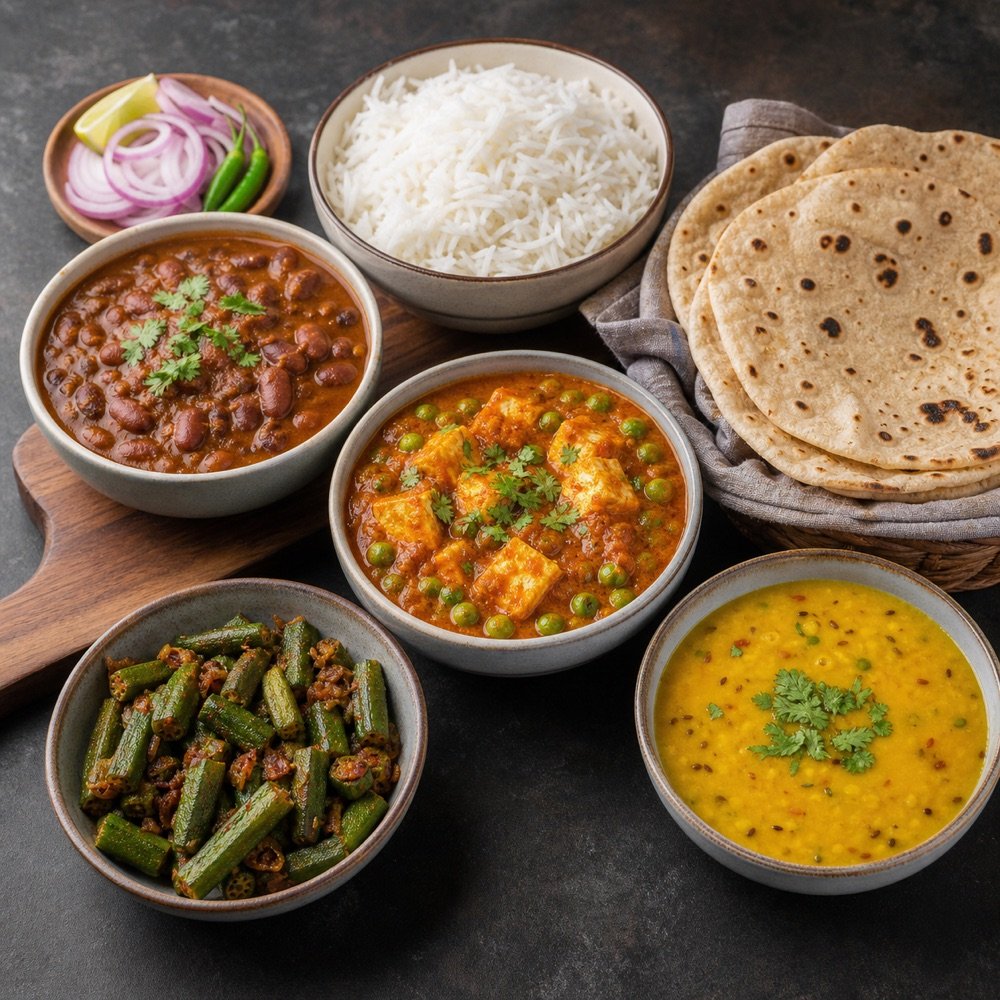
4.5
Spiced potato & tomato curry with fresh whole wheat rotis
The everyday hero of North Indian kitchens! When you ask "Aaj kya bana hai?" (What\
📍 Origin: Pan North India
🍽️ Traditional Serving: Served with hot rotis, often accompanied by pickle
4 medium potatoes, cubed
3 large tomatoes, pureed
1 onion, finely chopped
2 green chilies, slit
1 tsp cumin seeds
1/2 tsp turmeric powder
1 tsp coriander powder
1/2 tsp red chili powder
1/2 tsp garam masala
1 tsp ginger-garlic paste
2 tbsp oil
Fresh coriander leaves
Salt to taste
For rotis: 2 cups whole wheat flour
Water as needed
Make roti dough: Knead wheat flour with water and salt into soft dough. Rest for 15 minutes.
Start sabzi: Heat oil in pan, add cumin seeds. When they splutter, add chopped onions.
Add aromatics: Sauté onions until golden, add ginger-garlic paste and green chilies. Cook for a minute.
Add tomatoes: Add tomato puree, turmeric, coriander powder, chili powder. Cook until oil separates (5-7 minutes).
Cook potatoes: Add cubed potatoes with 1 cup water and salt. Cover and cook until potatoes are tender (10-12 minutes).
Finish sabzi: Add garam masala and fresh coriander. The gravy should be medium-thick.
Make rotis: Roll dough balls into thin circles, cook on hot tawa until brown spots appear. Apply ghee if desired.
Serve: Serve hot rotis with aloo tamatar sabzi, pickle, and raw onions.
4.6
Soft wheat dumplings cooked in a flavorful lentil gravy
Bihar\
📍 Origin: Bihar, Eastern UP
🍽️ Traditional Serving: Served in bowls with generous ghee on top
For pithi: 1 cup whole wheat flour
2 tbsp sattu (optional, for stuffing)
1/2 tsp ajwain
Water for dough
For dal: 1 cup arhar/chana dal
1 onion, chopped
2 tomatoes, chopped
1 tsp cumin seeds
1/2 tsp turmeric
1 tsp coriander powder
2-3 green chilies
1 tsp ginger paste
2 tbsp ghee
Fresh coriander
Salt to taste
Cook dal: Pressure cook dal with turmeric and salt for 3-4 whistles until soft but not mushy.
Make pithi dough: Knead wheat flour with ajwain, salt, and water into soft, pliable dough. Make small balls.
Optional stuffing: If stuffing, mix sattu with spices, fill in dough balls, and seal.
Prepare dal tempering: Heat ghee, add cumin seeds, chopped onions, and ginger paste. Sauté until golden.
Add tomatoes: Add chopped tomatoes, coriander powder, green chilies. Cook until mushy.
Combine: Add cooked dal to the tempering. Bring to boil, add water if needed for gravy consistency.
Cook pithi: Gently drop pithi balls into boiling dal. Cover and cook for 8-10 minutes until pithi are cooked through.
Finish: Pithi will float when cooked. Garnish with fresh coriander and ghee. Serve hot.
4.7
Stuffed flatbread with roasted gram flour, served with curd & pickle
Bihar\
📍 Origin: Bihar, Jharkhand
🍽️ Traditional Serving: Served hot with cold curd and pickle
For filling: 1 cup sattu
1 onion, finely chopped
2-3 green chilies, chopped
1 tsp mustard oil
1 tsp kalonji (nigella seeds)
1/2 tsp ajwain
Fresh coriander, chopped
Lemon juice
Pickle masala
For dough: 2 cups whole wheat flour
Water and salt
Ghee for cooking
To serve: Fresh curd (yogurt)
Mango or lemon pickle
Make sattu filling: Mix sattu with chopped onion, green chilies, mustard oil, kalonji, ajwain, pickle masala, coriander, and lemon juice. Add water to make crumbly (not wet) mixture.
Prepare dough: Knead wheat flour with salt and water into soft dough. Rest for 15 minutes.
Stuff parathas: Roll dough ball into small circle, place sattu filling in center, gather edges and seal. Flatten gently.
Roll carefully: Roll stuffed ball into paratha (medium thickness) using dry flour. Be gentle to prevent tearing.
Cook: Heat tawa/griddle, place paratha and cook on medium heat. Flip when bubbles appear.
Apply ghee: Apply ghee on both sides, cook until golden brown with crispy spots.
Serve hot: Serve immediately with fresh cold curd, pickle, and butter.
4.6
Smoky mashed eggplant cooked with spices
The smoky masterpiece of Indian vegetarian cuisine! Baigan Bharta is what happens when eggplant meets fire - literally. Roasting the eggplant directly on flame until the skin chars and the flesh becomes soft and smoky is an art passed down through generations. That smoky flavor is irreplaceable - it\
📍 Origin: Punjab, popular pan-India
🍽️ Traditional Serving: Served hot with rotis and a dollop of ghee
3 large eggplants (baingan)
2 large tomatoes, chopped
1 large onion, finely chopped
2-3 green chilies, chopped
1 tbsp ginger-garlic paste
1 tsp cumin seeds
1/2 tsp turmeric powder
1 tsp coriander powder
1/2 tsp red chili powder
1/2 tsp garam masala
3 tbsp mustard oil (or regular oil)
Fresh coriander leaves
Salt to taste
Roast eggplants: Roast eggplants directly on gas flame or in oven at 200°C, turning occasionally until skin is completely charred and flesh is soft (15-20 minutes).
Peel and mash: Let cool slightly, peel off charred skin completely. Mash the flesh roughly with fork - keep some texture.
Temper spices: Heat mustard oil until smoking, let it cool slightly. Add cumin seeds.
Sauté aromatics: Add chopped onions, sauté until golden brown. Add ginger-garlic paste, green chilies.
Add tomatoes: Add chopped tomatoes, turmeric, coriander powder, chili powder. Cook until tomatoes are mushy and oil separates.
Mix eggplant: Add mashed eggplant, salt, and garam masala. Mix well and cook for 5-7 minutes on medium heat.
Finish: Add fresh coriander. The bharta should be slightly moist, not dry. Drizzle ghee on top.
Serve: Serve hot with rotis, parathas, or rice.
4.8
Kidney beans slow-cooked in rich tomato gravy
The Sunday special that brings families together! Rajma-chawal (kidney beans with rice) is North India\
📍 Origin: Himachal Pradesh, Punjab
🍽️ Traditional Serving: Served hot with steamed rice, topped with coriander
1 cup dried rajma (kidney beans), soaked overnight
2 large tomatoes, pureed
1 onion, finely chopped
1 tbsp ginger-garlic paste
2 green chilies, slit
1 tsp cumin seeds
1 bay leaf
1 tsp coriander powder
1/2 tsp turmeric powder
1 tsp red chili powder
1 tsp garam masala
1/2 tsp kasuri methi (dried fenugreek leaves)
3 tbsp oil
Fresh coriander
Salt to taste
Cook rajma: Pressure cook soaked rajma with salt and water for 6-7 whistles until very soft. Don\
,
,
,
,
,
,
,
4.7
Spicy & tangy chickpea curry
Delhi\
📍 Origin: Delhi, Punjab
🍽️ Traditional Serving: Served with bhature or kulcha, garnished with onions
1.5 cups boiled chickpeas
2 tomatoes, pureed
1 onion, finely chopped
1 tbsp ginger-garlic paste
2 green chilies
1 tsp cumin seeds
2 tbsp chole masala
1 tsp coriander powder
1/2 tsp turmeric
1 tsp red chili powder
1 tsp amchur (dry mango powder)
1/2 tsp garam masala
1 tea bag (for dark color)
3 tbsp oil
Fresh coriander
Salt to taste
Cook chickpeas: Pressure cook chickpeas with tea bag, salt for 4-5 whistles until very soft. Reserve water.
Temper: Heat oil, add cumin seeds. When spluttering, add chopped onions.
Golden brown: Cook onions until deep golden (this is key for flavor and color).
Aromatics: Add ginger-garlic paste, green chilies, cook for 2 minutes.
Spice mix: Add tomato puree, turmeric, coriander powder, chili powder, chole masala. Cook until oil separates (8-10 minutes).
Add chickpeas: Add boiled chickpeas with some reserved water. Mix well.
Simmer: Cook on medium heat for 15 minutes, mashing some chickpeas to thicken gravy.
Finish: Add amchur, garam masala, fresh coriander. The gravy should be thick and clingy.
Serve: Serve hot with bhature, kulcha, or rice. Top with onion rings and lemon wedges.
4.4
Sweet & mildly spiced pumpkin curry
The sweet surprise of Indian vegetables! Kaddu (pumpkin) sabzi divides people - some love its natural sweetness, others are skeptical. But when made right, with the perfect balance of sweet and spicy, it converts even the doubters. In UP and Bihar, kaddu ki sabzi is monsoon and winter favorite, when pumpkins are abundant. The trick is to cook it with minimal water, letting the pumpkin release its natural sugars and caramelize slightly. Some add jaggery for extra sweetness, some balance it with tomatoes. The soft, melt-in-mouth texture and the interplay of sweet pumpkin with savory spices make it unique. It\
📍 Origin: Uttar Pradesh, Bihar
🍽️ Traditional Serving: Served with pooris or rotis
500g pumpkin (kaddu), cubed
1 tomato, chopped
1 tsp cumin seeds
1/2 tsp fenugreek seeds
2 dried red chilies
1/2 tsp turmeric powder
1 tsp coriander powder
1/2 tsp red chili powder
1/2 tsp fennel powder (saunf)
1 tsp jaggery (optional)
2 tbsp oil
Fresh coriander
Salt to taste
Prepare pumpkin: Peel and cut pumpkin into medium cubes (not too small, they\
,
,
,
,
,
,
,
4.7
Cottage cheese & peas in tomato gravy
The vegetarian classic that needs no introduction! Matar Paneer is India\
📍 Origin: Punjab, Delhi
🍽️ Traditional Serving: Served with butter naan or jeera rice
200g paneer, cubed
1 cup green peas (fresh or frozen)
3 tomatoes, pureed
1 onion, finely chopped
1 tbsp ginger-garlic paste
1 tsp cumin seeds
1/2 tsp turmeric powder
1 tsp coriander powder
1 tsp red chili powder
1/2 tsp garam masala
1/4 cup fresh cream
1 tsp kasuri methi
3 tbsp oil/butter
Fresh coriander
Salt to taste
Prep paneer: Cut paneer into cubes. Lightly fry in oil until golden (optional, or use as is).
Temper: Heat oil/butter, add cumin seeds. When crackling, add chopped onions.
Sauté: Cook onions until golden, add ginger-garlic paste, cook for 2 minutes.
Make gravy: Add tomato puree, turmeric, coriander powder, chili powder. Cook on medium heat until oil separates (8-10 minutes).
Add peas: Add green peas and 1/2 cup water. Cook covered for 5 minutes until peas are tender.
Add paneer: Add paneer cubes gently, simmer for 5 minutes. Don\
,
,
4.6
Yogurt-based curry served with steamed rice
The comfort food that soothes body and soul! Kadhi-chawal is what Indians crave when they need gentle, nourishing food. The tangy yogurt curry with crispy pakoras, paired with hot steamed rice, creates a perfect balance. Each region has its version - Gujarat makes it sweet, Punjab adds pakoras, Rajasthan makes it spicy, Bihar keeps it simple. The art is in tempering - mustard seeds, curry leaves, and dried red chilies sizzling in ghee create the signature aroma. Kadhi is cooling, digestive, and perfect for hot summer days or upset stomachs. The sound of kadhi simmering, the aroma of tempering, the sight of pakoras floating - it\
📍 Origin: Gujarat, Rajasthan, popular pan-India
🍽️ Traditional Serving: Served with steamed rice and papad
1.5 cups yogurt
3 tbsp gram flour (besan)
1 tsp cumin seeds
1/2 tsp fenugreek seeds
1/2 tsp mustard seeds
Pinch of hing (asafoetida)
8-10 curry leaves
2 dried red chilies
1/2 tsp turmeric
2 green chilies, slit
1 tsp ginger, chopped
2 tbsp ghee
For pakoras: 1/2 cup besan, onions, spices
1.5 cups basmati rice
Salt to taste
Cook rice: Wash and cook basmati rice until fluffy. Keep warm.
Make kadhi base: Whisk yogurt with gram flour, turmeric, salt, and 3 cups water until smooth and lump-free.
Cook kadhi: Simmer yogurt mixture on low heat, stirring continuously to prevent curdling, for 15-20 minutes.
Make pakoras: Mix besan with chopped onions, spices, water to make batter. Fry small pakoras until golden. Add to kadhi.
Tempering: Heat ghee, add mustard seeds, cumin seeds, fenugreek seeds, hing. When crackling, add curry leaves and red chilies.
Pour tempering: Pour hot tempering over simmering kadhi. Add green chilies and ginger.
Final simmer: Let kadhi simmer for 5 more minutes. Consistency should be slightly thick, pourable.
Serve: Serve hot kadhi over rice, with papad and pickle on the side.
4.5
Seasonal vegetables cooked with traditional spices
The rainbow on your plate! Mix veg sabzi is India\
📍 Origin: Pan-India
🍽️ Traditional Serving: Served with rotis or rice
1 potato, cubed
1 carrot, cubed
1/2 cup beans, chopped
1/2 cup peas
1/2 cauliflower, florets
1 capsicum, cubed
2 tomatoes, chopped
1 onion, chopped
1 tsp cumin seeds
1/2 tsp turmeric
1 tsp coriander powder
1/2 tsp garam masala
1 tsp ginger-garlic paste
2 tbsp oil
Fresh coriander
Salt to taste
Prep vegetables: Cut all vegetables into uniform cubes for even cooking.
Temper: Heat oil, add cumin seeds. When crackling, add chopped onions.
Sauté onions: Cook until translucent, add ginger-garlic paste, cook for 1 minute.
Add hard vegetables: Add potatoes and carrots first with turmeric and salt. Sauté for 3-4 minutes.
Add remaining: Add cauliflower, beans, peas. Mix well with spices.
Add tomatoes: Add chopped tomatoes, coriander powder. Cover and cook for 5 minutes.
Cook vegetables: Add capsicum and a little water. Cover and cook until vegetables are tender but not mushy (10-12 minutes).
Finish: Add garam masala, fresh coriander. The sabzi can be dry or slightly gravy-based. Serve hot.
4.5
Spiced & sautéed okra
The vegetable that divides the world! Okra (bhindi/lady\
📍 Origin: Pan-India
🍽️ Traditional Serving: Served with rotis or dal-chawal
300g okra (bhindi), washed and dried
1 onion, sliced
2 tomatoes, chopped
1 tsp cumin seeds
1/2 tsp turmeric powder
1 tsp coriander powder
1/2 tsp red chili powder
1/2 tsp amchur (dry mango powder)
1/2 tsp garam masala
2 tbsp oil
Fresh coriander
Salt to taste
Prep okra: Wash okra and dry completely (moisture makes it slimy). Trim ends and cut into 1-inch pieces.
Heat pan: Heat oil in wide pan on high heat. Oil should be hot.
Fry okra: Add okra pieces, spread them in single layer. Don\
,
,
,
,
,
4.3
Fluffy steamed basmati rice
The canvas for countless curries! Plain steamed rice is the foundation of Indian meals, especially in the east and south. The perfect rice - each grain separate, fluffy, aromatic - is an art. Basmati rice from the foothills of Himalayas brings fragrance, while everyday rice provides sustenance. The ritual of washing rice, the right water ratio, the timing - mothers teach daughters, passing down wisdom. Rice isn\
📍 Origin: Pan-India
🍽️ Traditional Serving: Served hot with dal, curry, and ghee
1 cup basmati rice
Water (1.5 to 2 times the rice)
Salt to taste
Optional: 1 tsp ghee
Wash rice: Rinse rice 3-4 times until water runs clear. This removes excess starch.
Soak: Soak rice in water for 15-20 minutes (for basmati). Drain.
Cook: Bring water to boil with salt. Add rice, stir once gently.
Simmer: Cover and cook on low heat for 12-15 minutes until water is absorbed.
Rest: Turn off heat, keep covered for 5 minutes. Steam will finish cooking.
Fluff: Gently fluff with fork. Each grain should be separate.
Serve: Serve hot with ghee drizzled on top, paired with dal and curry.
4.4
Spiced potato & eggplant curry
The dynamic duo of Indian vegetables! Potato and eggplant come together in perfect harmony in this classic North Indian curry. Aloo-baingan is everyday cooking that tastes extraordinary. The trick is cooking eggplant until it\
📍 Origin: North India
🍽️ Traditional Serving: Served with rotis or rice
2 potatoes, cubed
2 medium eggplants, cubed
2 tomatoes, chopped
1 onion, chopped
1 tsp cumin seeds
1/2 tsp turmeric
1 tsp coriander powder
1/2 tsp red chili powder
1/2 tsp garam masala
1 tsp ginger-garlic paste
3 tbsp oil
Fresh coriander
Salt to taste
Prep vegetables: Cut potatoes and eggplants into similar-sized cubes. Soak eggplant in salted water for 10 minutes, drain.
Temper: Heat oil, add cumin seeds. When crackling, add chopped onions.
Sauté: Cook onions until golden, add ginger-garlic paste.
Add spices: Add tomatoes, turmeric, coriander powder, chili powder. Cook until oil separates.
Cook vegetables: Add potato and eggplant cubes, salt. Mix well with masala.
Cover and cook: Add a little water, cover and cook on medium heat until vegetables are tender (15-20 minutes). Stir occasionally.
Finish: Add garam masala, fresh coriander. The curry should be semi-dry. Serve hot.
4.5
Comforting red lentil curry
The quickest path to comfort! Masoor dal (red lentils) is the weeknight savior - cooks fast, tastes delicious, and nourishes deeply. Of all dals, masoor is the fastest cooking, going from raw to creamy in 15 minutes. It\
📍 Origin: Pan-India
🍽️ Traditional Serving: Served with rice or rotis, topped with ghee
1 cup masoor dal (red lentils)
1 onion, chopped
2 tomatoes, chopped
2 cloves garlic, minced
1 tsp cumin seeds
1/2 tsp turmeric
1/2 tsp red chili powder
1 tsp coriander powder
2 green chilies, slit
2 tbsp ghee
Fresh coriander
Salt to taste
Wash dal: Rinse masoor dal 2-3 times until water runs clear.
Cook dal: Pressure cook dal with turmeric, salt, and 2.5 cups water for 3 whistles. Or simmer for 15-20 minutes until soft.
Prepare tempering: Heat ghee, add cumin seeds. When crackling, add minced garlic and onions.
Sauté: Cook onions until golden, add tomatoes, chili powder, coriander powder.
Cook masala: Cook until tomatoes are mushy and oil separates (5-7 minutes).
Add dal: Add cooked dal to the tempering. Mix well, adjust water for consistency.
Simmer: Add green chilies, simmer for 5 minutes to blend flavors.
Garnish: Add fresh coriander. Serve hot with rice or rotis, ghee on top.
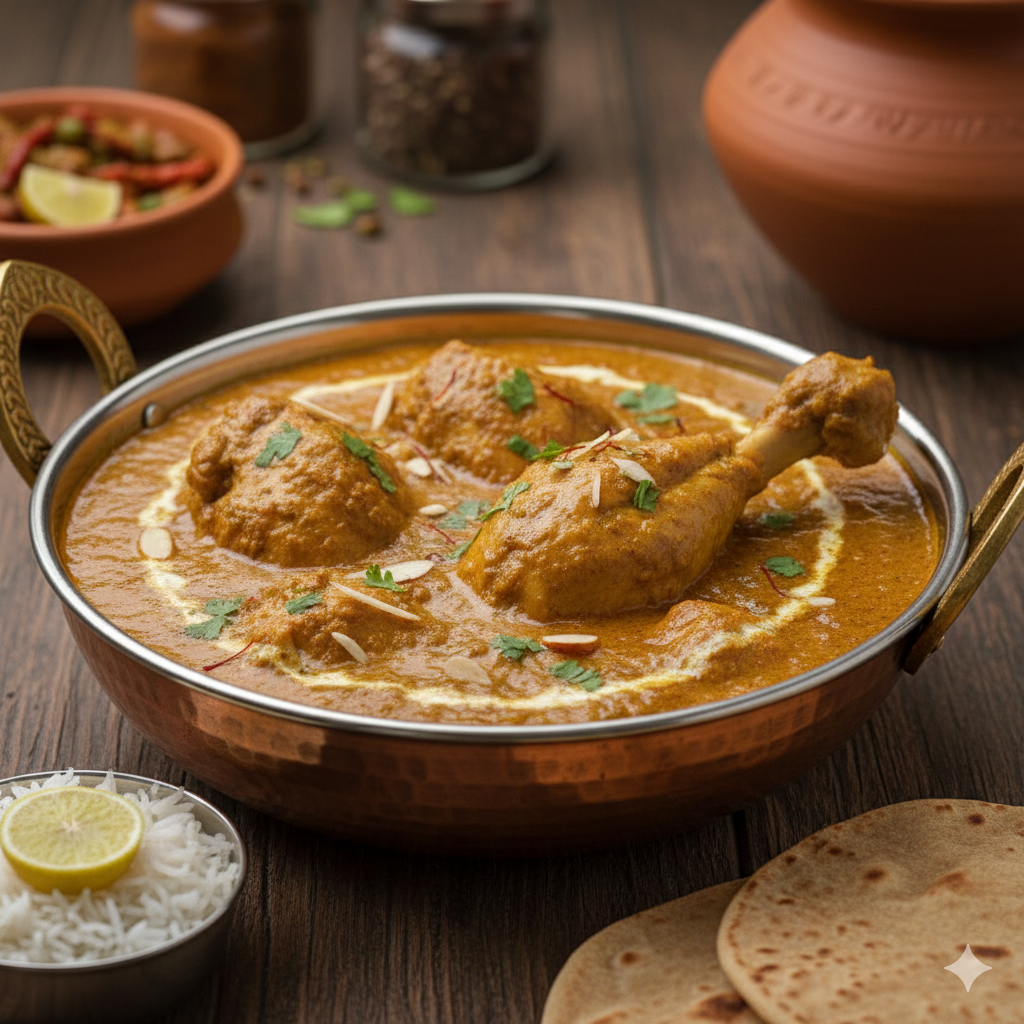
4.9
Rich meat curry slow-cooked with aromatic spices
The royal legacy on your plate! Mughlai Korma comes from the grand kitchens of Mughal emperors, where cooking was an art form and food was poetry. This rich, creamy curry represents the pinnacle of Awadhi cuisine - slow-cooked meat in a gravy enriched with nuts, cream, and aromatic spices. The name "korma" comes from Turkish "kavurma" meaning braised meat. The signature is its creamy white-to-golden gravy, mild yet intensely flavored with whole spices, saffron, and rose water. Making authentic korma requires patience - the meat must be tender enough to fall off the bone, the gravy smooth as silk. From Mughal durbars to modern weddings, korma remains the dish that signifies celebration, hospitality, and culinary excellence.
📍 Origin: Mughlai cuisine, Awadh (Lucknow)
🍽️ Traditional Serving: Served with naan, roomali roti, or pulao
300g chicken/mutton pieces
1 cup yogurt
2 onions, fried golden (birista)
1/4 cup cashew paste
1/4 cup fresh cream
2 tbsp ginger-garlic paste
Whole spices: 4 green cardamom, 2 bay leaves, 4 cloves, 1 cinnamon
1/2 tsp saffron in milk
1 tsp white pepper
1/2 tsp mace-nutmeg powder
4 tbsp ghee
2 tbsp rose water
Salt to taste
Marinate: Marinate meat with yogurt, ginger-garlic paste, salt for 30 minutes.
Fry onions: Fry sliced onions until deep golden brown, grind to paste.
Sauté meat: Heat ghee, add whole spices. Add marinated meat, sear on high heat.
Cook meat: Add fried onion paste, cook on low heat until meat is 70% done.
Make gravy: Add cashew paste and water, simmer until meat is completely tender.
Enrich: Add cream, white pepper, mace-nutmeg powder. Simmer for 5 minutes.
Finish: Add saffron milk and rose water. The gravy should be creamy and aromatic.
Serve: Garnish with fried nuts, saffron strands. Serve with naan or roomali roti.
4.8
Spicy chicken curry made with traditional Bihari flavors
Bihar\
📍 Origin: Bihar
🍽️ Traditional Serving: Served with rice or litti
500g chicken pieces with bone
2 onions, finely chopped
3 tomatoes, pureed
3 tbsp yogurt
2 tbsp ginger-garlic paste
Whole spices: 3 bay leaves, 4 green cardamom, 4 cloves, 1 cinnamon
2 tsp coriander powder
1 tsp cumin powder
1.5 tsp red chili powder
1 tsp garam masala
4 tbsp mustard oil
3-4 green chilies, slit
Fresh coriander
Salt to taste
Marinate: Mix chicken with yogurt, half the ginger-garlic paste, salt. Marinate 30 minutes.
Heat mustard oil: Heat mustard oil until smoking, let it cool slightly (reduces pungency).
Temper spices: Add whole spices, let them crackle. Add chopped onions.
Brown onions: Cook onions until deep golden brown - this is key for color and flavor.
Add aromatics: Add remaining ginger-garlic paste, cook for 2 minutes.
Make gravy: Add tomato puree, coriander powder, cumin powder, chili powder. Cook until oil separates (8-10 minutes).
Cook chicken: Add marinated chicken, green chilies, sauté on high heat for 5 minutes.
Simmer: Add water, cover and cook on low heat until chicken is tender (20-25 minutes).
Finish: Add garam masala, fresh coriander. The gravy should be thick and clingy. Serve hot.
4.9
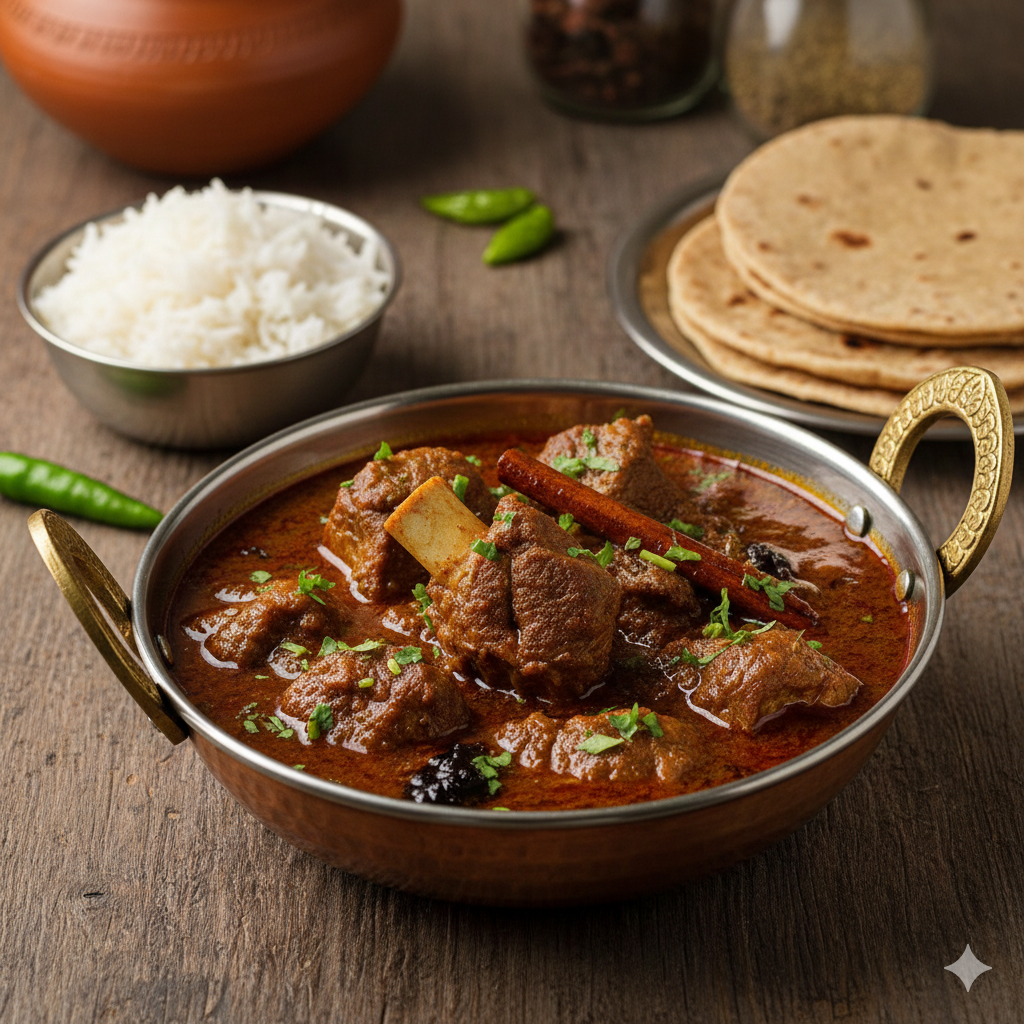
Tender mutton cooked in a flavorful gravy
The crown jewel of Bihari non-vegetarian cuisine! Mutton curry in Bihar is serious business - slow-cooked for hours until the meat falls off the bone, in a gravy that\
📍 Origin: Bihar, Jharkhand
🍽️ Traditional Serving: Served with rice or litti, garnished with coriander
500g mutton pieces with bone
2 large onions, chopped
3 tomatoes, pureed
4 tbsp yogurt
3 tbsp ginger-garlic paste
Whole spices: 4 bay leaves, 6 green cardamom, 6 cloves, 2 cinnamon sticks, 1 black cardamom
2 tsp coriander powder
1 tsp cumin powder
2 tsp red chili powder
1 tsp garam masala
5 tbsp mustard oil
4-5 green chilies
1 tsp black pepper
Fresh coriander
Salt to taste
Marinate: Marinate mutton with yogurt, half the ginger-garlic paste, turmeric, salt for 1 hour.
Heat oil: Heat mustard oil until smoking, cool slightly.
Brown mutton: Sear marinated mutton pieces on high heat until browned. Remove and set aside.
Make base: In the same oil, add whole spices. Add chopped onions, cook until deep brown.
Aromatics: Add remaining ginger-garlic paste, cook until raw smell disappears.
Create gravy: Add tomato puree, all spice powders. Cook on medium heat until oil separates (10 minutes).
Cook mutton: Add browned mutton, green chilies, mix well. Add hot water (1.5 cups).
Slow cook: Cover tightly, cook on low heat for 60-75 minutes until mutton is very tender. Check and add water if needed.
Finish: Add garam masala, black pepper, fresh coriander. The gravy should be thick and rich.
Rest: Let it rest for 10 minutes before serving. Serve hot with rice or litti.
4.6
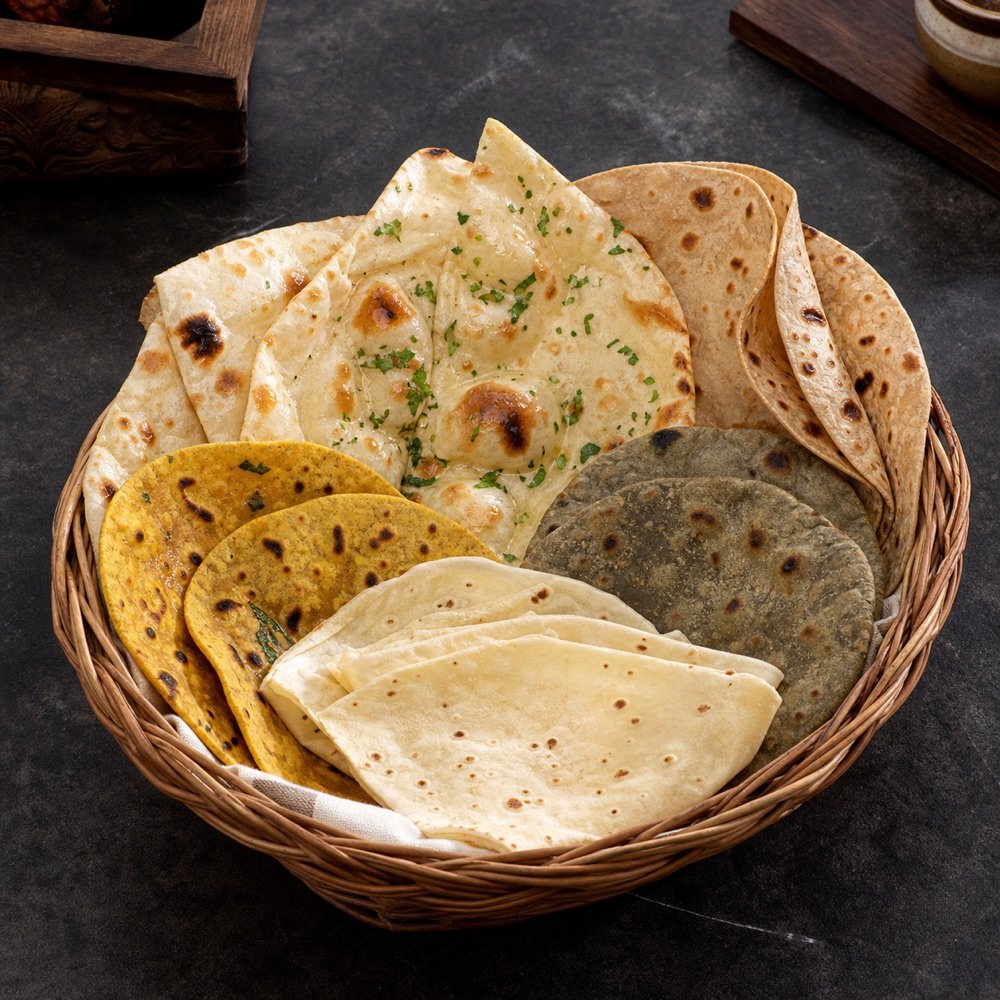
Freshly made whole wheat flatbread
The heartbeat of Indian homes! Chapati (roti) is more than bread - it's tradition, love, and daily sustenance rolled into one. The sound of chapatis puffing up on the tawa, the aroma of toasted wheat, the sight of steam rising - these are the sounds, smells, and sights of Indian kitchens. Making perfect rotis is a rite of passage - mothers teach daughters, the skill handed down through generations. The perfect roti is soft yet holds together, has brown spots but isn't burnt, puffs up like a balloon when held on direct flame. From village homes to city apartments, from elaborate feasts to simple dinners, roti is constant. It's the vehicle for sabzi, dal, pickle - the foundation of the meal. Fresh, hot rotis straight from the tawa, with a touch of ghee, is simple perfection.
📍 Origin: Pan-India
🍽️ Traditional Serving: Served hot, stacked in cloth, often with ghee
4.7
Corn flour flatbread, best with sarson ka saag
Punjab\
📍 Origin: Punjab, Haryana
🍽️ Traditional Serving: Served hot with sarson ka saag and white butter
2 cups makki atta (corn flour)
Warm water
Pinch of salt
White butter for serving
Make dough: Mix corn flour with salt. Add warm water gradually and knead. The dough will be more crumbly than wheat, that\
,
,
,
,
,
,
,
4.5
Pearl millet flatbread with earthy flavor
Rajasthan\
📍 Origin: Rajasthan, Gujarat
🍽️ Traditional Serving: Served hot with garlic chutney and jaggery
2 cups bajra flour (pearl millet)
Warm water
Pinch of salt
Ghee for applying
Prepare dough: Mix bajra flour with salt. Add warm water and knead into soft dough. The dough will be softer and more delicate than wheat.
Rest: Cover with damp cloth and rest for 10 minutes.
Shape: Make medium balls. Dip hands in water, pat ball between palms to form thick circle (traditional method). Or use plastic sheets to roll gently.
Keep thick: Bajra rotis are thick (about 1/4 to 1/3 inch), not thin like wheat rotis.
Cook: Heat tawa on medium heat. Place roti and cook for 2-3 minutes.
Flip: Turn and cook other side. Press edges gently with spatula.
Finish: The roti should have golden spots and be cooked through. Apply ghee generously.
Serve: Serve hot with garlic chutney, white butter, and jaggery.
4.6
Flatbread made with gram flour + wheat flour
The spiced bread that\
📍 Origin: Rajasthan, Punjab
🍽️ Traditional Serving: Served hot with butter, pickle, or curd
1 cup wheat flour
1 cup gram flour (besan)
1 onion, finely chopped
2 green chilies, chopped
1 tsp carom seeds (ajwain)
1/2 tsp turmeric
1/2 tsp red chili powder
1 tsp coriander powder
Fresh coriander, chopped
2 tbsp oil
Salt to taste
Water as needed
Mix flours: Combine wheat flour and gram flour in bowl. Add salt, ajwain, turmeric, chili powder, coriander powder.
Add ingredients: Add chopped onions, green chilies, coriander leaves, oil. Mix well.
Make dough: Add water gradually and knead into medium-soft dough. The dough should be softer than regular roti dough.
Rest: Cover and rest for 15 minutes.
Roll: Make balls, roll into circles (medium thickness - between regular roti and paratha).
Cook: Heat tawa, place missi roti. Cook on medium heat.
Apply ghee: Flip when bubbles appear, apply ghee/oil on both sides. Cook until golden spots appear.
Serve: Serve hot with pickle, curd, or butter.
4.8
Soft oven-baked flatbread
The restaurant favorite that conquered the world! Naan is Persian bread that became thoroughly Indian through Mughal influence. Unlike rotis, naan is leavened (uses yeast), giving it that soft, fluffy texture and slightly sour taste. Traditionally cooked in tandoor (clay oven) where it sticks to the hot walls and cooks with intense heat, getting characteristic charred spots. The sound of naan slapping against tandoor walls, the aroma of baking bread, the sight of bubbling, puffed naans - it\
📍 Origin: Persia, popularized by Mughals in India
🍽️ Traditional Serving: Served hot, brushed with butter
2 cups all-purpose flour (maida)
1 tsp active dry yeast
1 tsp sugar
1/2 cup warm milk
2 tbsp yogurt
1 tbsp oil
1/2 tsp salt
1 tsp kalonji/sesame seeds
Butter for brushing
Warm water if needed
Activate yeast: Mix yeast with sugar and warm milk. Let it sit for 10 minutes until frothy.
Make dough: Mix flour, salt, yogurt, oil, and yeast mixture. Knead into soft, smooth dough. Add warm water if needed.
Proof: Cover dough with damp cloth, let it rise in warm place for 1-1.5 hours until doubled in size.
Divide: Punch down dough, divide into balls. Let rest for 10 minutes.
Shape: Roll each ball into tear-drop or oval shape (medium thickness). Sprinkle kalonji/sesame seeds.
Cook: Heat oven to maximum (or use tawa). If using tawa, place naan and press gently. Cover and cook.
Flip: Flip and cook other side. For traditional charred spots, hold directly on flame for few seconds.
Brush butter: Brush generously with melted butter. Serve hot.
4.7
Thin, soft flatbread perfect for wraps
The handkerchief bread that\
📍 Origin: Delhi, Lucknow (Mughlai influence)
🍽️ Traditional Serving: Served folded, often for wraps or with kebabs
1.5 cups all-purpose flour (maida)
1/2 cup whole wheat flour
1 tbsp oil
1/2 tsp salt
3/4 cup warm water (approximately)
Butter for brushing
Mix flours: Combine maida, wheat flour, salt, and oil.
Make soft dough: Add warm water gradually and knead into very soft, pliable dough (softer than regular roti dough).
Rest: Cover with damp cloth and rest for 30 minutes minimum. This makes stretching easier.
Divide: Make small balls, coat lightly with oil.
Roll thin: Roll each ball into very thin circle (as thin as possible without tearing). Use flour for dusting.
Cook method 1 - Tawa: Heat tawa on high heat. Place thin roti, cook for 30 seconds, flip and cook other side briefly.
Cook method 2 - Inverted kadhai: Heat inverted kadhai, stretch dough over it, cook for few seconds.
Serve: Brush with butter, fold into quarters. Serve immediately.
4.6
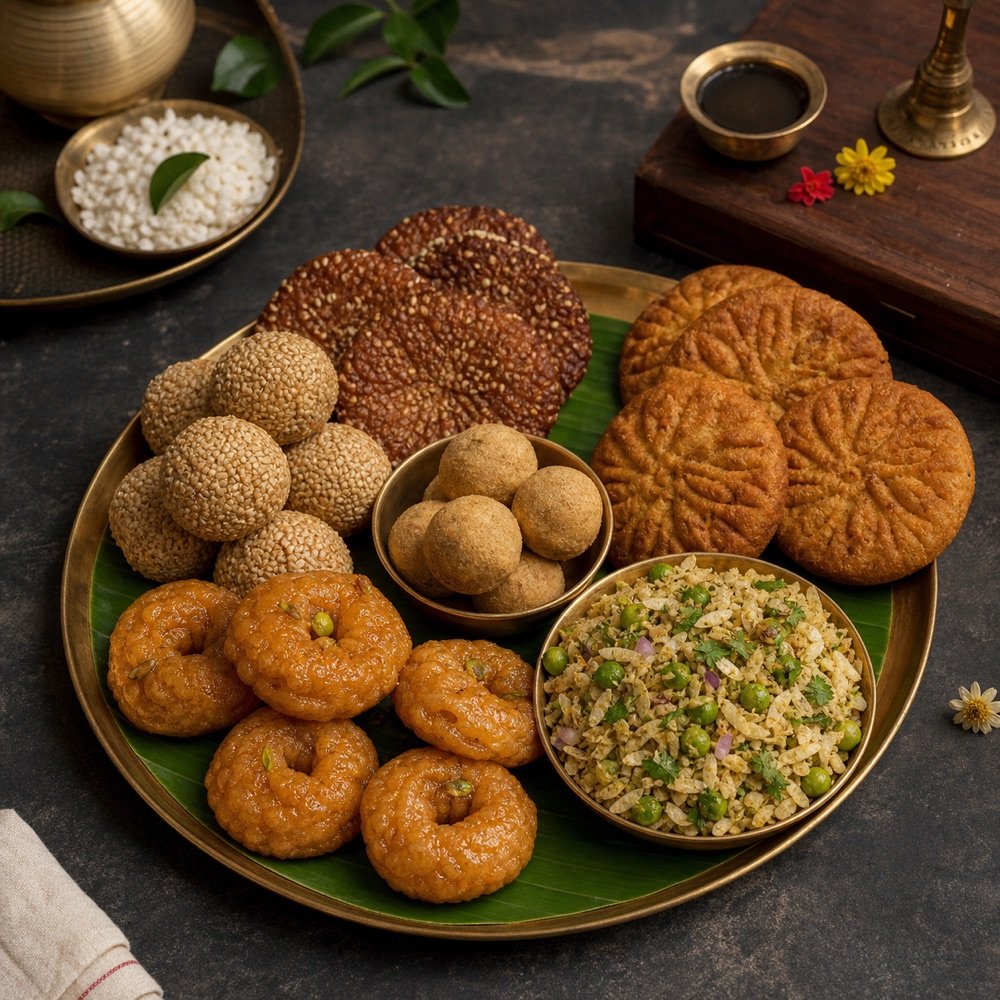
Deep-fried sweet biscuit made with jaggery & wheat flour
Bihar's sacred sweet that connects past and present! Thekua is the soul of Chhath Puja, the ancient festival where Bihar worships the Sun God. For four days, millions of devotees prepare thekua as prasad (offering). The recipe is centuries old - jaggery, wheat flour, ghee, and cardamom, deep-fried until golden and crispy. What makes thekua special is its long shelf life - it stays crispy for weeks, perfect for the pilgrimage season. The process is meditative - mixing, shaping with special molds that create beautiful patterns, frying in large batches. The aroma of thekua frying signals Chhath is near. Beyond festivals, thekua is tea-time snack, travel food, gift food. Its rustic sweetness and crunchy texture make it addictive. This is more than food - it's faith, tradition, and cultural identity wrapped in sweetness!
📍 Origin: Bihar, Jharkhand - Chhath Puja special
🍽️ Traditional Serving: Offered as prasad during Chhath Puja, served with tea
4.7
Sweet fried pancakes soaked in sugar syrup
The ancient pancake that predates modern desserts! Malpua is mentioned in ancient Sanskrit texts, making it one of India\
📍 Origin: Ancient India, popular in Bihar, UP, Rajasthan
🍽️ Traditional Serving: Served hot, often with rabri, garnished with pistachios
1 cup all-purpose flour
2 tbsp semolina (sooji)
1/2 cup milk
1/4 cup sugar (for batter)
1/2 tsp fennel seeds, crushed
2-3 green cardamom, powdered
Pinch of baking soda
Ghee for frying
For syrup: 1 cup sugar
1/2 cup water
Few saffron strands
Cardamom powder
Make syrup: Boil sugar with water, add saffron and cardamom. Cook until one-string consistency. Keep warm.
Prepare batter: Mix flour, semolina, sugar, fennel seeds, cardamom, baking soda.
Add milk: Add milk gradually to make flowing but thick batter (like dosa batter). Rest for 20 minutes.
Heat ghee: Heat ghee in flat pan on medium heat.
Fry malpuas: Pour ladleful of batter, spread slightly. The edges should be lacy and crispy.
Cook both sides: Fry until golden brown on both sides (about 2-3 minutes total).
Soak in syrup: Immediately dip fried malpua in warm sugar syrup for 2-3 minutes.
Serve: Remove from syrup, serve hot with rabri or as is. Garnish with nuts.
4.5
Deep-fried sweet dumplings with cardamom flavor
Bihar\
📍 Origin: Bihar, Eastern UP
🍽️ Traditional Serving: Served during Chhath Puja and festivals
1.5 cups rice flour (or wheat flour)
3/4 cup jaggery, grated
1/2 tsp cardamom powder
1/4 tsp fennel seeds
1/4 cup water
Oil for deep frying
Melt jaggery: Heat jaggery with water until completely melted. Strain and cool slightly.
Make batter: Mix rice flour, cardamom powder, fennel seeds. Add jaggery syrup.
Adjust consistency: Add water if needed to make thick, dropping batter (thicker than malpua).
Rest: Let batter rest for 10-15 minutes.
Heat oil: Heat oil for deep frying on medium heat.
Fry pua: Drop spoonfuls of batter into oil. They should sink and rise slowly.
Cook thoroughly: Fry on medium heat until deep golden brown (about 5-6 minutes). They should be cooked through, not raw inside.
Drain and serve: Remove when crispy outside, drain on paper. Serve warm or at room temperature.
4.6
Crunchy sesame brittle with jaggery
Winter\
📍 Origin: Bihar, Uttar Pradesh
🍽️ Traditional Serving: Served during Makar Sankranti and winter season
2 cups white sesame seeds (til)
1.5 cups jaggery, grated
1/2 tsp cardamom powder
Ghee for greasing
Roast sesame: Dry roast sesame seeds on low heat until aromatic and slightly golden (don\
,
,
,
,
,
,
4.7
Crispy rice flour sweet with sesame topping
The patient sweet that rewards waiting! Anarsa is Bihar and Jharkhand\
📍 Origin: Bihar, Jharkhand - Chhath Puja special
🍽️ Traditional Serving: Offered during Chhath Puja, served as festive sweet
2 cups rice (preferably old rice)
1 cup jaggery, grated
1/2 cup white sesame seeds
1/4 tsp cardamom powder
Ghee for frying
Day 1 - Soak: Wash and soak rice in water for 6-8 hours. Drain completely.
Day 1-2 - Dry: Spread rice on cloth, dry in shade for 24 hours until completely moisture-free.
Day 2 - Grind: Grind dried rice to fine powder. Sieve to remove coarse particles.
Day 2 - Mix: Melt jaggery with minimal water, mix with rice powder and cardamom. Make stiff dough.
Day 2-3 - Ferment: Cover and keep in warm place for 24 hours. Dough will ferment and soften slightly.
Day 3 - Shape: Make small balls, flatten into thick discs. Press sesame seeds on top.
Day 3 - Fry: Heat ghee, fry anarsa on low heat for 10-12 minutes until crispy and golden. Patience is key!
Cool and store: Cool completely. Store in airtight container. Stays crispy for weeks.
4.5
Energy balls made from roasted gram flour & nuts
Bihar\
📍 Origin: Bihar, Jharkhand
🍽️ Traditional Serving: Served as energy snack, especially in winter
2 cups sattu (roasted gram flour)
1 cup jaggery powder
1/2 cup ghee, melted
1/4 cup mixed nuts (almonds, cashews), chopped
2 tbsp sesame seeds
1 tsp cardamom powder
2 tbsp grated coconut (optional)
Roast sattu: Lightly roast sattu in dry pan for 2-3 minutes to enhance aroma. Cool.
Mix dry ingredients: Combine sattu, jaggery powder, chopped nuts, sesame seeds, cardamom, coconut.
Add ghee: Add melted ghee gradually and mix. The mixture should hold shape when pressed.
Shape ladoos: Take portions and shape into tight balls (lime-sized). Press firmly so they don\
,
,
,

4.8
Flaky layered pastry soaked in sugar syrup
Bihar\
📍 Origin: Silao, Bihar (near Nalanda)
🍽️ Traditional Serving: Served as festive sweet, famous as Silao ka Khaja
2 cups all-purpose flour
1/2 cup ghee (for dough and layering)
1/4 tsp baking soda
Water as needed
Ghee for deep frying
For syrup: 1.5 cups sugar
3/4 cup water
1/2 tsp cardamom powder
Make dough: Mix flour, baking soda, 2 tbsp ghee. Add water to make stiff dough. Knead well. Rest 30 minutes.
Create layers: Divide into portions. Roll each very thin, apply ghee, fold like envelope. Roll again. Repeat 3-4 times to create layers.
Final shape: Roll into rectangle, cut into 2-inch squares or diamonds.
Deep fry: Heat ghee, fry khaja on medium-low heat. They will puff up and develop layers. Fry until golden (5-7 minutes).
Make syrup: Boil sugar and water to one-string consistency. Add cardamom.
Soak: Dip fried khaja in warm syrup for 3-4 minutes.
Drain: Remove from syrup, let excess drip off.
Serve: Cool completely. The khaja should be crispy with absorbed sweetness. Store in airtight container.
4.6
Fried sweet dough balls glazed with sugar syrup
The Indian doughnut that\
📍 Origin: North India
🍽️ Traditional Serving: Served as festive sweet, garnished with pistachios
2 cups all-purpose flour
1/2 cup ghee
1/4 cup yogurt
1/4 tsp baking soda
Pinch of cardamom powder
Ghee for deep frying
For syrup: 1.5 cups sugar
3/4 cup water
Few saffron strands
Sliced pistachios for garnish
Make dough: Mix flour, baking soda, cardamom. Add 1/2 cup ghee, rub until crumbly. Add yogurt and make stiff dough. Rest 30 minutes.
Shape: Make small balls (walnut-sized), flatten slightly. Make depression in center with thumb.
Fry slowly: Heat ghee for deep frying. FRY ON VERY LOW HEAT - this is crucial! Fry for 15-20 minutes until pale golden.
Test: Balushahi should be cooked through - break one to check. Outside should be crispy, inside cooked.
Make syrup: Boil sugar, water, saffron to one-string consistency.
Soak: Dip hot balushahi in warm syrup for 5 minutes. They will absorb syrup.
Garnish: Remove, place on wire rack. Fill center depression with thick syrup and pistachios.
Set: Let them set for few hours. They develop better texture overnight.
4.7
Crispy kachori topped with yogurt, chutneys, and spices
When kachori meets chaat magic! Kachori chaat transforms the humble stuffed kachori into a flavor explosion. Breaking open crispy kachori, topping it with boiled potatoes, chickpeas, yogurt, tangy chutneys, and crunchy sev creates layers of taste and texture. Every region has their style - some add hot potato curry, some keep it cold with yogurt. The contrast of hot crispy kachori with cold yogurt, sweet chutney with spicy green chutney, soft potatoes with crunchy sev - it\
📍 Origin: Rajasthan, Delhi
🍽️ Traditional Serving: Served immediately in plates or kulhads
4 kachoris (ready-made or homemade)
1 cup boiled chickpeas
2 potatoes, boiled and cubed
1 cup yogurt, whisked
Green chutney
Tamarind chutney
1 tsp chaat masala
1 tsp roasted cumin powder
1/2 tsp red chili powder
Sev (fine and thick)
Boondi (fried gram flour balls)
Fresh coriander
Pomegranate seeds (optional)
Prepare kachoris: If using ready kachoris, heat them slightly. Break open at the center.
Add chickpea-potato: Fill kachoris with boiled chickpeas and potato cubes.
Yogurt layer: Pour whisked yogurt generously over kachoris.
Chutneys: Drizzle green chutney and sweet tamarind chutney in artistic patterns.
Spice it up: Sprinkle chaat masala, cumin powder, red chili powder.
Crunch factor: Top with generous sev, boondi for texture.
Garnish: Add fresh coriander and pomegranate seeds.
Serve immediately: Eat within 2-3 minutes before kachoris get soggy. The contrast of crispy and creamy is the essence!
4.4
Flattened rice with peas, lightly spiced & refreshing
Bihar\
📍 Origin: Bihar, Maharashtra
🍽️ Traditional Serving: Served hot for breakfast or light meal
2 cups thick poha (flattened rice)
1 cup fresh/frozen peas
1 onion, chopped
2 green chilies, chopped
1 tsp mustard seeds
8-10 curry leaves
1/2 tsp turmeric
1 tsp sugar
2 tbsp peanuts (optional)
2 tbsp oil
Fresh coriander
Lemon juice
Salt to taste
Rinse poha: Wash poha gently in water, drain immediately. Let it sit for 5 minutes to soften (don\
,
,
,
,
,
,
,
4.5
Digestive sweet mix with nuts, spices & jaggery
The healing sweet from Ayurveda! Panjeeri (also called panjiri) is traditional postpartum food given to new mothers for strength and lactation. Made with whole wheat flour roasted in ghee, loaded with nuts, seeds, and warming spices, it\
📍 Origin: North India (Ayurvedic tradition)
🍽️ Traditional Serving: Given to postpartum mothers, served with warm milk
2 cups whole wheat flour
1 cup ghee
3/4 cup jaggery powder
1/4 cup almonds, chopped
1/4 cup cashews, chopped
2 tbsp melon seeds
2 tbsp gum Arabic (gondh), fried
2 tbsp edible gum (dink), fried
1 tsp fennel seeds, roasted
1 tsp dry ginger powder
1/2 tsp cardamom powder
2 tbsp grated coconut
Fry gondh: Heat little ghee, fry gum Arabic until it puffs up. Remove and cool. Crush slightly.
Roast flour: Heat ghee in heavy pan, add wheat flour. Roast on low heat, stirring continuously for 15-20 minutes until aromatic and golden.
Add nuts: Add chopped almonds, cashews, melon seeds. Roast for 3-4 minutes.
Add dry ingredients: Turn off heat. Add fried gondh, coconut, fennel, dry ginger, cardamom, jaggery powder.
Mix well: Mix thoroughly while still warm. The mixture should be crumbly but hold shape when pressed.
Cool: Spread on plate to cool completely.
Store: Store in airtight glass jar. Stays fresh for 2-3 months.
Serve: Take 1-2 tbsp with milk daily, or shape into ladoos to eat as sweet.
4.6
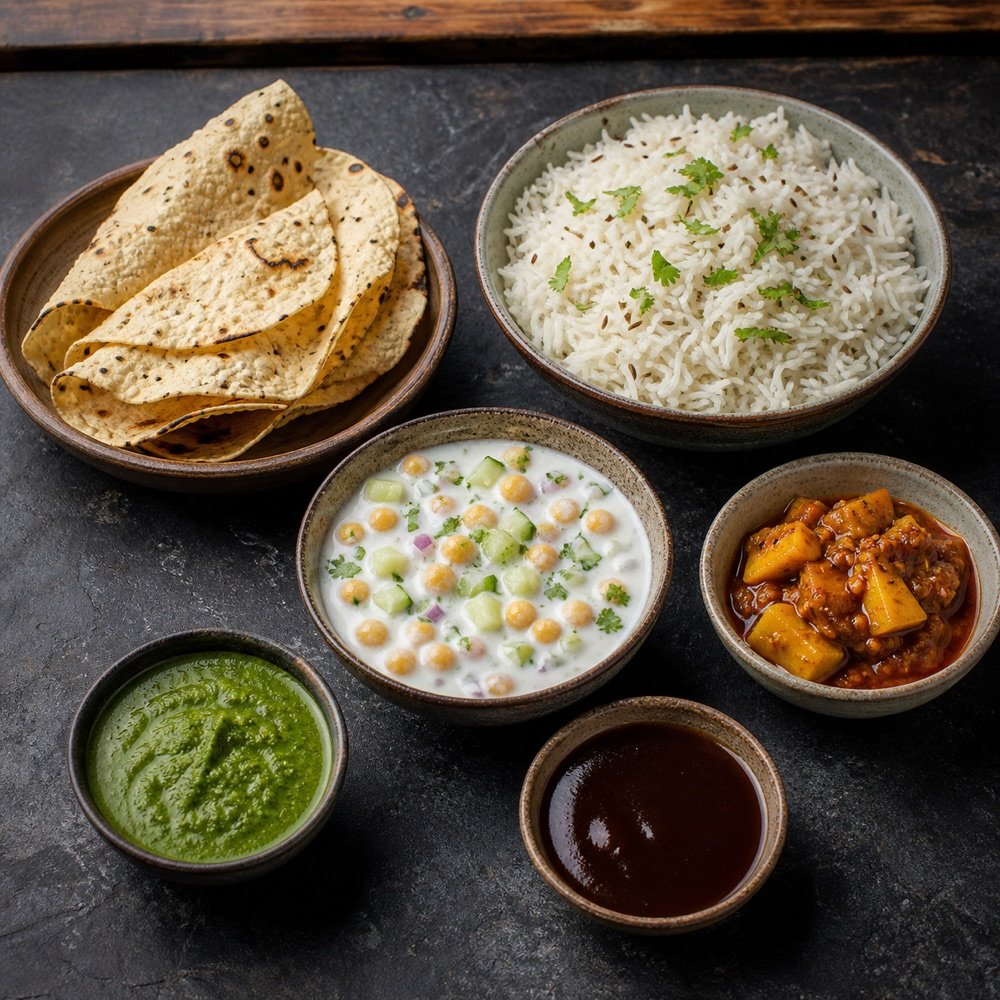
Steamed basmati rice tempered with cumin seeds
The aromatic upgrade to plain rice! Jeera rice (cumin rice) is what happens when you add just one spice to rice and transform it completely. The tempering of cumin seeds in ghee releases aromatic oils that infuse every grain of rice. It's the restaurant standard, the upgrade that makes dal-rice special, the side dish that needs no introduction. The beauty is in its simplicity - fluffy basmati rice, fragrant cumin, and ghee. That's it. Yet it elevates any curry, any dal, any gravy dish. From roadside dhabas to wedding banquets, jeera rice is everywhere. The aroma alone is appetizing. Each grain separate, coated with ghee, studded with cumin - this is rice done right!
📍 Origin: North India
🍽️ Traditional Serving: Served hot with dal and curry
4.5
Refreshing yogurt side with spices
The cooling companion to spicy Indian meals! Raita is yogurt-based side dish that brings balance, relief, and refreshment to meals. When curries are too spicy, raita cools. When meals are heavy, raita lightens. The varieties are endless - cucumber raita with its crunch, boondi raita with crispy balls, mixed raita with vegetables. The preparation is simple - whisk yogurt, add ingredients, season with roasted cumin and salt. But the effect is profound. Raita aids digestion (thanks to yogurt\
📍 Origin: Pan-India
🍽️ Traditional Serving: Served chilled in small bowls
2 cups fresh yogurt/curd
For cucumber raita: 1 cucumber, grated
For boondi raita: 1/2 cup boondi
For mixed raita: cucumber, tomato, onion, all chopped
1 tsp roasted cumin powder
1/2 tsp black salt
1/4 tsp red chili powder
Fresh coriander and mint, chopped
Regular salt to taste
Whisk yogurt: Take fresh yogurt in bowl, whisk until smooth and creamy. If too thick, add 2-3 tbsp water.
Prepare ingredients: For cucumber - grate and squeeze excess water. For boondi - soak in water for 5 minutes, squeeze and add.
Mix: Add your choice of ingredients to yogurt.
Season: Add roasted cumin powder, black salt, regular salt, chili powder. Mix well.
Chill: Refrigerate for 15-20 minutes for best taste.
Garnish: Just before serving, add chopped coriander and mint.
Serve: Serve cold as side dish with any meal.
4.7
Tangy & spicy pickles to complement your meal
The flavor bomb in tiny portions! Indian pickles (achar) are not side dishes - they\
📍 Origin: Pan-India, regional variations
🍽️ Traditional Serving: Served in small portions as condiment
For basic pickle mix: Raw mangoes/lemons/mixed vegetables
1/4 cup mustard oil
2 tbsp mustard seeds, coarsely ground
1 tbsp fennel seeds
1 tbsp fenugreek seeds, roasted and ground
2 tbsp red chili powder
1 tbsp turmeric
1/4 cup salt
1 tsp hing (asafoetida)
Prepare vegetables: Cut mangoes/lemons into pieces. Dry completely in sun or wipe clean (no moisture).
Make masala: Mix all spice powders - mustard, fennel, fenugreek, chili, turmeric, salt, hing.
Mix: In glass/ceramic jar, mix vegetables with spice mixture.
Add oil: Heat mustard oil until smoking, cool completely. Pour over pickle.
Mix well: Mix thoroughly ensuring all pieces are coated.
Mature: Keep jar in sunlight for 7-15 days, shaking daily. Pickle will mature and oil will separate.
Store: Once matured, store in cool place. Lasts for months/years.
Serve: Serve small portions as accompaniment to meals.
4.6
Crispy thin lentil wafers
The crunch that completes the meal! Papad (or papadum) is thin, crispy wafer made from lentil flour that\
📍 Origin: Pan-India, regional varieties
🍽️ Traditional Serving: Served as crispy accompaniment to meals
Papad (store-bought)
Oil for frying (if making fried papad)
For serving: Chaat masala, lemon juice (optional)
Roasted method: Hold papad with tongs directly over gas flame. It will puff up and cook in 5-10 seconds. Flip and roast other side. Keep rotating to avoid burning.
Microwave method: Place papad on microwave-safe plate, cook for 30-40 seconds until it puffs up and crisps.
Fried method: Heat oil in pan, slide in papad. It will puff up immediately. Remove within 5 seconds and drain.
Season: Sprinkle chaat masala or squeeze lemon if desired.
Serve: Break into pieces and serve immediately while crispy.
4.7
Coriander & mint chutney, spicy & fresh
The green magic that transforms snacks! Green chutney (hari chutney) is THE accompaniment to Indian street food and snacks. Made with fresh coriander, mint, green chilies, and spices, it\
📍 Origin: Pan-India
🍽️ Traditional Serving: Served as condiment with snacks and meals
2 cups fresh coriander leaves with tender stems
1/2 cup fresh mint leaves
3-4 green chilies (adjust to taste)
1 inch ginger
2 cloves garlic
1/4 cup grated coconut (optional)
2 tbsp lemon juice
1 tsp roasted cumin powder
1/2 tsp black salt
Regular salt to taste
Water as needed
Wash herbs: Wash coriander and mint thoroughly. Remove thick stems from coriander, keep tender ones.
Blend: Add all ingredients to blender - coriander, mint, chilies, ginger, garlic, coconut, lemon juice, cumin, salts.
Grind: Add 2-3 tbsp water and grind to smooth paste. Don\
,
,
,
4.6
Sweet & tangy chutney made from tamarind
The sweet-sour symphony! Tamarind chutney (imli ki chutney or meethi chutney) is the perfect balance of sweet and tangy that makes Indian chaats irresistible. Made from tamarind pulp, jaggery/sugar, and aromatic spices, it\
📍 Origin: Pan-India
🍽️ Traditional Serving: Served as sweet chutney with chaats
1 cup tamarind pulp (from 100g tamarind)
1 cup jaggery or sugar
1/2 cup dates, chopped
1 tsp roasted cumin powder
1 tsp fennel powder
1/2 tsp dry ginger powder
1/4 tsp black salt
1/2 tsp red chili powder
1/4 tsp black pepper
Salt to taste
2 cups water
Extract tamarind: Soak tamarind in warm water for 30 minutes. Mash and strain to get pulp. Discard seeds and fiber.
Cook: In pan, add tamarind pulp, chopped dates, water. Bring to boil.
Add jaggery: Add jaggery/sugar, cook on medium heat for 10-12 minutes, stirring.
Add spices: Add cumin powder, fennel powder, ginger powder, black salt, chili powder, pepper, salt.
Thicken: Cook until thick, coating consistency. It will thicken more as it cools.
Cool: Cool completely. The chutney should be smooth and glossy.
Store: Store in glass bottle in fridge. Lasts 2-3 weeks.
Serve: Serve with chaats, snacks, or as dip.
4.5
Cooling plain yogurt side
The probiotic powerhouse that\
📍 Origin: Pan-India, ancient tradition
🍽️ Traditional Serving: Served cold in small bowls
1 liter full-fat milk
2-3 tbsp curd (as starter culture)
Boil milk: Boil milk and let it cool to lukewarm (around 40-45°C/105-110°F). Test by dipping finger - should be comfortably warm, not hot.
Add culture: Add 2-3 tbsp of previous day\
,
,
,
s thick and doesn\
,
,
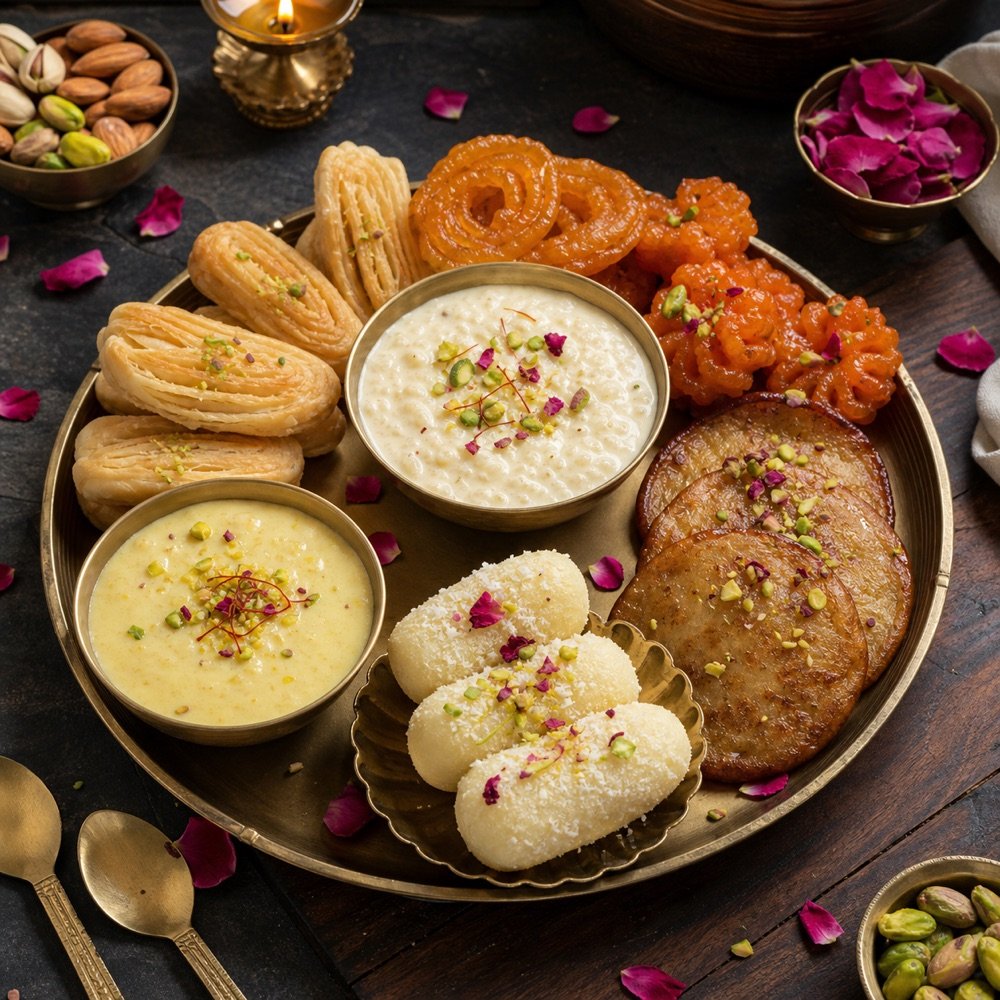
4.8
Thickened sweetened milk with saffron & nuts
The labor of love that's pure indulgence! Rabri is sweetened milk reduced to creamy, thick consistency with layers of malai (cream). The making requires patience - milk is simmered for hours, stirred constantly, cream layers collected and folded back. The result is rich, dense, aromatic dessert studded with nuts and flavored with cardamom and saffron. Each spoonful has varying textures - smooth, creamy, grainy. Rabri is celebration dessert, festival special, the sweet you make when you want to impress. Served cold, garnished with pistachios and silver leaf, it's luxury in a bowl. Traditionally paired with malpua, jalebi, or falooda, rabri is also perfect alone. The richness, the creaminess, the sweetness - rabri is indulgence personified!
📍 Origin: North India
🍽️ Traditional Serving: Served cold in bowls, garnished with nuts and silver leaf
4.7
Creamy rice pudding served in earthen pots
The royal dessert served in earthy elegance! Phirni is Mughlai dessert that\
📍 Origin: Mughlai cuisine, North India
🍽️ Traditional Serving: Served cold in earthen pots (kulhad/matki)
1/4 cup basmati rice
1 liter full-fat milk
1/2 cup sugar
Few saffron strands
1/2 tsp cardamom powder
2 tbsp chopped pistachios
2 tbsp chopped almonds
Few drops kewra/rose water
Silver leaf for garnish
Prepare rice: Wash and soak rice for 30 minutes. Drain and coarsely grind to powder (not too fine).
Boil milk: In heavy pan, bring milk to boil. Lower heat to medium.
Add rice: Add ground rice to milk, stirring continuously to prevent lumps.
Cook: Keep stirring and cooking for 20-25 minutes. The rice will dissolve and milk will thicken.
Add flavors: Add sugar, saffron, cardamom, half the nuts. Cook for 5 more minutes.
Add essence: Remove from heat, add kewra or rose water.
Set: Pour into small earthen pots or serving bowls. Let cool to room temperature.
Chill: Refrigerate for at least 3-4 hours. Garnish with remaining nuts and silver leaf before serving.
4.6
Traditional rice pudding with cardamom
The comfort dessert of every Indian household! Kheer (also called payasam) is rice pudding that\
📍 Origin: Ancient India, pan-regional
🍽️ Traditional Serving: Served hot or cold, garnished with nuts
1/4 cup basmati rice
1 liter full-fat milk
1/2 cup sugar (adjust to taste)
1/2 tsp cardamom powder
2 tbsp chopped almonds
2 tbsp chopped cashews
2 tbsp raisins
Few saffron strands (optional)
Silver leaf for special occasions
Wash rice: Wash rice thoroughly and soak for 20 minutes. Drain.
Boil milk: In heavy-bottomed pan, bring milk to boil on medium heat.
Add rice: Add drained rice to boiling milk. Lower heat.
Cook: Cook on low-medium heat for 30-35 minutes, stirring frequently. Rice should be completely cooked and starting to break down.
Thicken: As it cooks, milk will reduce and thicken. Stir to prevent sticking.
Add sugar: When rice is soft and milk has thickened, add sugar and cardamom. Mix well.
Add nuts: Add half the nuts and raisins, reserve rest for garnish. Add saffron if using.
Final touch: Cook for 2-3 more minutes. Remove from heat. Kheer thickens more as it cools.
Serve: Serve hot or cold, garnished with remaining nuts. Both ways are delicious!
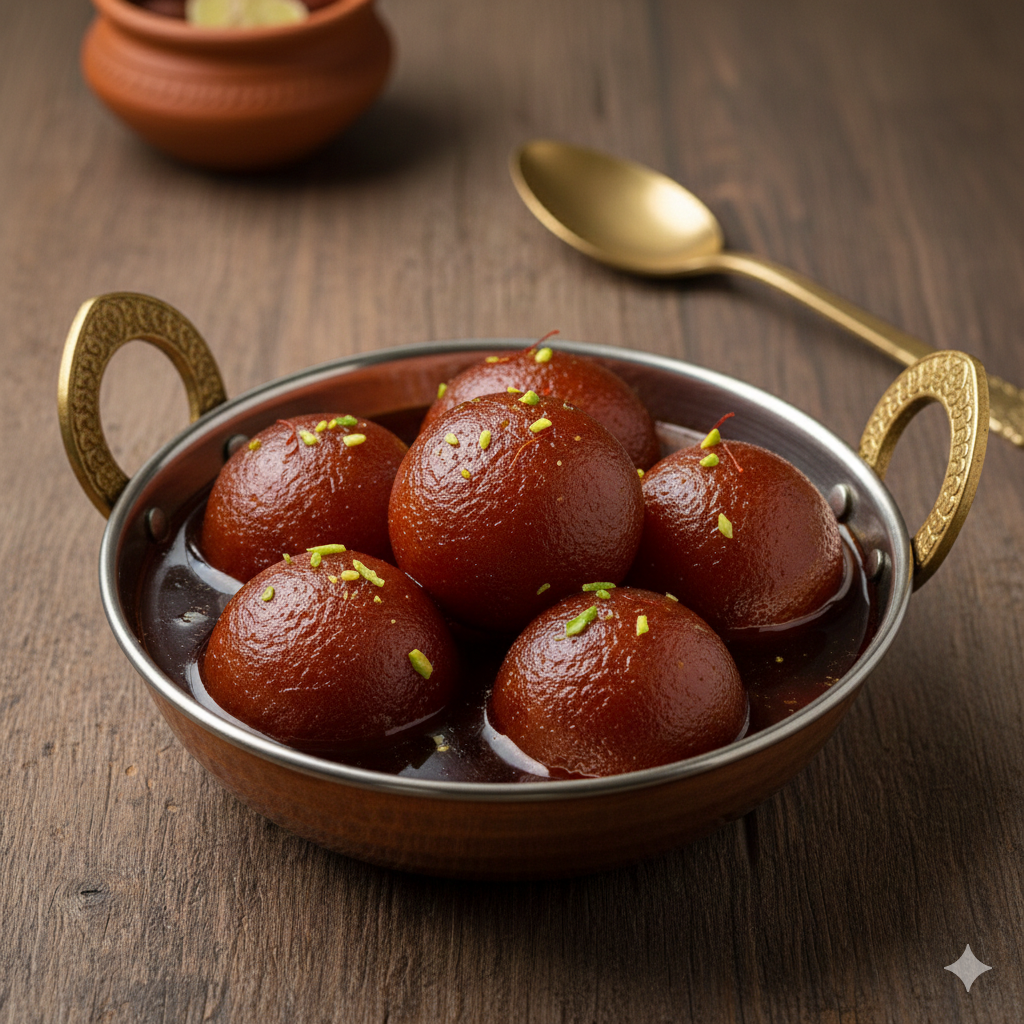
4.9
Soft milk balls soaked in rose-flavored syrup
India\
📍 Origin: Persian influence, adopted in India
🍽️ Traditional Serving: Served warm with syrup
1 cup khoya (mawa), crumbled
1/4 cup paneer, grated
3 tbsp all-purpose flour
1/4 tsp cardamom powder
Pinch of baking soda
Ghee for deep frying
For syrup: 2 cups sugar
1.5 cups water
4-5 green cardamom
1 tsp rose water
Few saffron strands
Make syrup first: Boil sugar and water with cardamom until one-string consistency. Add rose water and saffron. Keep warm.
Make dough: Mix khoya, paneer, flour, cardamom powder, tiny pinch of baking soda. Knead gently to smooth dough. Don\
,
ll break while frying. If dough is dry, add tiny bit of milk.
Heat ghee: Heat ghee for deep frying on LOW heat. This is crucial!
Fry slowly: Add balls to low heat ghee. Fry very slowly, rotating constantly for even browning (8-10 minutes). They should be deep golden, cooked through.
Soak: Remove fried balls directly into warm sugar syrup.
Absorb: Let them soak for at least 2-3 hours. They\
,
4.7
Crispy spiral swirls soaked in sugar syrup
The breakfast sweet that\
📍 Origin: Middle Eastern origin, popular in India
🍽️ Traditional Serving: Served hot and fresh
1 cup all-purpose flour
2 tbsp besan (gram flour)
1/4 tsp baking powder
Pinch of turmeric or orange food color
1/2 cup yogurt
Water as needed
Ghee for deep frying
For syrup: 1.5 cups sugar
3/4 cup water
Few saffron strands
1/2 tsp cardamom powder
Few drops lemon juice
Make batter: Mix flour, besan, baking powder, color. Add yogurt and water to make flowing batter (like dosa batter). Ferment for 8-12 hours or overnight.
Make syrup: Boil sugar and water with saffron and cardamom to one-string consistency. Add lemon juice. Keep warm.
Heat ghee: Heat ghee in wide pan for deep frying on medium heat.
Pipe jalebis: Pour batter in squeeze bottle or cloth with small hole. Pipe spirals directly into hot ghee.
Fry: Fry until crispy and golden on both sides (about 2 minutes total). The ghee should be sizzling but not smoking hot.
Soak: Remove and immediately dip in warm sugar syrup for 15-20 seconds.
Drain: Take out and place on rack to drain excess syrup.
Serve: Serve immediately while crispy-warm. Fresh jalebi is the best jalebi!
4.8
Sweet pancakes served with thickened milk
The royal combination that defines indulgence! Malpua with rabri is the ultimate dessert duo - sweet, crispy malpua pancakes paired with rich, creamy rabri. Together, they create perfect balance - warm and cold, crispy and creamy, light and rich. This combination is festival royalty, appearing during Holi and other celebrations. The presentation is beautiful - golden malpuas stacked, topped with thick rabri, garnished with nuts and silver leaf. Each bite offers contrasting textures and complementary flavors. In Rajasthan, this is wedding dessert. In Varanasi and Bihar, this is Holi special. The effort is significant - both malpua and rabri require time and skill. But the result is worth it - a dessert that impresses, delights, and satisfies completely. This is celebration on a plate!
📍 Origin: North India - Festival special
🍽️ Traditional Serving: Warm malpuas topped with cold rabri
For malpua: See malpua recipe
For rabri: See rabri recipe
Additional garnish: Extra pistachios
Almonds
Silver leaf
Rose petals
Make rabri: Prepare rabri following full recipe. Chill completely.
Make sugar syrup: For malpuas, prepare sugar syrup with saffron and cardamom.
Prepare malpua batter: Make malpua batter and let it rest.
Fry malpuas: Fry malpuas until golden and crispy. Soak in syrup.
Assemble: Place 2-3 warm malpuas on serving plate.
Top with rabri: Generously pour chilled rabri over warm malpuas.
Garnish: Garnish with chopped nuts, silver leaf, and rose petals.
Serve immediately: The contrast of warm crispy malpua with cold creamy rabri is the magic! Serve right away.
4.6
Flower-shaped sweet similar to jalebi
Jalebi\
📍 Origin: North India
🍽️ Traditional Serving: Served fresh and warm
1 cup urad dal (skinless black gram)
1/4 tsp baking soda
Orange/red food color
Ghee for deep frying
For syrup: 2 cups sugar
1 cup water
Few saffron strands
1/2 tsp cardamom powder
Few drops lemon juice
Soak dal: Wash and soak urad dal for 4-5 hours. Drain.
Grind: Grind to smooth, thick, flowing paste without water (or minimal water). The consistency should be thick like idli batter.
Ferment: Add baking soda and color, mix well. Ferment for 8-10 hours or overnight in warm place. Batter will become airy.
Make syrup: Boil sugar, water, saffron, cardamom to one-string consistency. Add lemon juice. Keep warm.
Heat ghee: Heat ghee in wide pan on medium heat.
Pipe imarti: Pour batter in cloth with small hole or squeeze bottle. Pipe flower/star patterns directly into hot ghee. The pattern should be intricate.
Fry: Fry until crispy and deep orange on both sides (2-3 minutes total).
Soak: Immediately dip in warm syrup for 1 minute. Remove and drain excess.
Serve: Serve fresh and warm for best taste!
4.6
Flaky glazed Indian doughnut
See balushahi-regional for full story. This rich, flaky sweet is wedding favorite and celebration essential. The slow-fried dough balls with their characteristic depression filled with syrup are pure indulgence. Every bite crumbles delicately, releasing sweetness. Perfect with tea or as standalone sweet!
📍 Origin: North India
🍽️ Traditional Serving: Served as festive sweet, garnished with pistachios
See balushahi-regional recipe for complete ingredients
Follow balushahi-regional recipe for detailed instructions. Key points: Use ghee in dough, fry on very low heat for 15-20 minutes, soak in one-string sugar syrup, fill center with thick syrup.
4.7
Cylindrical cottage cheese sweets in syrup
Bengal\
📍 Origin: West Bengal
🍽️ Traditional Serving: Served at room temperature, coated with coconut
For chhena: 1 liter full-fat milk
3 tbsp lemon juice
For syrup: 2 cups sugar
3 cups water
3-4 green cardamom
For coating: 1/2 cup desiccated coconut or khoya
Orange/pink food color (optional)
Make chhena: Boil milk, add lemon juice to curdle. Strain through cloth, wash under cold water to remove sourness. Hang for 30 minutes to remove excess water.
Knead: Knead chhena for 8-10 minutes until smooth and fatty (very important for texture).
Shape: Divide into portions, shape into thick cylinders (about 2 inches long).
Make syrup: Boil sugar and water with cardamom. Add color if using.
Cook cham cham: Add shaped chhena cylinders to boiling syrup. Cook on medium heat for 15-20 minutes. They will puff up and become spongy.
Cool: Remove from syrup, let cool to room temperature. They will shrink slightly.
Coat: Roll in desiccated coconut or crumbled khoya.
Serve: Serve at room temperature or chilled. Store in syrup if not serving immediately.
4.8
Famous Silao ka Khaja - layered flaky pastry
See khaja in Regional Delights for full story. Bihar\
📍 Origin: Silao, Bihar
🍽️ Traditional Serving: Served as festival sweet, famous as Silao ka Khaja
See khaja recipe in Regional Delights for complete ingredients
Follow khaja recipe for detailed layering technique. Key: repeated rolling and folding with ghee creates layers, slow frying puffs them up, syrup soaking adds sweetness while maintaining crispiness.
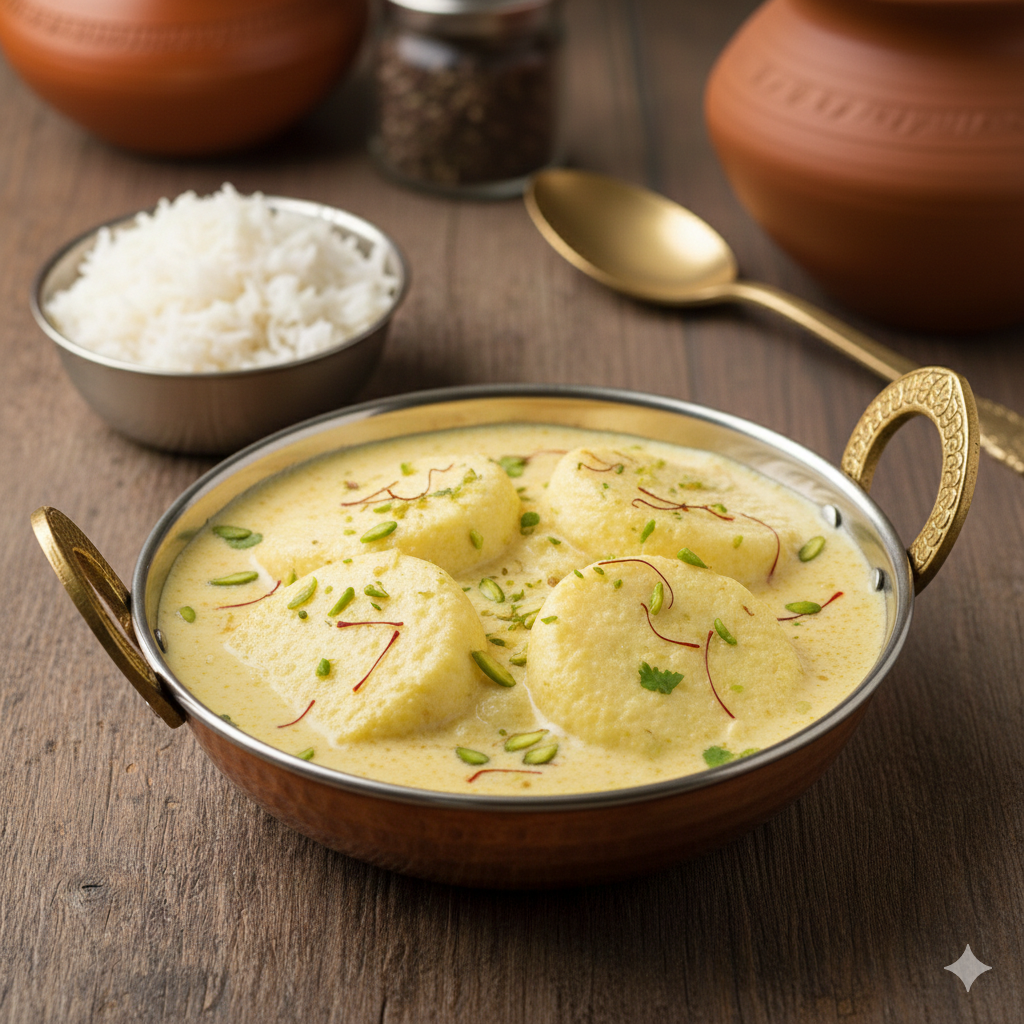
4.9
Soft cheese patties in creamy saffron milk
The dessert that defines elegance! Rasmalai is soft, spongy cottage cheese discs soaked in thick, creamy, saffron-flavored milk. Each piece is cloud-like - so soft it almost dissolves on the tongue. The contrast of the cheese disc with the creamy milk, the subtle cardamom and saffron flavors, the garnish of pistachios - every element is refined. Bengali sweet shops created this masterpiece, and it has conquered India and beyond. Rasmalai is special occasion dessert - celebrations, festivals, dinner parties. The presentation in bowls with generous rabri-like milk, the cold serving temperature, the delicate sweetness - it\
📍 Origin: West Bengal
🍽️ Traditional Serving: Served cold in creamy milk
For chhena: 1.5 liters milk + 4 tbsp lemon juice
For syrup: 2 cups sugar + 4 cups water
For rabri: 1 liter milk + 1/2 cup sugar + saffron + cardamom powder + 3 tbsp chopped pistachios + 2 tbsp almonds
Make chhena: Boil milk, curdle with lemon juice, strain, wash, hang for 30 minutes.
Knead: Knead chhena for 10 minutes until absolutely smooth.
Shape: Make small balls, flatten into thick discs (they\
,
ll double in size.
Make rabri: In another pan, boil milk, reduce to half, add sugar, saffron, cardamom, half the nuts.
Squeeze: Remove cooked discs from syrup, gently squeeze between palms to remove excess syrup.
Soak in rabri: Add squeezed discs to prepared rabri. Soak for 2-3 hours in fridge.
Serve: Serve cold in bowls with rabri, garnished with nuts. Pure bliss!
4.8
Spiced milk tea with ginger & cardamom
India's national drink! Masala chai is more than beverage - it's ritual, comfort, social glue. Made by boiling tea leaves with milk, water, sugar, and warming spices (ginger, cardamom, cloves), chai is aromatic, energizing, and soul-warming. Every region has their formula, every home their secret blend. Street vendors sell chai in small glasses, homes serve it in special cups, offices run on chai breaks. The aroma of brewing chai, the first sip that's strong and sweet, the warmth spreading through your body - chai is daily necessity and special treat. Morning start, afternoon pick-me-up, evening relaxation, late-night conversation fuel - chai fits every moment. With pakoras in monsoon, with biscuits for guests, alone for contemplation - chai is life's companion!
📍 Origin: Pan-India
🍽️ Traditional Serving: Served hot in small glasses or cups
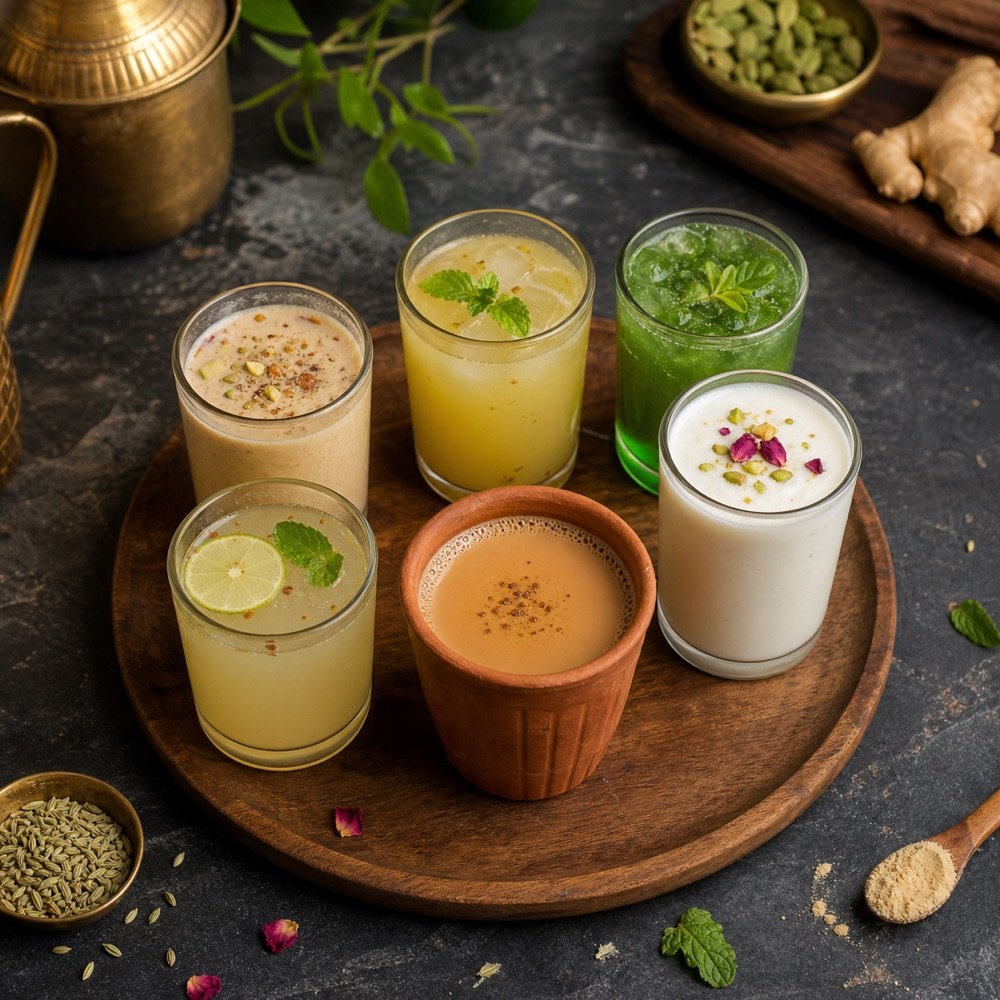
4.7
Refreshing roasted gram flour drink
Bihar\
📍 Origin: Bihar, Jharkhand, Uttar Pradesh
🍽️ Traditional Serving: Served cold in tall glasses
3 tbsp sattu (roasted gram flour)
1 cup cold water
For sweet version: 2 tbsp sugar/jaggery powder + 1/4 tsp cardamom powder
For salty version: 1/2 tsp black salt + 1/4 tsp roasted cumin powder + 1 green chili, chopped + 1 tbsp lemon juice + fresh coriander
Ice cubes
Sweet sattu: Mix sattu, sugar, cardamom in glass. Add little water to make paste (prevents lumps).
Add water: Add remaining cold water, stir vigorously until smooth.
Serve sweet: Add ice cubes, serve immediately. Some prefer it thick, some add more water.
Salty sattu: Mix sattu with little water to paste. Add black salt, cumin powder, chopped chili, coriander.
Complete: Add remaining water, stir well. Add lemon juice.
Serve salty: Add ice, serve with coriander garnish. It\
,
4.7
Churned yogurt drink, cooling & probiotic-rich
Punjab\
📍 Origin: Punjab, North India
🍽️ Traditional Serving: Served cold in tall glasses or kulhad
2 cups fresh yogurt/curd
1 cup cold water or ice cubes
For sweet: 3-4 tbsp sugar + 1/4 tsp cardamom powder + few saffron strands + cream for topping
For salted: 1 tsp salt + 1/2 tsp roasted cumin powder + fresh mint leaves + black salt
Ice cubes
Sweet lassi: Blend yogurt, sugar, cardamom, saffron with half cup water until frothy.
Add ice: Add ice cubes and remaining water, blend again until very frothy.
Serve sweet: Pour in tall glasses, top with cream and chopped nuts. Should be thick and frothy.
Salted lassi: Blend yogurt with salt, cumin powder, mint, black salt, and half cup water.
Blend with ice: Add ice and remaining water, blend until frothy.
Serve salted: Pour in glasses, garnish with mint leaves and cumin powder sprinkle.
Note: Adjust sweetness/saltiness to taste. Lassi should be thick enough to coat glass sides.
4.6
Fresh lime drink with sweet/salty flavors
India\
📍 Origin: Pan-India
🍽️ Traditional Serving: Served cold in glasses
2 tbsp fresh lime juice (1-2 limes)
1 cup water
For sweet: 2 tbsp sugar
For salty: 1/4 tsp black salt + pinch regular salt + 1/4 tsp roasted cumin powder
For masala: Above spices + chat masala + pinch black pepper
Ice cubes
Fresh mint leaves (optional)
Soda water for fizzy version
Extract juice: Squeeze fresh limes to get juice. Remove seeds.
Sweet version: Mix sugar with little water to dissolve. Add lime juice and remaining water.
Salty version: Mix black salt, regular salt, cumin powder in glass. Add lime juice and water.
Masala version: Add all spices to glass, add lime juice, water, and chaat masala.
Mix well: Stir vigorously. Taste and adjust.
Add ice: Add ice cubes generously. Add mint leaves.
Soda option: Replace half water with soda water for fizzy nimbu pani.
Serve: Serve immediately, garnished with lime slice. Perfect refreshment!
4.7
Raw mango cooler with mint & spices
Summer\
📍 Origin: North India
🍽️ Traditional Serving: Served cold in glasses during summer
2 large raw mangoes
1/2 cup sugar (adjust)
1 tsp black salt
1/2 tsp regular salt
1 tsp roasted cumin powder
Few fresh mint leaves
1/4 tsp black pepper powder
Water as needed
Ice cubes
Roast mangoes: Roast raw mangoes directly on flame or in oven until skin is charred and fruit is soft (15-20 minutes).
Extract pulp: Cool, peel off skin, extract pulp, discard seed.
Blend: Blend mango pulp with sugar, both salts, cumin powder, mint, black pepper, and 1 cup water until smooth.
Make concentrate: This is your aam panna concentrate. It\
,
,
,
,
4.6
Cooling milk drink with nuts & spices
Holi\
📍 Origin: North India
🍽️ Traditional Serving: Served cold during Holi and summer
3 cups chilled milk
3 tbsp sugar
2 tbsp almonds
1 tbsp cashews
1 tbsp pistachios
1 tbsp melon seeds
1 tbsp fennel seeds
1 tsp black peppercorns
4-5 green cardamom
1 tbsp poppy seeds
1 tsp dried rose petals
Few saffron strands
Ice cubes
Rose petals and nuts for garnish
Soak: Soak almonds, cashews, pistachios, melon seeds, poppy seeds in water for 2-3 hours.
Make paste: Drain and grind soaked nuts with fennel, peppercorns, cardamom, rose petals, little milk to fine paste.
Mix with milk: Add paste to chilled milk, add sugar, stir well.
Strain: Strain through fine strainer to remove coarse particles (optional - some like it with texture).
Add saffron: Add saffron strands for color and flavor.
Chill: Refrigerate for 1-2 hours for flavors to meld.
Serve: Serve chilled with ice cubes, garnished with rose petals and chopped nuts.
Enjoy: Sip slowly - thandai is rich and meant to be savored!
4.5
Cooling vetiver root syrup drink
The ancient cooler from Ayurveda! Khus (vetiver) sharbat is made from vetiver roots that have natural cooling properties. The concentrated green syrup has distinctive earthy-sweet aroma that\
📍 Origin: Ancient India - Ayurvedic tradition
🍽️ Traditional Serving: Served cold in summer
2-3 tbsp khus syrup (store-bought)
1 cup chilled water
1 tbsp lemon juice
1 tbsp sugar (if syrup not sweet enough)
Ice cubes
Lemon slices for garnish
Mix: In glass, add khus syrup.
Add water: Add chilled water, stir well.
Add lemon: Add lemon juice for tangy balance.
Sweeten: Add sugar if needed. Commercial syrups are usually pre-sweetened.
Add ice: Add generous ice cubes.
Stir: Mix well until syrup is evenly distributed.
Garnish: Add lemon slice.
Serve: Serve immediately. The earthy-sweet aroma is distinctive!
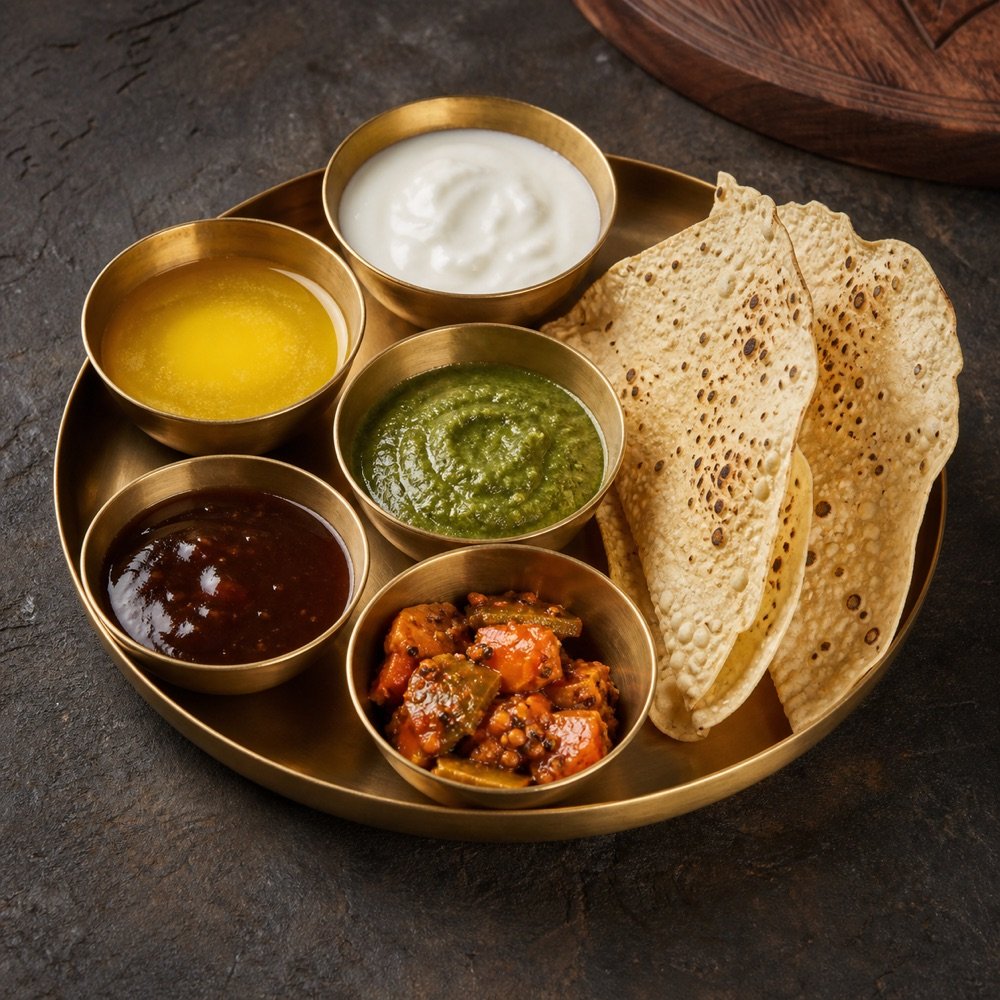
4.7
Pure ghee or butter portion for extra richness
The richness multiplier! Ghee (clarified butter) is sacred in Indian cuisine - used in cooking, poured over food, offered in prayers. Adding extra ghee to your dal, rice, or paratha transforms the dish. The nutty aroma, the glossy appearance, the rich flavor - ghee makes everything better. In traditional homes, generous ghee is sign of hospitality and love. Pure homemade ghee from cow's milk is considered most nutritious. Beyond taste, ghee aids digestion and absorption of nutrients. Whether it's melted ghee over hot khichdi or solid butter on fresh roti, this add-on is flavor enhancer that Indians cherish!
📍 Origin: Pan-India
🍽️ Traditional Serving: Served melted over food or as solid portion
4.6
Additional portion of green or tamarind chutney
Never enough chutney! Both green chutney (coriander-mint) and sweet tamarind chutney are so essential that one serving is rarely sufficient. Extra chutneys mean more dipping, more drizzling, more flavor. See individual chutney recipes for full stories - these flavor enhancers transform simple snacks into spectacular experiences!
📍 Origin: Pan-India
🍽️ Traditional Serving: Served in small portions as condiment
See green-chutney or tamarind-chutney recipes
Serve extra portion of chosen chutney in small bowl.
4.7
Additional portion of your favorite pickle
The flavor bomb that\
📍 Origin: Pan-India, regional variations
🍽️ Traditional Serving: Served in small portions
See pickles recipe for varieties
Serve extra portion of chosen pickle variety in small bowl.
4.6
Additional crispy papad
Because one papad is never enough! The satisfying crunch of papad makes it dangerously easy to finish. Extra papads mean you can enjoy that crispiness throughout your meal. See papad recipe for full story - these lentil wafers are the unsung heroes of Indian dining!
📍 Origin: Pan-India
🍽️ Traditional Serving: Served crispy and hot
See papad recipe
Roast/fry additional papad as per papad recipe. Serve hot and crispy.
4.6
Additional portion of fresh curd or raita
Cool relief on demand! When curries are spicy or meals are heavy, extra curd/raita provides additional cooling comfort. The probiotic benefits, digestive aid, and refreshing taste make it worth ordering extra. See curd and raita recipes for full stories - these yogurt-based sides are essential for balanced Indian meals!
📍 Origin: Pan-India
🍽️ Traditional Serving: Served cold in small bowls
See curd or raita recipes
Serve additional portion of fresh curd or prepared raita in small bowl, chilled.
4.8
Dal Chawal Aloo Fry Combo is a home-style cooked Swadika recipe made with fresh ingredients, balanced spices, and a delivery-friendly home-kitchen finish.
Dal Chawal Aloo Fry Combo extends Swadika's promise of ghar ka swaad with a clear recipe format, practical prep time, and the comfort of food that feels cooked for the family, not mass-produced.
📍 Origin: Bihar, Uttar Pradesh and North India
🍽️ Traditional Serving: Served hot in delivery-safe Swadika packaging
4.8
Rajma Chawal Bowl is a home-style cooked Swadika recipe made with fresh ingredients, balanced spices, and a delivery-friendly home-kitchen finish.
Rajma Chawal Bowl extends Swadika's promise of ghar ka swaad with a clear recipe format, practical prep time, and the comfort of food that feels cooked for the family, not mass-produced.
📍 Origin: Bihar, Uttar Pradesh and North India
🍽️ Traditional Serving: Served hot in delivery-safe Swadika packaging
4.6
Chole Chawal Bowl is a home-style cooked Swadika recipe made with fresh ingredients, balanced spices, and a delivery-friendly home-kitchen finish.
Chole Chawal Bowl extends Swadika's promise of ghar ka swaad with a clear recipe format, practical prep time, and the comfort of food that feels cooked for the family, not mass-produced.
📍 Origin: Bihar, Uttar Pradesh and North India
🍽️ Traditional Serving: Served hot in delivery-safe Swadika packaging
4.6
Kadhi Pakora Chawal Combo is a home-style cooked Swadika recipe made with fresh ingredients, balanced spices, and a delivery-friendly home-kitchen finish.
Kadhi Pakora Chawal Combo extends Swadika's promise of ghar ka swaad with a clear recipe format, practical prep time, and the comfort of food that feels cooked for the family, not mass-produced.
📍 Origin: Bihar, Uttar Pradesh and North India
🍽️ Traditional Serving: Served hot in delivery-safe Swadika packaging
4.8
Aloo Paratha Breakfast Combo is a tawa-cooked Swadika recipe made with fresh ingredients, balanced spices, and a delivery-friendly home-kitchen finish.
Aloo Paratha Breakfast Combo extends Swadika's promise of ghar ka swaad with a clear recipe format, practical prep time, and the comfort of food that feels cooked for the family, not mass-produced.
📍 Origin: Bihar, Uttar Pradesh and North India
🍽️ Traditional Serving: Served hot in delivery-safe Swadika packaging
4.6
Paneer Paratha Combo is a tawa-cooked Swadika recipe made with fresh ingredients, balanced spices, and a delivery-friendly home-kitchen finish.
Paneer Paratha Combo extends Swadika's promise of ghar ka swaad with a clear recipe format, practical prep time, and the comfort of food that feels cooked for the family, not mass-produced.
📍 Origin: Bihar, Uttar Pradesh and North India
🍽️ Traditional Serving: Served hot in delivery-safe Swadika packaging
4.6
Egg Curry Rice Combo is a rice-cooked Swadika recipe made with fresh ingredients, balanced spices, and a delivery-friendly home-kitchen finish.
Egg Curry Rice Combo extends Swadika's promise of ghar ka swaad with a clear recipe format, practical prep time, and the comfort of food that feels cooked for the family, not mass-produced.
📍 Origin: Bihar, Uttar Pradesh and North India
🍽️ Traditional Serving: Served hot in delivery-safe Swadika packaging
4.8
Chicken Curry Rice Bowl is a rice-cooked Swadika recipe made with fresh ingredients, balanced spices, and a delivery-friendly home-kitchen finish.
Chicken Curry Rice Bowl extends Swadika's promise of ghar ka swaad with a clear recipe format, practical prep time, and the comfort of food that feels cooked for the family, not mass-produced.
📍 Origin: Bihar, Uttar Pradesh and North India
🍽️ Traditional Serving: Served hot in delivery-safe Swadika packaging
4.6
Mutton Curry Rice Bowl is a rice-cooked Swadika recipe made with fresh ingredients, balanced spices, and a delivery-friendly home-kitchen finish.
Mutton Curry Rice Bowl extends Swadika's promise of ghar ka swaad with a clear recipe format, practical prep time, and the comfort of food that feels cooked for the family, not mass-produced.
📍 Origin: Bihar, Uttar Pradesh and North India
🍽️ Traditional Serving: Served hot in delivery-safe Swadika packaging
4.8
Mini Ghar Ka Khana Thali is a home-style cooked Swadika recipe made with fresh ingredients, balanced spices, and a delivery-friendly home-kitchen finish.
Mini Ghar Ka Khana Thali extends Swadika's promise of ghar ka swaad with a clear recipe format, practical prep time, and the comfort of food that feels cooked for the family, not mass-produced.
📍 Origin: Bihar, Uttar Pradesh and North India
🍽️ Traditional Serving: Served hot in delivery-safe Swadika packaging
4.6
Office Lunch Veg Thali is a home-style cooked Swadika recipe made with fresh ingredients, balanced spices, and a delivery-friendly home-kitchen finish.
Office Lunch Veg Thali extends Swadika's promise of ghar ka swaad with a clear recipe format, practical prep time, and the comfort of food that feels cooked for the family, not mass-produced.
📍 Origin: Bihar, Uttar Pradesh and North India
🍽️ Traditional Serving: Served hot in delivery-safe Swadika packaging
4.6
Office Lunch Non-Veg Thali is a home-style cooked Swadika recipe made with fresh ingredients, balanced spices, and a delivery-friendly home-kitchen finish.
Office Lunch Non-Veg Thali extends Swadika's promise of ghar ka swaad with a clear recipe format, practical prep time, and the comfort of food that feels cooked for the family, not mass-produced.
📍 Origin: Bihar, Uttar Pradesh and North India
🍽️ Traditional Serving: Served hot in delivery-safe Swadika packaging
4.8
Litti Chokha Family Box is a home-style cooked Swadika recipe made with fresh ingredients, balanced spices, and a delivery-friendly home-kitchen finish.
Litti Chokha Family Box extends Swadika's promise of ghar ka swaad with a clear recipe format, practical prep time, and the comfort of food that feels cooked for the family, not mass-produced.
📍 Origin: Bihar, Uttar Pradesh and North India
🍽️ Traditional Serving: Served hot in delivery-safe Swadika packaging
4.6
Paratha Combo Box is a tawa-cooked Swadika recipe made with fresh ingredients, balanced spices, and a delivery-friendly home-kitchen finish.
Paratha Combo Box extends Swadika's promise of ghar ka swaad with a clear recipe format, practical prep time, and the comfort of food that feels cooked for the family, not mass-produced.
📍 Origin: Bihar, Uttar Pradesh and North India
🍽️ Traditional Serving: Served hot in delivery-safe Swadika packaging
4.8
Weekend Mutton Special Thali is a home-style cooked Swadika recipe made with fresh ingredients, balanced spices, and a delivery-friendly home-kitchen finish.
Weekend Mutton Special Thali extends Swadika's promise of ghar ka swaad with a clear recipe format, practical prep time, and the comfort of food that feels cooked for the family, not mass-produced.
📍 Origin: Bihar, Uttar Pradesh and North India
🍽️ Traditional Serving: Served hot in delivery-safe Swadika packaging
4.8
Ghugni Chaat is a home-style cooked Swadika recipe made with fresh ingredients, balanced spices, and a delivery-friendly home-kitchen finish.
Ghugni Chaat extends Swadika's promise of ghar ka swaad with a clear recipe format, practical prep time, and the comfort of food that feels cooked for the family, not mass-produced.
📍 Origin: Bihar, Uttar Pradesh and Indian street kitchens
🍽️ Traditional Serving: Served hot in delivery-safe Swadika packaging
4.8
Chana Ghugni is a home-style cooked Swadika recipe made with fresh ingredients, balanced spices, and a delivery-friendly home-kitchen finish.
Chana Ghugni extends Swadika's promise of ghar ka swaad with a clear recipe format, practical prep time, and the comfort of food that feels cooked for the family, not mass-produced.
📍 Origin: Bihar, Uttar Pradesh and Indian street kitchens
🍽️ Traditional Serving: Served hot in delivery-safe Swadika packaging
4.6
Nimki is a home-style cooked Swadika recipe made with fresh ingredients, balanced spices, and a delivery-friendly home-kitchen finish.
Nimki extends Swadika's promise of ghar ka swaad with a clear recipe format, practical prep time, and the comfort of food that feels cooked for the family, not mass-produced.
📍 Origin: Bihar, Uttar Pradesh and Indian street kitchens
🍽️ Traditional Serving: Served hot in delivery-safe Swadika packaging
4.6
Mathri is a home-style cooked Swadika recipe made with fresh ingredients, balanced spices, and a delivery-friendly home-kitchen finish.
Mathri extends Swadika's promise of ghar ka swaad with a clear recipe format, practical prep time, and the comfort of food that feels cooked for the family, not mass-produced.
📍 Origin: Bihar, Uttar Pradesh and Indian street kitchens
🍽️ Traditional Serving: Served hot in delivery-safe Swadika packaging
4.6
Sattu Kachori is a home-style cooked Swadika recipe made with fresh ingredients, balanced spices, and a delivery-friendly home-kitchen finish.
Sattu Kachori extends Swadika's promise of ghar ka swaad with a clear recipe format, practical prep time, and the comfort of food that feels cooked for the family, not mass-produced.
📍 Origin: Bihar, Uttar Pradesh and Indian street kitchens
🍽️ Traditional Serving: Served hot in delivery-safe Swadika packaging
4.6
Pyaz Kachori is a home-style cooked Swadika recipe made with fresh ingredients, balanced spices, and a delivery-friendly home-kitchen finish.
Pyaz Kachori extends Swadika's promise of ghar ka swaad with a clear recipe format, practical prep time, and the comfort of food that feels cooked for the family, not mass-produced.
📍 Origin: Bihar, Uttar Pradesh and Indian street kitchens
🍽️ Traditional Serving: Served hot in delivery-safe Swadika packaging
4.6
Dal Kachori is a home-style cooked Swadika recipe made with fresh ingredients, balanced spices, and a delivery-friendly home-kitchen finish.
Dal Kachori extends Swadika's promise of ghar ka swaad with a clear recipe format, practical prep time, and the comfort of food that feels cooked for the family, not mass-produced.
📍 Origin: Bihar, Uttar Pradesh and Indian street kitchens
🍽️ Traditional Serving: Served hot in delivery-safe Swadika packaging
4.6
Aloo Chop is a home-style cooked Swadika recipe made with fresh ingredients, balanced spices, and a delivery-friendly home-kitchen finish.
Aloo Chop extends Swadika's promise of ghar ka swaad with a clear recipe format, practical prep time, and the comfort of food that feels cooked for the family, not mass-produced.
📍 Origin: Bihar, Uttar Pradesh and Indian street kitchens
🍽️ Traditional Serving: Served hot in delivery-safe Swadika packaging
4.6
Beguni is a home-style cooked Swadika recipe made with fresh ingredients, balanced spices, and a delivery-friendly home-kitchen finish.
Beguni extends Swadika's promise of ghar ka swaad with a clear recipe format, practical prep time, and the comfort of food that feels cooked for the family, not mass-produced.
📍 Origin: Bihar, Uttar Pradesh and Indian street kitchens
🍽️ Traditional Serving: Served hot in delivery-safe Swadika packaging
4.6
Moong Dal Pakora is a home-style cooked Swadika recipe made with fresh ingredients, balanced spices, and a delivery-friendly home-kitchen finish.
Moong Dal Pakora extends Swadika's promise of ghar ka swaad with a clear recipe format, practical prep time, and the comfort of food that feels cooked for the family, not mass-produced.
📍 Origin: Bihar, Uttar Pradesh and Indian street kitchens
🍽️ Traditional Serving: Served hot in delivery-safe Swadika packaging
4.6
Mirchi Pakora is a home-style cooked Swadika recipe made with fresh ingredients, balanced spices, and a delivery-friendly home-kitchen finish.
Mirchi Pakora extends Swadika's promise of ghar ka swaad with a clear recipe format, practical prep time, and the comfort of food that feels cooked for the family, not mass-produced.
📍 Origin: Bihar, Uttar Pradesh and Indian street kitchens
🍽️ Traditional Serving: Served hot in delivery-safe Swadika packaging
4.6
Paneer Tikka Bites is a home-style cooked Swadika recipe made with fresh ingredients, balanced spices, and a delivery-friendly home-kitchen finish.
Paneer Tikka Bites extends Swadika's promise of ghar ka swaad with a clear recipe format, practical prep time, and the comfort of food that feels cooked for the family, not mass-produced.
📍 Origin: Bihar, Uttar Pradesh and Indian street kitchens
🍽️ Traditional Serving: Served hot in delivery-safe Swadika packaging
4.6
Chicken Pakora is a home-style cooked Swadika recipe made with fresh ingredients, balanced spices, and a delivery-friendly home-kitchen finish.
Chicken Pakora extends Swadika's promise of ghar ka swaad with a clear recipe format, practical prep time, and the comfort of food that feels cooked for the family, not mass-produced.
📍 Origin: Bihar, Uttar Pradesh and Indian street kitchens
🍽️ Traditional Serving: Served hot in delivery-safe Swadika packaging
4.6
Keema Samosa is a home-style cooked Swadika recipe made with fresh ingredients, balanced spices, and a delivery-friendly home-kitchen finish.
Keema Samosa extends Swadika's promise of ghar ka swaad with a clear recipe format, practical prep time, and the comfort of food that feels cooked for the family, not mass-produced.
📍 Origin: Bihar, Uttar Pradesh and Indian street kitchens
🍽️ Traditional Serving: Served hot in delivery-safe Swadika packaging
4.6
Dahi Puchka is a home-style cooked Swadika recipe made with fresh ingredients, balanced spices, and a delivery-friendly home-kitchen finish.
Dahi Puchka extends Swadika's promise of ghar ka swaad with a clear recipe format, practical prep time, and the comfort of food that feels cooked for the family, not mass-produced.
📍 Origin: Bihar, Uttar Pradesh and Indian street kitchens
🍽️ Traditional Serving: Served hot in delivery-safe Swadika packaging
4.6
Sev Puri is a home-style cooked Swadika recipe made with fresh ingredients, balanced spices, and a delivery-friendly home-kitchen finish.
Sev Puri extends Swadika's promise of ghar ka swaad with a clear recipe format, practical prep time, and the comfort of food that feels cooked for the family, not mass-produced.
📍 Origin: Bihar, Uttar Pradesh and Indian street kitchens
🍽️ Traditional Serving: Served hot in delivery-safe Swadika packaging
4.6
Corn Chaat is a home-style cooked Swadika recipe made with fresh ingredients, balanced spices, and a delivery-friendly home-kitchen finish.
Corn Chaat extends Swadika's promise of ghar ka swaad with a clear recipe format, practical prep time, and the comfort of food that feels cooked for the family, not mass-produced.
📍 Origin: Bihar, Uttar Pradesh and Indian street kitchens
🍽️ Traditional Serving: Served hot in delivery-safe Swadika packaging
4.6
Masala Peanuts is a home-style cooked Swadika recipe made with fresh ingredients, balanced spices, and a delivery-friendly home-kitchen finish.
Masala Peanuts extends Swadika's promise of ghar ka swaad with a clear recipe format, practical prep time, and the comfort of food that feels cooked for the family, not mass-produced.
📍 Origin: Bihar, Uttar Pradesh and Indian street kitchens
🍽️ Traditional Serving: Served hot in delivery-safe Swadika packaging
4.6
Poha Chivda is a home-style cooked Swadika recipe made with fresh ingredients, balanced spices, and a delivery-friendly home-kitchen finish.
Poha Chivda extends Swadika's promise of ghar ka swaad with a clear recipe format, practical prep time, and the comfort of food that feels cooked for the family, not mass-produced.
📍 Origin: Bihar, Uttar Pradesh and Indian street kitchens
🍽️ Traditional Serving: Served hot in delivery-safe Swadika packaging
4.6
Dal Tadka is a home-style cooked Swadika recipe made with fresh ingredients, balanced spices, and a delivery-friendly home-kitchen finish.
Dal Tadka extends Swadika's promise of ghar ka swaad with a clear recipe format, practical prep time, and the comfort of food that feels cooked for the family, not mass-produced.
📍 Origin: North Indian home kitchens
🍽️ Traditional Serving: Served hot in delivery-safe Swadika packaging
4.6
Dal Fry is a home-style cooked Swadika recipe made with fresh ingredients, balanced spices, and a delivery-friendly home-kitchen finish.
Dal Fry extends Swadika's promise of ghar ka swaad with a clear recipe format, practical prep time, and the comfort of food that feels cooked for the family, not mass-produced.
📍 Origin: North Indian home kitchens
🍽️ Traditional Serving: Served hot in delivery-safe Swadika packaging
4.6
Arhar Dal is a home-style cooked Swadika recipe made with fresh ingredients, balanced spices, and a delivery-friendly home-kitchen finish.
Arhar Dal extends Swadika's promise of ghar ka swaad with a clear recipe format, practical prep time, and the comfort of food that feels cooked for the family, not mass-produced.
📍 Origin: North Indian home kitchens
🍽️ Traditional Serving: Served hot in delivery-safe Swadika packaging
4.6
Moong Dal is a home-style cooked Swadika recipe made with fresh ingredients, balanced spices, and a delivery-friendly home-kitchen finish.
Moong Dal extends Swadika's promise of ghar ka swaad with a clear recipe format, practical prep time, and the comfort of food that feels cooked for the family, not mass-produced.
📍 Origin: North Indian home kitchens
🍽️ Traditional Serving: Served hot in delivery-safe Swadika packaging
4.6
Panchmel Dal is a home-style cooked Swadika recipe made with fresh ingredients, balanced spices, and a delivery-friendly home-kitchen finish.
Panchmel Dal extends Swadika's promise of ghar ka swaad with a clear recipe format, practical prep time, and the comfort of food that feels cooked for the family, not mass-produced.
📍 Origin: North Indian home kitchens
🍽️ Traditional Serving: Served hot in delivery-safe Swadika packaging
4.6
Aloo Gobhi is a home-style cooked Swadika recipe made with fresh ingredients, balanced spices, and a delivery-friendly home-kitchen finish.
Aloo Gobhi extends Swadika's promise of ghar ka swaad with a clear recipe format, practical prep time, and the comfort of food that feels cooked for the family, not mass-produced.
📍 Origin: North Indian home kitchens
🍽️ Traditional Serving: Served hot in delivery-safe Swadika packaging
4.6
Dum Aloo is a home-style cooked Swadika recipe made with fresh ingredients, balanced spices, and a delivery-friendly home-kitchen finish.
Dum Aloo extends Swadika's promise of ghar ka swaad with a clear recipe format, practical prep time, and the comfort of food that feels cooked for the family, not mass-produced.
📍 Origin: North Indian home kitchens
🍽️ Traditional Serving: Served hot in delivery-safe Swadika packaging
4.6
Jeera Aloo is a home-style cooked Swadika recipe made with fresh ingredients, balanced spices, and a delivery-friendly home-kitchen finish.
Jeera Aloo extends Swadika's promise of ghar ka swaad with a clear recipe format, practical prep time, and the comfort of food that feels cooked for the family, not mass-produced.
📍 Origin: North Indian home kitchens
🍽️ Traditional Serving: Served hot in delivery-safe Swadika packaging
4.6
Lauki Chana Dal is a home-style cooked Swadika recipe made with fresh ingredients, balanced spices, and a delivery-friendly home-kitchen finish.
Lauki Chana Dal extends Swadika's promise of ghar ka swaad with a clear recipe format, practical prep time, and the comfort of food that feels cooked for the family, not mass-produced.
📍 Origin: North Indian home kitchens
🍽️ Traditional Serving: Served hot in delivery-safe Swadika packaging
4.6
Parwal Aloo Sabzi is a home-style cooked Swadika recipe made with fresh ingredients, balanced spices, and a delivery-friendly home-kitchen finish.
Parwal Aloo Sabzi extends Swadika's promise of ghar ka swaad with a clear recipe format, practical prep time, and the comfort of food that feels cooked for the family, not mass-produced.
📍 Origin: North Indian home kitchens
🍽️ Traditional Serving: Served hot in delivery-safe Swadika packaging
4.6
Sarson Ka Saag is a home-style cooked Swadika recipe made with fresh ingredients, balanced spices, and a delivery-friendly home-kitchen finish.
Sarson Ka Saag extends Swadika's promise of ghar ka swaad with a clear recipe format, practical prep time, and the comfort of food that feels cooked for the family, not mass-produced.
📍 Origin: North Indian home kitchens
🍽️ Traditional Serving: Served hot in delivery-safe Swadika packaging
4.8
Paneer Butter Masala is a home-style cooked Swadika recipe made with fresh ingredients, balanced spices, and a delivery-friendly home-kitchen finish.
Paneer Butter Masala extends Swadika's promise of ghar ka swaad with a clear recipe format, practical prep time, and the comfort of food that feels cooked for the family, not mass-produced.
📍 Origin: North Indian home kitchens
🍽️ Traditional Serving: Served hot in delivery-safe Swadika packaging
4.6
Shahi Paneer is a home-style cooked Swadika recipe made with fresh ingredients, balanced spices, and a delivery-friendly home-kitchen finish.
Shahi Paneer extends Swadika's promise of ghar ka swaad with a clear recipe format, practical prep time, and the comfort of food that feels cooked for the family, not mass-produced.
📍 Origin: North Indian home kitchens
🍽️ Traditional Serving: Served hot in delivery-safe Swadika packaging
4.6
Kadai Paneer is a home-style cooked Swadika recipe made with fresh ingredients, balanced spices, and a delivery-friendly home-kitchen finish.
Kadai Paneer extends Swadika's promise of ghar ka swaad with a clear recipe format, practical prep time, and the comfort of food that feels cooked for the family, not mass-produced.
📍 Origin: North Indian home kitchens
🍽️ Traditional Serving: Served hot in delivery-safe Swadika packaging
4.6
Palak Paneer is a home-style cooked Swadika recipe made with fresh ingredients, balanced spices, and a delivery-friendly home-kitchen finish.
Palak Paneer extends Swadika's promise of ghar ka swaad with a clear recipe format, practical prep time, and the comfort of food that feels cooked for the family, not mass-produced.
📍 Origin: North Indian home kitchens
🍽️ Traditional Serving: Served hot in delivery-safe Swadika packaging
4.6
Paneer Bhurji is a home-style cooked Swadika recipe made with fresh ingredients, balanced spices, and a delivery-friendly home-kitchen finish.
Paneer Bhurji extends Swadika's promise of ghar ka swaad with a clear recipe format, practical prep time, and the comfort of food that feels cooked for the family, not mass-produced.
📍 Origin: North Indian home kitchens
🍽️ Traditional Serving: Served hot in delivery-safe Swadika packaging
4.6
Chole Masala is a home-style cooked Swadika recipe made with fresh ingredients, balanced spices, and a delivery-friendly home-kitchen finish.
Chole Masala extends Swadika's promise of ghar ka swaad with a clear recipe format, practical prep time, and the comfort of food that feels cooked for the family, not mass-produced.
📍 Origin: North Indian home kitchens
🍽️ Traditional Serving: Served hot in delivery-safe Swadika packaging
4.6
Dum Aloo Banarasi is a home-style cooked Swadika recipe made with fresh ingredients, balanced spices, and a delivery-friendly home-kitchen finish.
Dum Aloo Banarasi extends Swadika's promise of ghar ka swaad with a clear recipe format, practical prep time, and the comfort of food that feels cooked for the family, not mass-produced.
📍 Origin: North Indian home kitchens
🍽️ Traditional Serving: Served hot in delivery-safe Swadika packaging
4.6
Egg Curry is a home-style cooked Swadika recipe made with fresh ingredients, balanced spices, and a delivery-friendly home-kitchen finish.
Egg Curry extends Swadika's promise of ghar ka swaad with a clear recipe format, practical prep time, and the comfort of food that feels cooked for the family, not mass-produced.
📍 Origin: North Indian home kitchens
🍽️ Traditional Serving: Served hot in delivery-safe Swadika packaging
4.6
Egg Bhurji is a home-style cooked Swadika recipe made with fresh ingredients, balanced spices, and a delivery-friendly home-kitchen finish.
Egg Bhurji extends Swadika's promise of ghar ka swaad with a clear recipe format, practical prep time, and the comfort of food that feels cooked for the family, not mass-produced.
📍 Origin: North Indian home kitchens
🍽️ Traditional Serving: Served hot in delivery-safe Swadika packaging
4.6
Chicken Korma is a home-style cooked Swadika recipe made with fresh ingredients, balanced spices, and a delivery-friendly home-kitchen finish.
Chicken Korma extends Swadika's promise of ghar ka swaad with a clear recipe format, practical prep time, and the comfort of food that feels cooked for the family, not mass-produced.
📍 Origin: North Indian home kitchens
🍽️ Traditional Serving: Served hot in delivery-safe Swadika packaging
4.6
Chicken Masala is a home-style cooked Swadika recipe made with fresh ingredients, balanced spices, and a delivery-friendly home-kitchen finish.
Chicken Masala extends Swadika's promise of ghar ka swaad with a clear recipe format, practical prep time, and the comfort of food that feels cooked for the family, not mass-produced.
📍 Origin: North Indian home kitchens
🍽️ Traditional Serving: Served hot in delivery-safe Swadika packaging
4.6
Chicken Do Pyaza is a home-style cooked Swadika recipe made with fresh ingredients, balanced spices, and a delivery-friendly home-kitchen finish.
Chicken Do Pyaza extends Swadika's promise of ghar ka swaad with a clear recipe format, practical prep time, and the comfort of food that feels cooked for the family, not mass-produced.
📍 Origin: North Indian home kitchens
🍽️ Traditional Serving: Served hot in delivery-safe Swadika packaging
4.6
Mutton Keema is a home-style cooked Swadika recipe made with fresh ingredients, balanced spices, and a delivery-friendly home-kitchen finish.
Mutton Keema extends Swadika's promise of ghar ka swaad with a clear recipe format, practical prep time, and the comfort of food that feels cooked for the family, not mass-produced.
📍 Origin: North Indian home kitchens
🍽️ Traditional Serving: Served hot in delivery-safe Swadika packaging
4.6
Mutton Rogan Style Curry is a home-style cooked Swadika recipe made with fresh ingredients, balanced spices, and a delivery-friendly home-kitchen finish.
Mutton Rogan Style Curry extends Swadika's promise of ghar ka swaad with a clear recipe format, practical prep time, and the comfort of food that feels cooked for the family, not mass-produced.
📍 Origin: North Indian home kitchens
🍽️ Traditional Serving: Served hot in delivery-safe Swadika packaging
4.6
Fish Curry Bihari Style is a home-style cooked Swadika recipe made with fresh ingredients, balanced spices, and a delivery-friendly home-kitchen finish.
Fish Curry Bihari Style extends Swadika's promise of ghar ka swaad with a clear recipe format, practical prep time, and the comfort of food that feels cooked for the family, not mass-produced.
📍 Origin: North Indian home kitchens
🍽️ Traditional Serving: Served hot in delivery-safe Swadika packaging
4.6
Plain Khichdi is a rice-cooked Swadika recipe made with fresh ingredients, balanced spices, and a delivery-friendly home-kitchen finish.
Plain Khichdi extends Swadika's promise of ghar ka swaad with a clear recipe format, practical prep time, and the comfort of food that feels cooked for the family, not mass-produced.
📍 Origin: Indian rice kitchens
🍽️ Traditional Serving: Served hot in delivery-safe Swadika packaging
4.6
Masala Khichdi is a rice-cooked Swadika recipe made with fresh ingredients, balanced spices, and a delivery-friendly home-kitchen finish.
Masala Khichdi extends Swadika's promise of ghar ka swaad with a clear recipe format, practical prep time, and the comfort of food that feels cooked for the family, not mass-produced.
📍 Origin: Indian rice kitchens
🍽️ Traditional Serving: Served hot in delivery-safe Swadika packaging
4.6
Veg Pulao is a rice-cooked Swadika recipe made with fresh ingredients, balanced spices, and a delivery-friendly home-kitchen finish.
Veg Pulao extends Swadika's promise of ghar ka swaad with a clear recipe format, practical prep time, and the comfort of food that feels cooked for the family, not mass-produced.
📍 Origin: Indian rice kitchens
🍽️ Traditional Serving: Served hot in delivery-safe Swadika packaging
4.6
Peas Pulao is a rice-cooked Swadika recipe made with fresh ingredients, balanced spices, and a delivery-friendly home-kitchen finish.
Peas Pulao extends Swadika's promise of ghar ka swaad with a clear recipe format, practical prep time, and the comfort of food that feels cooked for the family, not mass-produced.
📍 Origin: Indian rice kitchens
🍽️ Traditional Serving: Served hot in delivery-safe Swadika packaging
4.6
Ghee Rice is a rice-cooked Swadika recipe made with fresh ingredients, balanced spices, and a delivery-friendly home-kitchen finish.
Ghee Rice extends Swadika's promise of ghar ka swaad with a clear recipe format, practical prep time, and the comfort of food that feels cooked for the family, not mass-produced.
📍 Origin: Indian rice kitchens
🍽️ Traditional Serving: Served hot in delivery-safe Swadika packaging
4.6
Lemon Rice is a rice-cooked Swadika recipe made with fresh ingredients, balanced spices, and a delivery-friendly home-kitchen finish.
Lemon Rice extends Swadika's promise of ghar ka swaad with a clear recipe format, practical prep time, and the comfort of food that feels cooked for the family, not mass-produced.
📍 Origin: Indian rice kitchens
🍽️ Traditional Serving: Served hot in delivery-safe Swadika packaging
4.6
Curd Rice is a rice-cooked Swadika recipe made with fresh ingredients, balanced spices, and a delivery-friendly home-kitchen finish.
Curd Rice extends Swadika's promise of ghar ka swaad with a clear recipe format, practical prep time, and the comfort of food that feels cooked for the family, not mass-produced.
📍 Origin: Indian rice kitchens
🍽️ Traditional Serving: Served hot in delivery-safe Swadika packaging
4.8
Chicken Biryani is a rice-cooked Swadika recipe made with fresh ingredients, balanced spices, and a delivery-friendly home-kitchen finish.
Chicken Biryani extends Swadika's promise of ghar ka swaad with a clear recipe format, practical prep time, and the comfort of food that feels cooked for the family, not mass-produced.
📍 Origin: Indian rice kitchens
🍽️ Traditional Serving: Served hot in delivery-safe Swadika packaging
4.6
Veg Biryani is a rice-cooked Swadika recipe made with fresh ingredients, balanced spices, and a delivery-friendly home-kitchen finish.
Veg Biryani extends Swadika's promise of ghar ka swaad with a clear recipe format, practical prep time, and the comfort of food that feels cooked for the family, not mass-produced.
📍 Origin: Indian rice kitchens
🍽️ Traditional Serving: Served hot in delivery-safe Swadika packaging
4.6
Egg Biryani is a rice-cooked Swadika recipe made with fresh ingredients, balanced spices, and a delivery-friendly home-kitchen finish.
Egg Biryani extends Swadika's promise of ghar ka swaad with a clear recipe format, practical prep time, and the comfort of food that feels cooked for the family, not mass-produced.
📍 Origin: Indian rice kitchens
🍽️ Traditional Serving: Served hot in delivery-safe Swadika packaging
4.6
Mutton Biryani is a rice-cooked Swadika recipe made with fresh ingredients, balanced spices, and a delivery-friendly home-kitchen finish.
Mutton Biryani extends Swadika's promise of ghar ka swaad with a clear recipe format, practical prep time, and the comfort of food that feels cooked for the family, not mass-produced.
📍 Origin: Indian rice kitchens
🍽️ Traditional Serving: Served hot in delivery-safe Swadika packaging
4.6
Tawa Paratha is a tawa-cooked Swadika recipe made with fresh ingredients, balanced spices, and a delivery-friendly home-kitchen finish.
Tawa Paratha extends Swadika's promise of ghar ka swaad with a clear recipe format, practical prep time, and the comfort of food that feels cooked for the family, not mass-produced.
📍 Origin: North Indian tawa and tandoor kitchens
🍽️ Traditional Serving: Served hot in delivery-safe Swadika packaging
4.6
Lachha Paratha is a tawa-cooked Swadika recipe made with fresh ingredients, balanced spices, and a delivery-friendly home-kitchen finish.
Lachha Paratha extends Swadika's promise of ghar ka swaad with a clear recipe format, practical prep time, and the comfort of food that feels cooked for the family, not mass-produced.
📍 Origin: North Indian tawa and tandoor kitchens
🍽️ Traditional Serving: Served hot in delivery-safe Swadika packaging
4.6
Aloo Paratha is a tawa-cooked Swadika recipe made with fresh ingredients, balanced spices, and a delivery-friendly home-kitchen finish.
Aloo Paratha extends Swadika's promise of ghar ka swaad with a clear recipe format, practical prep time, and the comfort of food that feels cooked for the family, not mass-produced.
📍 Origin: North Indian tawa and tandoor kitchens
🍽️ Traditional Serving: Served hot in delivery-safe Swadika packaging
4.6
Paneer Paratha is a tawa-cooked Swadika recipe made with fresh ingredients, balanced spices, and a delivery-friendly home-kitchen finish.
Paneer Paratha extends Swadika's promise of ghar ka swaad with a clear recipe format, practical prep time, and the comfort of food that feels cooked for the family, not mass-produced.
📍 Origin: North Indian tawa and tandoor kitchens
🍽️ Traditional Serving: Served hot in delivery-safe Swadika packaging
4.6
Gobhi Paratha is a tawa-cooked Swadika recipe made with fresh ingredients, balanced spices, and a delivery-friendly home-kitchen finish.
Gobhi Paratha extends Swadika's promise of ghar ka swaad with a clear recipe format, practical prep time, and the comfort of food that feels cooked for the family, not mass-produced.
📍 Origin: North Indian tawa and tandoor kitchens
🍽️ Traditional Serving: Served hot in delivery-safe Swadika packaging
4.6
Sattu Paratha Only is a tawa-cooked Swadika recipe made with fresh ingredients, balanced spices, and a delivery-friendly home-kitchen finish.
Sattu Paratha Only extends Swadika's promise of ghar ka swaad with a clear recipe format, practical prep time, and the comfort of food that feels cooked for the family, not mass-produced.
📍 Origin: North Indian tawa and tandoor kitchens
🍽️ Traditional Serving: Served hot in delivery-safe Swadika packaging
4.6
Plain Poori is a tawa-cooked Swadika recipe made with fresh ingredients, balanced spices, and a delivery-friendly home-kitchen finish.
Plain Poori extends Swadika's promise of ghar ka swaad with a clear recipe format, practical prep time, and the comfort of food that feels cooked for the family, not mass-produced.
📍 Origin: North Indian tawa and tandoor kitchens
🍽️ Traditional Serving: Served hot in delivery-safe Swadika packaging
4.6
Bedmi Poori is a tawa-cooked Swadika recipe made with fresh ingredients, balanced spices, and a delivery-friendly home-kitchen finish.
Bedmi Poori extends Swadika's promise of ghar ka swaad with a clear recipe format, practical prep time, and the comfort of food that feels cooked for the family, not mass-produced.
📍 Origin: North Indian tawa and tandoor kitchens
🍽️ Traditional Serving: Served hot in delivery-safe Swadika packaging
4.6
Garlic Naan is a tawa-cooked Swadika recipe made with fresh ingredients, balanced spices, and a delivery-friendly home-kitchen finish.
Garlic Naan extends Swadika's promise of ghar ka swaad with a clear recipe format, practical prep time, and the comfort of food that feels cooked for the family, not mass-produced.
📍 Origin: North Indian tawa and tandoor kitchens
🍽️ Traditional Serving: Served hot in delivery-safe Swadika packaging
4.6
Butter Naan is a tawa-cooked Swadika recipe made with fresh ingredients, balanced spices, and a delivery-friendly home-kitchen finish.
Butter Naan extends Swadika's promise of ghar ka swaad with a clear recipe format, practical prep time, and the comfort of food that feels cooked for the family, not mass-produced.
📍 Origin: North Indian tawa and tandoor kitchens
🍽️ Traditional Serving: Served hot in delivery-safe Swadika packaging
4.6
Tandoori Roti is a tawa-cooked Swadika recipe made with fresh ingredients, balanced spices, and a delivery-friendly home-kitchen finish.
Tandoori Roti extends Swadika's promise of ghar ka swaad with a clear recipe format, practical prep time, and the comfort of food that feels cooked for the family, not mass-produced.
📍 Origin: North Indian tawa and tandoor kitchens
🍽️ Traditional Serving: Served hot in delivery-safe Swadika packaging
4.8
Champaran Chicken is a home-style cooked Swadika recipe made with fresh ingredients, balanced spices, and a delivery-friendly home-kitchen finish.
Champaran Chicken extends Swadika's promise of ghar ka swaad with a clear recipe format, practical prep time, and the comfort of food that feels cooked for the family, not mass-produced.
📍 Origin: Bihar and Uttar Pradesh
🍽️ Traditional Serving: Served hot in delivery-safe Swadika packaging
4.8
Champaran Mutton is a home-style cooked Swadika recipe made with fresh ingredients, balanced spices, and a delivery-friendly home-kitchen finish.
Champaran Mutton extends Swadika's promise of ghar ka swaad with a clear recipe format, practical prep time, and the comfort of food that feels cooked for the family, not mass-produced.
📍 Origin: Bihar and Uttar Pradesh
🍽️ Traditional Serving: Served hot in delivery-safe Swadika packaging
4.6
Bihari Fish Curry is a home-style cooked Swadika recipe made with fresh ingredients, balanced spices, and a delivery-friendly home-kitchen finish.
Bihari Fish Curry extends Swadika's promise of ghar ka swaad with a clear recipe format, practical prep time, and the comfort of food that feels cooked for the family, not mass-produced.
📍 Origin: Bihar and Uttar Pradesh
🍽️ Traditional Serving: Served hot in delivery-safe Swadika packaging
4.6
Sattu Stuffed Litti is a home-style cooked Swadika recipe made with fresh ingredients, balanced spices, and a delivery-friendly home-kitchen finish.
Sattu Stuffed Litti extends Swadika's promise of ghar ka swaad with a clear recipe format, practical prep time, and the comfort of food that feels cooked for the family, not mass-produced.
📍 Origin: Bihar and Uttar Pradesh
🍽️ Traditional Serving: Served hot in delivery-safe Swadika packaging
4.6
Dhuska is a home-style cooked Swadika recipe made with fresh ingredients, balanced spices, and a delivery-friendly home-kitchen finish.
Dhuska extends Swadika's promise of ghar ka swaad with a clear recipe format, practical prep time, and the comfort of food that feels cooked for the family, not mass-produced.
📍 Origin: Bihar and Uttar Pradesh
🍽️ Traditional Serving: Served hot in delivery-safe Swadika packaging
4.6
Peetha is a home-style cooked Swadika recipe made with fresh ingredients, balanced spices, and a delivery-friendly home-kitchen finish.
Peetha extends Swadika's promise of ghar ka swaad with a clear recipe format, practical prep time, and the comfort of food that feels cooked for the family, not mass-produced.
📍 Origin: Bihar and Uttar Pradesh
🍽️ Traditional Serving: Served hot in delivery-safe Swadika packaging
4.6
Dal Peetha is a home-style cooked Swadika recipe made with fresh ingredients, balanced spices, and a delivery-friendly home-kitchen finish.
Dal Peetha extends Swadika's promise of ghar ka swaad with a clear recipe format, practical prep time, and the comfort of food that feels cooked for the family, not mass-produced.
📍 Origin: Bihar and Uttar Pradesh
🍽️ Traditional Serving: Served hot in delivery-safe Swadika packaging
4.6
Chana Dal Pitha is a home-style cooked Swadika recipe made with fresh ingredients, balanced spices, and a delivery-friendly home-kitchen finish.
Chana Dal Pitha extends Swadika's promise of ghar ka swaad with a clear recipe format, practical prep time, and the comfort of food that feels cooked for the family, not mass-produced.
📍 Origin: Bihar and Uttar Pradesh
🍽️ Traditional Serving: Served hot in delivery-safe Swadika packaging
4.6
Bihari Kabab is a home-style cooked Swadika recipe made with fresh ingredients, balanced spices, and a delivery-friendly home-kitchen finish.
Bihari Kabab extends Swadika's promise of ghar ka swaad with a clear recipe format, practical prep time, and the comfort of food that feels cooked for the family, not mass-produced.
📍 Origin: Bihar and Uttar Pradesh
🍽️ Traditional Serving: Served hot in delivery-safe Swadika packaging
4.6
Makhana Kheer is a slow-cooked Swadika recipe made with fresh ingredients, balanced spices, and a delivery-friendly home-kitchen finish.
Makhana Kheer extends Swadika's promise of ghar ka swaad with a clear recipe format, practical prep time, and the comfort of food that feels cooked for the family, not mass-produced.
📍 Origin: Bihar and Uttar Pradesh
🍽️ Traditional Serving: Served hot in delivery-safe Swadika packaging
4.6
Buxar Style Chura Dahi is a home-style cooked Swadika recipe made with fresh ingredients, balanced spices, and a delivery-friendly home-kitchen finish.
Buxar Style Chura Dahi extends Swadika's promise of ghar ka swaad with a clear recipe format, practical prep time, and the comfort of food that feels cooked for the family, not mass-produced.
📍 Origin: Bihar and Uttar Pradesh
🍽️ Traditional Serving: Served hot in delivery-safe Swadika packaging
4.6
Dahi Chura Jaggery Bowl is a home-style cooked Swadika recipe made with fresh ingredients, balanced spices, and a delivery-friendly home-kitchen finish.
Dahi Chura Jaggery Bowl extends Swadika's promise of ghar ka swaad with a clear recipe format, practical prep time, and the comfort of food that feels cooked for the family, not mass-produced.
📍 Origin: Bihar and Uttar Pradesh
🍽️ Traditional Serving: Served hot in delivery-safe Swadika packaging
4.6
Banarasi Tamatar Chaat is a home-style cooked Swadika recipe made with fresh ingredients, balanced spices, and a delivery-friendly home-kitchen finish.
Banarasi Tamatar Chaat extends Swadika's promise of ghar ka swaad with a clear recipe format, practical prep time, and the comfort of food that feels cooked for the family, not mass-produced.
📍 Origin: Bihar and Uttar Pradesh
🍽️ Traditional Serving: Served hot in delivery-safe Swadika packaging
4.6
Banarasi Aloo Dum is a home-style cooked Swadika recipe made with fresh ingredients, balanced spices, and a delivery-friendly home-kitchen finish.
Banarasi Aloo Dum extends Swadika's promise of ghar ka swaad with a clear recipe format, practical prep time, and the comfort of food that feels cooked for the family, not mass-produced.
📍 Origin: Bihar and Uttar Pradesh
🍽️ Traditional Serving: Served hot in delivery-safe Swadika packaging
4.6
Nimona is a home-style cooked Swadika recipe made with fresh ingredients, balanced spices, and a delivery-friendly home-kitchen finish.
Nimona extends Swadika's promise of ghar ka swaad with a clear recipe format, practical prep time, and the comfort of food that feels cooked for the family, not mass-produced.
📍 Origin: Bihar and Uttar Pradesh
🍽️ Traditional Serving: Served hot in delivery-safe Swadika packaging
4.6
Tehri is a home-style cooked Swadika recipe made with fresh ingredients, balanced spices, and a delivery-friendly home-kitchen finish.
Tehri extends Swadika's promise of ghar ka swaad with a clear recipe format, practical prep time, and the comfort of food that feels cooked for the family, not mass-produced.
📍 Origin: Bihar and Uttar Pradesh
🍽️ Traditional Serving: Served hot in delivery-safe Swadika packaging
4.6
Bedmi Poori Aloo is a home-style cooked Swadika recipe made with fresh ingredients, balanced spices, and a delivery-friendly home-kitchen finish.
Bedmi Poori Aloo extends Swadika's promise of ghar ka swaad with a clear recipe format, practical prep time, and the comfort of food that feels cooked for the family, not mass-produced.
📍 Origin: Bihar and Uttar Pradesh
🍽️ Traditional Serving: Served hot in delivery-safe Swadika packaging
4.6
Onion Salad is a home-style cooked Swadika recipe made with fresh ingredients, balanced spices, and a delivery-friendly home-kitchen finish.
Onion Salad extends Swadika's promise of ghar ka swaad with a clear recipe format, practical prep time, and the comfort of food that feels cooked for the family, not mass-produced.
📍 Origin: Indian meal accompaniments
🍽️ Traditional Serving: Served hot in delivery-safe Swadika packaging
4.6
Green Salad is a home-style cooked Swadika recipe made with fresh ingredients, balanced spices, and a delivery-friendly home-kitchen finish.
Green Salad extends Swadika's promise of ghar ka swaad with a clear recipe format, practical prep time, and the comfort of food that feels cooked for the family, not mass-produced.
📍 Origin: Indian meal accompaniments
🍽️ Traditional Serving: Served hot in delivery-safe Swadika packaging
4.6
Masala Onion is a home-style cooked Swadika recipe made with fresh ingredients, balanced spices, and a delivery-friendly home-kitchen finish.
Masala Onion extends Swadika's promise of ghar ka swaad with a clear recipe format, practical prep time, and the comfort of food that feels cooked for the family, not mass-produced.
📍 Origin: Indian meal accompaniments
🍽️ Traditional Serving: Served hot in delivery-safe Swadika packaging
4.6
Roasted Papad Masala is a home-style cooked Swadika recipe made with fresh ingredients, balanced spices, and a delivery-friendly home-kitchen finish.
Roasted Papad Masala extends Swadika's promise of ghar ka swaad with a clear recipe format, practical prep time, and the comfort of food that feels cooked for the family, not mass-produced.
📍 Origin: Indian meal accompaniments
🍽️ Traditional Serving: Served hot in delivery-safe Swadika packaging
4.6
Garlic Chutney is a home-style cooked Swadika recipe made with fresh ingredients, balanced spices, and a delivery-friendly home-kitchen finish.
Garlic Chutney extends Swadika's promise of ghar ka swaad with a clear recipe format, practical prep time, and the comfort of food that feels cooked for the family, not mass-produced.
📍 Origin: Indian meal accompaniments
🍽️ Traditional Serving: Served hot in delivery-safe Swadika packaging
4.6
Tomato Chutney is a home-style cooked Swadika recipe made with fresh ingredients, balanced spices, and a delivery-friendly home-kitchen finish.
Tomato Chutney extends Swadika's promise of ghar ka swaad with a clear recipe format, practical prep time, and the comfort of food that feels cooked for the family, not mass-produced.
📍 Origin: Indian meal accompaniments
🍽️ Traditional Serving: Served hot in delivery-safe Swadika packaging
4.6
Sattu Chutney is a home-style cooked Swadika recipe made with fresh ingredients, balanced spices, and a delivery-friendly home-kitchen finish.
Sattu Chutney extends Swadika's promise of ghar ka swaad with a clear recipe format, practical prep time, and the comfort of food that feels cooked for the family, not mass-produced.
📍 Origin: Indian meal accompaniments
🍽️ Traditional Serving: Served hot in delivery-safe Swadika packaging
4.6
Mint Raita is a home-style cooked Swadika recipe made with fresh ingredients, balanced spices, and a delivery-friendly home-kitchen finish.
Mint Raita extends Swadika's promise of ghar ka swaad with a clear recipe format, practical prep time, and the comfort of food that feels cooked for the family, not mass-produced.
📍 Origin: Indian meal accompaniments
🍽️ Traditional Serving: Served hot in delivery-safe Swadika packaging
4.6
Boondi Raita is a home-style cooked Swadika recipe made with fresh ingredients, balanced spices, and a delivery-friendly home-kitchen finish.
Boondi Raita extends Swadika's promise of ghar ka swaad with a clear recipe format, practical prep time, and the comfort of food that feels cooked for the family, not mass-produced.
📍 Origin: Indian meal accompaniments
🍽️ Traditional Serving: Served hot in delivery-safe Swadika packaging
4.6
Extra Rice is a rice-cooked Swadika recipe made with fresh ingredients, balanced spices, and a delivery-friendly home-kitchen finish.
Extra Rice extends Swadika's promise of ghar ka swaad with a clear recipe format, practical prep time, and the comfort of food that feels cooked for the family, not mass-produced.
📍 Origin: Indian meal accompaniments
🍽️ Traditional Serving: Served hot in delivery-safe Swadika packaging
4.6
Extra Roti is a tawa-cooked Swadika recipe made with fresh ingredients, balanced spices, and a delivery-friendly home-kitchen finish.
Extra Roti extends Swadika's promise of ghar ka swaad with a clear recipe format, practical prep time, and the comfort of food that feels cooked for the family, not mass-produced.
📍 Origin: Indian meal accompaniments
🍽️ Traditional Serving: Served hot in delivery-safe Swadika packaging
4.8
Makhana Kheer is a slow-cooked Swadika recipe made with fresh ingredients, balanced spices, and a delivery-friendly home-kitchen finish.
Makhana Kheer extends Swadika's promise of ghar ka swaad with a clear recipe format, practical prep time, and the comfort of food that feels cooked for the family, not mass-produced.
📍 Origin: Indian mithai traditions
🍽️ Traditional Serving: Served hot in delivery-safe Swadika packaging
4.6
Sevai Kheer is a slow-cooked Swadika recipe made with fresh ingredients, balanced spices, and a delivery-friendly home-kitchen finish.
Sevai Kheer extends Swadika's promise of ghar ka swaad with a clear recipe format, practical prep time, and the comfort of food that feels cooked for the family, not mass-produced.
📍 Origin: Indian mithai traditions
🍽️ Traditional Serving: Served hot in delivery-safe Swadika packaging
4.6
Suji Halwa is a slow-cooked Swadika recipe made with fresh ingredients, balanced spices, and a delivery-friendly home-kitchen finish.
Suji Halwa extends Swadika's promise of ghar ka swaad with a clear recipe format, practical prep time, and the comfort of food that feels cooked for the family, not mass-produced.
📍 Origin: Indian mithai traditions
🍽️ Traditional Serving: Served hot in delivery-safe Swadika packaging
4.6
Gajar Halwa is a slow-cooked Swadika recipe made with fresh ingredients, balanced spices, and a delivery-friendly home-kitchen finish.
Gajar Halwa extends Swadika's promise of ghar ka swaad with a clear recipe format, practical prep time, and the comfort of food that feels cooked for the family, not mass-produced.
📍 Origin: Indian mithai traditions
🍽️ Traditional Serving: Served hot in delivery-safe Swadika packaging
4.6
Moong Dal Halwa is a slow-cooked Swadika recipe made with fresh ingredients, balanced spices, and a delivery-friendly home-kitchen finish.
Moong Dal Halwa extends Swadika's promise of ghar ka swaad with a clear recipe format, practical prep time, and the comfort of food that feels cooked for the family, not mass-produced.
📍 Origin: Indian mithai traditions
🍽️ Traditional Serving: Served hot in delivery-safe Swadika packaging
4.6
Besan Ladoo is a slow-cooked Swadika recipe made with fresh ingredients, balanced spices, and a delivery-friendly home-kitchen finish.
Besan Ladoo extends Swadika's promise of ghar ka swaad with a clear recipe format, practical prep time, and the comfort of food that feels cooked for the family, not mass-produced.
📍 Origin: Indian mithai traditions
🍽️ Traditional Serving: Served hot in delivery-safe Swadika packaging
4.6
Motichoor Ladoo is a slow-cooked Swadika recipe made with fresh ingredients, balanced spices, and a delivery-friendly home-kitchen finish.
Motichoor Ladoo extends Swadika's promise of ghar ka swaad with a clear recipe format, practical prep time, and the comfort of food that feels cooked for the family, not mass-produced.
📍 Origin: Indian mithai traditions
🍽️ Traditional Serving: Served hot in delivery-safe Swadika packaging
4.6
Kalakand is a slow-cooked Swadika recipe made with fresh ingredients, balanced spices, and a delivery-friendly home-kitchen finish.
Kalakand extends Swadika's promise of ghar ka swaad with a clear recipe format, practical prep time, and the comfort of food that feels cooked for the family, not mass-produced.
📍 Origin: Indian mithai traditions
🍽️ Traditional Serving: Served hot in delivery-safe Swadika packaging
4.6
Peda is a slow-cooked Swadika recipe made with fresh ingredients, balanced spices, and a delivery-friendly home-kitchen finish.
Peda extends Swadika's promise of ghar ka swaad with a clear recipe format, practical prep time, and the comfort of food that feels cooked for the family, not mass-produced.
📍 Origin: Indian mithai traditions
🍽️ Traditional Serving: Served hot in delivery-safe Swadika packaging
4.6
Sandesh is a slow-cooked Swadika recipe made with fresh ingredients, balanced spices, and a delivery-friendly home-kitchen finish.
Sandesh extends Swadika's promise of ghar ka swaad with a clear recipe format, practical prep time, and the comfort of food that feels cooked for the family, not mass-produced.
📍 Origin: Indian mithai traditions
🍽️ Traditional Serving: Served hot in delivery-safe Swadika packaging
4.6
Rajbhog is a slow-cooked Swadika recipe made with fresh ingredients, balanced spices, and a delivery-friendly home-kitchen finish.
Rajbhog extends Swadika's promise of ghar ka swaad with a clear recipe format, practical prep time, and the comfort of food that feels cooked for the family, not mass-produced.
📍 Origin: Indian mithai traditions
🍽️ Traditional Serving: Served hot in delivery-safe Swadika packaging
4.6
Rabri Jalebi is a slow-cooked Swadika recipe made with fresh ingredients, balanced spices, and a delivery-friendly home-kitchen finish.
Rabri Jalebi extends Swadika's promise of ghar ka swaad with a clear recipe format, practical prep time, and the comfort of food that feels cooked for the family, not mass-produced.
📍 Origin: Indian mithai traditions
🍽️ Traditional Serving: Served hot in delivery-safe Swadika packaging
4.6
Dahi Chura Gud Bowl is a slow-cooked Swadika recipe made with fresh ingredients, balanced spices, and a delivery-friendly home-kitchen finish.
Dahi Chura Gud Bowl extends Swadika's promise of ghar ka swaad with a clear recipe format, practical prep time, and the comfort of food that feels cooked for the family, not mass-produced.
📍 Origin: Indian mithai traditions
🍽️ Traditional Serving: Served hot in delivery-safe Swadika packaging
4.6
Malai Toast is a slow-cooked Swadika recipe made with fresh ingredients, balanced spices, and a delivery-friendly home-kitchen finish.
Malai Toast extends Swadika's promise of ghar ka swaad with a clear recipe format, practical prep time, and the comfort of food that feels cooked for the family, not mass-produced.
📍 Origin: Indian mithai traditions
🍽️ Traditional Serving: Served hot in delivery-safe Swadika packaging
4.6
Shahi Tukda is a slow-cooked Swadika recipe made with fresh ingredients, balanced spices, and a delivery-friendly home-kitchen finish.
Shahi Tukda extends Swadika's promise of ghar ka swaad with a clear recipe format, practical prep time, and the comfort of food that feels cooked for the family, not mass-produced.
📍 Origin: Indian mithai traditions
🍽️ Traditional Serving: Served hot in delivery-safe Swadika packaging
4.6
Jal Jeera is a mixed or brewed Swadika recipe made with fresh ingredients, balanced spices, and a delivery-friendly home-kitchen finish.
Jal Jeera extends Swadika's promise of ghar ka swaad with a clear recipe format, practical prep time, and the comfort of food that feels cooked for the family, not mass-produced.
📍 Origin: Indian seasonal drinks
🍽️ Traditional Serving: Served in a sealed cup or kulhad-style presentation
4.6
Masala Chaas is a mixed or brewed Swadika recipe made with fresh ingredients, balanced spices, and a delivery-friendly home-kitchen finish.
Masala Chaas extends Swadika's promise of ghar ka swaad with a clear recipe format, practical prep time, and the comfort of food that feels cooked for the family, not mass-produced.
📍 Origin: Indian seasonal drinks
🍽️ Traditional Serving: Served in a sealed cup or kulhad-style presentation
4.6
Rose Lassi is a mixed or brewed Swadika recipe made with fresh ingredients, balanced spices, and a delivery-friendly home-kitchen finish.
Rose Lassi extends Swadika's promise of ghar ka swaad with a clear recipe format, practical prep time, and the comfort of food that feels cooked for the family, not mass-produced.
📍 Origin: Indian seasonal drinks
🍽️ Traditional Serving: Served in a sealed cup or kulhad-style presentation
4.6
Mango Lassi is a mixed or brewed Swadika recipe made with fresh ingredients, balanced spices, and a delivery-friendly home-kitchen finish.
Mango Lassi extends Swadika's promise of ghar ka swaad with a clear recipe format, practical prep time, and the comfort of food that feels cooked for the family, not mass-produced.
📍 Origin: Indian seasonal drinks
🍽️ Traditional Serving: Served in a sealed cup or kulhad-style presentation
4.6
Gur Sharbat is a mixed or brewed Swadika recipe made with fresh ingredients, balanced spices, and a delivery-friendly home-kitchen finish.
Gur Sharbat extends Swadika's promise of ghar ka swaad with a clear recipe format, practical prep time, and the comfort of food that feels cooked for the family, not mass-produced.
📍 Origin: Indian seasonal drinks
🍽️ Traditional Serving: Served in a sealed cup or kulhad-style presentation
4.6
Bel Sharbat is a mixed or brewed Swadika recipe made with fresh ingredients, balanced spices, and a delivery-friendly home-kitchen finish.
Bel Sharbat extends Swadika's promise of ghar ka swaad with a clear recipe format, practical prep time, and the comfort of food that feels cooked for the family, not mass-produced.
📍 Origin: Indian seasonal drinks
🍽️ Traditional Serving: Served in a sealed cup or kulhad-style presentation
4.6
Badam Milk is a mixed or brewed Swadika recipe made with fresh ingredients, balanced spices, and a delivery-friendly home-kitchen finish.
Badam Milk extends Swadika's promise of ghar ka swaad with a clear recipe format, practical prep time, and the comfort of food that feels cooked for the family, not mass-produced.
📍 Origin: Indian seasonal drinks
🍽️ Traditional Serving: Served in a sealed cup or kulhad-style presentation
4.6
Hot Haldi Doodh is a mixed or brewed Swadika recipe made with fresh ingredients, balanced spices, and a delivery-friendly home-kitchen finish.
Hot Haldi Doodh extends Swadika's promise of ghar ka swaad with a clear recipe format, practical prep time, and the comfort of food that feels cooked for the family, not mass-produced.
📍 Origin: Indian seasonal drinks
🍽️ Traditional Serving: Served in a sealed cup or kulhad-style presentation
4.8
Kulhad Chai is a mixed or brewed Swadika recipe made with fresh ingredients, balanced spices, and a delivery-friendly home-kitchen finish.
Kulhad Chai extends Swadika's promise of ghar ka swaad with a clear recipe format, practical prep time, and the comfort of food that feels cooked for the family, not mass-produced.
📍 Origin: Indian seasonal drinks
🍽️ Traditional Serving: Served in a sealed cup or kulhad-style presentation
4.6
Ginger Chai is a mixed or brewed Swadika recipe made with fresh ingredients, balanced spices, and a delivery-friendly home-kitchen finish.
Ginger Chai extends Swadika's promise of ghar ka swaad with a clear recipe format, practical prep time, and the comfort of food that feels cooked for the family, not mass-produced.
📍 Origin: Indian seasonal drinks
🍽️ Traditional Serving: Served in a sealed cup or kulhad-style presentation
4.6
Elaichi Chai is a mixed or brewed Swadika recipe made with fresh ingredients, balanced spices, and a delivery-friendly home-kitchen finish.
Elaichi Chai extends Swadika's promise of ghar ka swaad with a clear recipe format, practical prep time, and the comfort of food that feels cooked for the family, not mass-produced.
📍 Origin: Indian seasonal drinks
🍽️ Traditional Serving: Served in a sealed cup or kulhad-style presentation
4.6
Extra Salad is a home-style cooked Swadika recipe made with fresh ingredients, balanced spices, and a delivery-friendly home-kitchen finish.
Extra Salad extends Swadika's promise of ghar ka swaad with a clear recipe format, practical prep time, and the comfort of food that feels cooked for the family, not mass-produced.
📍 Origin: Swadika kitchen extras
🍽️ Traditional Serving: Served hot in delivery-safe Swadika packaging
4.6
Extra Rice Bowl is a rice-cooked Swadika recipe made with fresh ingredients, balanced spices, and a delivery-friendly home-kitchen finish.
Extra Rice Bowl extends Swadika's promise of ghar ka swaad with a clear recipe format, practical prep time, and the comfort of food that feels cooked for the family, not mass-produced.
📍 Origin: Swadika kitchen extras
🍽️ Traditional Serving: Served hot in delivery-safe Swadika packaging
4.6
Extra Gravy is a home-style cooked Swadika recipe made with fresh ingredients, balanced spices, and a delivery-friendly home-kitchen finish.
Extra Gravy extends Swadika's promise of ghar ka swaad with a clear recipe format, practical prep time, and the comfort of food that feels cooked for the family, not mass-produced.
📍 Origin: Swadika kitchen extras
🍽️ Traditional Serving: Served hot in delivery-safe Swadika packaging
4.6
Extra Dal is a home-style cooked Swadika recipe made with fresh ingredients, balanced spices, and a delivery-friendly home-kitchen finish.
Extra Dal extends Swadika's promise of ghar ka swaad with a clear recipe format, practical prep time, and the comfort of food that feels cooked for the family, not mass-produced.
📍 Origin: Swadika kitchen extras
🍽️ Traditional Serving: Served hot in delivery-safe Swadika packaging
4.6
Extra Chokha is a home-style cooked Swadika recipe made with fresh ingredients, balanced spices, and a delivery-friendly home-kitchen finish.
Extra Chokha extends Swadika's promise of ghar ka swaad with a clear recipe format, practical prep time, and the comfort of food that feels cooked for the family, not mass-produced.
📍 Origin: Swadika kitchen extras
🍽️ Traditional Serving: Served hot in delivery-safe Swadika packaging
4.6
Extra Litti is a home-style cooked Swadika recipe made with fresh ingredients, balanced spices, and a delivery-friendly home-kitchen finish.
Extra Litti extends Swadika's promise of ghar ka swaad with a clear recipe format, practical prep time, and the comfort of food that feels cooked for the family, not mass-produced.
📍 Origin: Swadika kitchen extras
🍽️ Traditional Serving: Served hot in delivery-safe Swadika packaging
4.6
Extra Poori is a home-style cooked Swadika recipe made with fresh ingredients, balanced spices, and a delivery-friendly home-kitchen finish.
Extra Poori extends Swadika's promise of ghar ka swaad with a clear recipe format, practical prep time, and the comfort of food that feels cooked for the family, not mass-produced.
📍 Origin: Swadika kitchen extras
🍽️ Traditional Serving: Served hot in delivery-safe Swadika packaging
4.6
Extra Paratha is a tawa-cooked Swadika recipe made with fresh ingredients, balanced spices, and a delivery-friendly home-kitchen finish.
Extra Paratha extends Swadika's promise of ghar ka swaad with a clear recipe format, practical prep time, and the comfort of food that feels cooked for the family, not mass-produced.
📍 Origin: Swadika kitchen extras
🍽️ Traditional Serving: Served hot in delivery-safe Swadika packaging
4.6
Extra Boiled Egg is a home-style cooked Swadika recipe made with fresh ingredients, balanced spices, and a delivery-friendly home-kitchen finish.
Extra Boiled Egg extends Swadika's promise of ghar ka swaad with a clear recipe format, practical prep time, and the comfort of food that feels cooked for the family, not mass-produced.
📍 Origin: Swadika kitchen extras
🍽️ Traditional Serving: Served hot in delivery-safe Swadika packaging
4.6
Extra Chicken Piece is a home-style cooked Swadika recipe made with fresh ingredients, balanced spices, and a delivery-friendly home-kitchen finish.
Extra Chicken Piece extends Swadika's promise of ghar ka swaad with a clear recipe format, practical prep time, and the comfort of food that feels cooked for the family, not mass-produced.
📍 Origin: Swadika kitchen extras
🍽️ Traditional Serving: Served hot in delivery-safe Swadika packaging
4.6
Extra Mutton Piece is a home-style cooked Swadika recipe made with fresh ingredients, balanced spices, and a delivery-friendly home-kitchen finish.
Extra Mutton Piece extends Swadika's promise of ghar ka swaad with a clear recipe format, practical prep time, and the comfort of food that feels cooked for the family, not mass-produced.
📍 Origin: Swadika kitchen extras
🍽️ Traditional Serving: Served hot in delivery-safe Swadika packaging
4.8
Grilled Chicken Brown Rice Bowl is a lightly sauteed or grilled Swadika recipe made with fresh ingredients, balanced spices, and a delivery-friendly home-kitchen finish.
Grilled Chicken Brown Rice Bowl extends Swadika's promise of ghar ka swaad with a clear recipe format, practical prep time, and the comfort of food that feels cooked for the family, not mass-produced.
📍 Origin: Swadika fitness kitchen
🍽️ Traditional Serving: Served hot in delivery-safe Swadika packaging
4.6
Chicken Quinoa Protein Bowl is a lightly sauteed or grilled Swadika recipe made with fresh ingredients, balanced spices, and a delivery-friendly home-kitchen finish.
Chicken Quinoa Protein Bowl extends Swadika's promise of ghar ka swaad with a clear recipe format, practical prep time, and the comfort of food that feels cooked for the family, not mass-produced.
📍 Origin: Swadika fitness kitchen
🍽️ Traditional Serving: Served hot in delivery-safe Swadika packaging
4.6
Egg White Bhurji Box is a lightly sauteed or grilled Swadika recipe made with fresh ingredients, balanced spices, and a delivery-friendly home-kitchen finish.
Egg White Bhurji Box extends Swadika's promise of ghar ka swaad with a clear recipe format, practical prep time, and the comfort of food that feels cooked for the family, not mass-produced.
📍 Origin: Swadika fitness kitchen
🍽️ Traditional Serving: Served hot in delivery-safe Swadika packaging
4.6
Boiled Egg Sprout Salad is a lightly sauteed or grilled Swadika recipe made with fresh ingredients, balanced spices, and a delivery-friendly home-kitchen finish.
Boiled Egg Sprout Salad extends Swadika's promise of ghar ka swaad with a clear recipe format, practical prep time, and the comfort of food that feels cooked for the family, not mass-produced.
📍 Origin: Swadika fitness kitchen
🍽️ Traditional Serving: Served hot in delivery-safe Swadika packaging
4.8
Paneer Protein Bowl is a lightly sauteed or grilled Swadika recipe made with fresh ingredients, balanced spices, and a delivery-friendly home-kitchen finish.
Paneer Protein Bowl extends Swadika's promise of ghar ka swaad with a clear recipe format, practical prep time, and the comfort of food that feels cooked for the family, not mass-produced.
📍 Origin: Swadika fitness kitchen
🍽️ Traditional Serving: Served hot in delivery-safe Swadika packaging
4.6
Tofu Bhurji Millet Bowl is a lightly sauteed or grilled Swadika recipe made with fresh ingredients, balanced spices, and a delivery-friendly home-kitchen finish.
Tofu Bhurji Millet Bowl extends Swadika's promise of ghar ka swaad with a clear recipe format, practical prep time, and the comfort of food that feels cooked for the family, not mass-produced.
📍 Origin: Swadika fitness kitchen
🍽️ Traditional Serving: Served hot in delivery-safe Swadika packaging
4.6
Sprouts Chana Power Bowl is a lightly sauteed or grilled Swadika recipe made with fresh ingredients, balanced spices, and a delivery-friendly home-kitchen finish.
Sprouts Chana Power Bowl extends Swadika's promise of ghar ka swaad with a clear recipe format, practical prep time, and the comfort of food that feels cooked for the family, not mass-produced.
📍 Origin: Swadika fitness kitchen
🍽️ Traditional Serving: Served hot in delivery-safe Swadika packaging
4.8
Sattu Protein Shake is a lightly sauteed or grilled Swadika recipe made with fresh ingredients, balanced spices, and a delivery-friendly home-kitchen finish.
Sattu Protein Shake extends Swadika's promise of ghar ka swaad with a clear recipe format, practical prep time, and the comfort of food that feels cooked for the family, not mass-produced.
📍 Origin: Swadika fitness kitchen
🍽️ Traditional Serving: Served hot in delivery-safe Swadika packaging
4.6
Oats Sattu Breakfast Bowl is a lightly sauteed or grilled Swadika recipe made with fresh ingredients, balanced spices, and a delivery-friendly home-kitchen finish.
Oats Sattu Breakfast Bowl extends Swadika's promise of ghar ka swaad with a clear recipe format, practical prep time, and the comfort of food that feels cooked for the family, not mass-produced.
📍 Origin: Swadika fitness kitchen
🍽️ Traditional Serving: Served hot in delivery-safe Swadika packaging
4.6
High Protein Veg Thali is a lightly sauteed or grilled Swadika recipe made with fresh ingredients, balanced spices, and a delivery-friendly home-kitchen finish.
High Protein Veg Thali extends Swadika's promise of ghar ka swaad with a clear recipe format, practical prep time, and the comfort of food that feels cooked for the family, not mass-produced.
📍 Origin: Swadika fitness kitchen
🍽️ Traditional Serving: Served hot in delivery-safe Swadika packaging
4.6
Lean Chicken Roti Meal is a lightly sauteed or grilled Swadika recipe made with fresh ingredients, balanced spices, and a delivery-friendly home-kitchen finish.
Lean Chicken Roti Meal extends Swadika's promise of ghar ka swaad with a clear recipe format, practical prep time, and the comfort of food that feels cooked for the family, not mass-produced.
📍 Origin: Swadika fitness kitchen
🍽️ Traditional Serving: Served hot in delivery-safe Swadika packaging
4.6
Fish Protein Rice Bowl is a lightly sauteed or grilled Swadika recipe made with fresh ingredients, balanced spices, and a delivery-friendly home-kitchen finish.
Fish Protein Rice Bowl extends Swadika's promise of ghar ka swaad with a clear recipe format, practical prep time, and the comfort of food that feels cooked for the family, not mass-produced.
📍 Origin: Swadika fitness kitchen
🍽️ Traditional Serving: Served hot in delivery-safe Swadika packaging
4.8
Air Fryer Litti is a air-fried Swadika recipe made with fresh ingredients, balanced spices, and a delivery-friendly home-kitchen finish.
Air Fryer Litti extends Swadika's promise of ghar ka swaad with a clear recipe format, practical prep time, and the comfort of food that feels cooked for the family, not mass-produced.
📍 Origin: Swadika low-oil kitchen
🍽️ Traditional Serving: Served hot in delivery-safe Swadika packaging
4.8
Air Fryer Samosa is a air-fried Swadika recipe made with fresh ingredients, balanced spices, and a delivery-friendly home-kitchen finish.
Air Fryer Samosa extends Swadika's promise of ghar ka swaad with a clear recipe format, practical prep time, and the comfort of food that feels cooked for the family, not mass-produced.
📍 Origin: Swadika low-oil kitchen
🍽️ Traditional Serving: Served hot in delivery-safe Swadika packaging
4.6
Air Fryer Kachori is a air-fried Swadika recipe made with fresh ingredients, balanced spices, and a delivery-friendly home-kitchen finish.
Air Fryer Kachori extends Swadika's promise of ghar ka swaad with a clear recipe format, practical prep time, and the comfort of food that feels cooked for the family, not mass-produced.
📍 Origin: Swadika low-oil kitchen
🍽️ Traditional Serving: Served hot in delivery-safe Swadika packaging
4.8
Air Fryer Paneer Tikka is a air-fried Swadika recipe made with fresh ingredients, balanced spices, and a delivery-friendly home-kitchen finish.
Air Fryer Paneer Tikka extends Swadika's promise of ghar ka swaad with a clear recipe format, practical prep time, and the comfort of food that feels cooked for the family, not mass-produced.
📍 Origin: Swadika low-oil kitchen
🍽️ Traditional Serving: Served hot in delivery-safe Swadika packaging
4.8
Air Fryer Chicken Tikka is a air-fried Swadika recipe made with fresh ingredients, balanced spices, and a delivery-friendly home-kitchen finish.
Air Fryer Chicken Tikka extends Swadika's promise of ghar ka swaad with a clear recipe format, practical prep time, and the comfort of food that feels cooked for the family, not mass-produced.
📍 Origin: Swadika low-oil kitchen
🍽️ Traditional Serving: Served hot in delivery-safe Swadika packaging
4.6
Air Fryer Fish Tikka is a air-fried Swadika recipe made with fresh ingredients, balanced spices, and a delivery-friendly home-kitchen finish.
Air Fryer Fish Tikka extends Swadika's promise of ghar ka swaad with a clear recipe format, practical prep time, and the comfort of food that feels cooked for the family, not mass-produced.
📍 Origin: Swadika low-oil kitchen
🍽️ Traditional Serving: Served hot in delivery-safe Swadika packaging
4.6
Air Fryer Aloo Tikki is a air-fried Swadika recipe made with fresh ingredients, balanced spices, and a delivery-friendly home-kitchen finish.
Air Fryer Aloo Tikki extends Swadika's promise of ghar ka swaad with a clear recipe format, practical prep time, and the comfort of food that feels cooked for the family, not mass-produced.
📍 Origin: Swadika low-oil kitchen
🍽️ Traditional Serving: Served hot in delivery-safe Swadika packaging
4.6
Air Fryer Makhana Chivda is a air-fried Swadika recipe made with fresh ingredients, balanced spices, and a delivery-friendly home-kitchen finish.
Air Fryer Makhana Chivda extends Swadika's promise of ghar ka swaad with a clear recipe format, practical prep time, and the comfort of food that feels cooked for the family, not mass-produced.
📍 Origin: Swadika low-oil kitchen
🍽️ Traditional Serving: Served hot in delivery-safe Swadika packaging
4.6
Air Fryer Moong Dal Pakora is a air-fried Swadika recipe made with fresh ingredients, balanced spices, and a delivery-friendly home-kitchen finish.
Air Fryer Moong Dal Pakora extends Swadika's promise of ghar ka swaad with a clear recipe format, practical prep time, and the comfort of food that feels cooked for the family, not mass-produced.
📍 Origin: Swadika low-oil kitchen
🍽️ Traditional Serving: Served hot in delivery-safe Swadika packaging
4.6
Air Fryer Bread Pakora is a air-fried Swadika recipe made with fresh ingredients, balanced spices, and a delivery-friendly home-kitchen finish.
Air Fryer Bread Pakora extends Swadika's promise of ghar ka swaad with a clear recipe format, practical prep time, and the comfort of food that feels cooked for the family, not mass-produced.
📍 Origin: Swadika low-oil kitchen
🍽️ Traditional Serving: Served hot in delivery-safe Swadika packaging
4.6
Air Fryer Masala Fries is a air-fried Swadika recipe made with fresh ingredients, balanced spices, and a delivery-friendly home-kitchen finish.
Air Fryer Masala Fries extends Swadika's promise of ghar ka swaad with a clear recipe format, practical prep time, and the comfort of food that feels cooked for the family, not mass-produced.
📍 Origin: Swadika low-oil kitchen
🍽️ Traditional Serving: Served hot in delivery-safe Swadika packaging
4.6
Air Fryer Veg Cutlet is a air-fried Swadika recipe made with fresh ingredients, balanced spices, and a delivery-friendly home-kitchen finish.
Air Fryer Veg Cutlet extends Swadika's promise of ghar ka swaad with a clear recipe format, practical prep time, and the comfort of food that feels cooked for the family, not mass-produced.
📍 Origin: Swadika low-oil kitchen
🍽️ Traditional Serving: Served hot in delivery-safe Swadika packaging
4.8
10 Min Sattu Chaas Bowl is a express-cooked Swadika recipe made with fresh ingredients, balanced spices, and a delivery-friendly home-kitchen finish.
10 Min Sattu Chaas Bowl extends Swadika's promise of ghar ka swaad with a clear recipe format, practical prep time, and the comfort of food that feels cooked for the family, not mass-produced.
📍 Origin: Swadika express kitchen
🍽️ Traditional Serving: Served hot in delivery-safe Swadika packaging
4.6
10 Min Curd Rice Cup is a rice-cooked Swadika recipe made with fresh ingredients, balanced spices, and a delivery-friendly home-kitchen finish.
10 Min Curd Rice Cup extends Swadika's promise of ghar ka swaad with a clear recipe format, practical prep time, and the comfort of food that feels cooked for the family, not mass-produced.
📍 Origin: Swadika express kitchen
🍽️ Traditional Serving: Served hot in delivery-safe Swadika packaging
4.6
10 Min Sprout Chaat Cup is a express-cooked Swadika recipe made with fresh ingredients, balanced spices, and a delivery-friendly home-kitchen finish.
10 Min Sprout Chaat Cup extends Swadika's promise of ghar ka swaad with a clear recipe format, practical prep time, and the comfort of food that feels cooked for the family, not mass-produced.
📍 Origin: Swadika express kitchen
🍽️ Traditional Serving: Served hot in delivery-safe Swadika packaging
4.6
10 Min Boiled Egg Chaat is a express-cooked Swadika recipe made with fresh ingredients, balanced spices, and a delivery-friendly home-kitchen finish.
10 Min Boiled Egg Chaat extends Swadika's promise of ghar ka swaad with a clear recipe format, practical prep time, and the comfort of food that feels cooked for the family, not mass-produced.
📍 Origin: Swadika express kitchen
🍽️ Traditional Serving: Served hot in delivery-safe Swadika packaging
4.6
10 Min Poha Cup is a express-cooked Swadika recipe made with fresh ingredients, balanced spices, and a delivery-friendly home-kitchen finish.
10 Min Poha Cup extends Swadika's promise of ghar ka swaad with a clear recipe format, practical prep time, and the comfort of food that feels cooked for the family, not mass-produced.
📍 Origin: Swadika express kitchen
🍽️ Traditional Serving: Served hot in delivery-safe Swadika packaging
4.6
10 Min Masala Oats is a express-cooked Swadika recipe made with fresh ingredients, balanced spices, and a delivery-friendly home-kitchen finish.
10 Min Masala Oats extends Swadika's promise of ghar ka swaad with a clear recipe format, practical prep time, and the comfort of food that feels cooked for the family, not mass-produced.
📍 Origin: Swadika express kitchen
🍽️ Traditional Serving: Served hot in delivery-safe Swadika packaging
4.6
10 Min Paneer Salad Box is a express-cooked Swadika recipe made with fresh ingredients, balanced spices, and a delivery-friendly home-kitchen finish.
10 Min Paneer Salad Box extends Swadika's promise of ghar ka swaad with a clear recipe format, practical prep time, and the comfort of food that feels cooked for the family, not mass-produced.
📍 Origin: Swadika express kitchen
🍽️ Traditional Serving: Served hot in delivery-safe Swadika packaging
4.6
10 Min Chana Salad Box is a express-cooked Swadika recipe made with fresh ingredients, balanced spices, and a delivery-friendly home-kitchen finish.
10 Min Chana Salad Box extends Swadika's promise of ghar ka swaad with a clear recipe format, practical prep time, and the comfort of food that feels cooked for the family, not mass-produced.
📍 Origin: Swadika express kitchen
🍽️ Traditional Serving: Served hot in delivery-safe Swadika packaging
4.8
15 Min Egg Bhurji Roti is a tawa-cooked Swadika recipe made with fresh ingredients, balanced spices, and a delivery-friendly home-kitchen finish.
15 Min Egg Bhurji Roti extends Swadika's promise of ghar ka swaad with a clear recipe format, practical prep time, and the comfort of food that feels cooked for the family, not mass-produced.
📍 Origin: Swadika express kitchen
🍽️ Traditional Serving: Served hot in delivery-safe Swadika packaging
4.8
15 Min Paneer Bhurji Roti is a tawa-cooked Swadika recipe made with fresh ingredients, balanced spices, and a delivery-friendly home-kitchen finish.
15 Min Paneer Bhurji Roti extends Swadika's promise of ghar ka swaad with a clear recipe format, practical prep time, and the comfort of food that feels cooked for the family, not mass-produced.
📍 Origin: Swadika express kitchen
🍽️ Traditional Serving: Served hot in delivery-safe Swadika packaging
4.6
15 Min Aloo Jeera Roti is a tawa-cooked Swadika recipe made with fresh ingredients, balanced spices, and a delivery-friendly home-kitchen finish.
15 Min Aloo Jeera Roti extends Swadika's promise of ghar ka swaad with a clear recipe format, practical prep time, and the comfort of food that feels cooked for the family, not mass-produced.
📍 Origin: Swadika express kitchen
🍽️ Traditional Serving: Served hot in delivery-safe Swadika packaging
4.6
15 Min Dal Chawal Cup is a express-cooked Swadika recipe made with fresh ingredients, balanced spices, and a delivery-friendly home-kitchen finish.
15 Min Dal Chawal Cup extends Swadika's promise of ghar ka swaad with a clear recipe format, practical prep time, and the comfort of food that feels cooked for the family, not mass-produced.
📍 Origin: Swadika express kitchen
🍽️ Traditional Serving: Served hot in delivery-safe Swadika packaging
4.6
15 Min Rajma Rice Mini is a rice-cooked Swadika recipe made with fresh ingredients, balanced spices, and a delivery-friendly home-kitchen finish.
15 Min Rajma Rice Mini extends Swadika's promise of ghar ka swaad with a clear recipe format, practical prep time, and the comfort of food that feels cooked for the family, not mass-produced.
📍 Origin: Swadika express kitchen
🍽️ Traditional Serving: Served hot in delivery-safe Swadika packaging
4.6
15 Min Chole Rice Mini is a rice-cooked Swadika recipe made with fresh ingredients, balanced spices, and a delivery-friendly home-kitchen finish.
15 Min Chole Rice Mini extends Swadika's promise of ghar ka swaad with a clear recipe format, practical prep time, and the comfort of food that feels cooked for the family, not mass-produced.
📍 Origin: Swadika express kitchen
🍽️ Traditional Serving: Served hot in delivery-safe Swadika packaging
4.6
15 Min Chicken Keema Wrap is a express-cooked Swadika recipe made with fresh ingredients, balanced spices, and a delivery-friendly home-kitchen finish.
15 Min Chicken Keema Wrap extends Swadika's promise of ghar ka swaad with a clear recipe format, practical prep time, and the comfort of food that feels cooked for the family, not mass-produced.
📍 Origin: Swadika express kitchen
🍽️ Traditional Serving: Served hot in delivery-safe Swadika packaging
4.6
15 Min Veg Tawa Wrap is a express-cooked Swadika recipe made with fresh ingredients, balanced spices, and a delivery-friendly home-kitchen finish.
15 Min Veg Tawa Wrap extends Swadika's promise of ghar ka swaad with a clear recipe format, practical prep time, and the comfort of food that feels cooked for the family, not mass-produced.
📍 Origin: Swadika express kitchen
🍽️ Traditional Serving: Served hot in delivery-safe Swadika packaging
4.8
30 Min Mini Veg Thali is a express-cooked Swadika recipe made with fresh ingredients, balanced spices, and a delivery-friendly home-kitchen finish.
30 Min Mini Veg Thali extends Swadika's promise of ghar ka swaad with a clear recipe format, practical prep time, and the comfort of food that feels cooked for the family, not mass-produced.
📍 Origin: Swadika express kitchen
🍽️ Traditional Serving: Served hot in delivery-safe Swadika packaging
4.8
30 Min Mini Chicken Thali is a express-cooked Swadika recipe made with fresh ingredients, balanced spices, and a delivery-friendly home-kitchen finish.
30 Min Mini Chicken Thali extends Swadika's promise of ghar ka swaad with a clear recipe format, practical prep time, and the comfort of food that feels cooked for the family, not mass-produced.
📍 Origin: Swadika express kitchen
🍽️ Traditional Serving: Served hot in delivery-safe Swadika packaging
4.6
30 Min Kadhi Chawal Bowl is a express-cooked Swadika recipe made with fresh ingredients, balanced spices, and a delivery-friendly home-kitchen finish.
30 Min Kadhi Chawal Bowl extends Swadika's promise of ghar ka swaad with a clear recipe format, practical prep time, and the comfort of food that feels cooked for the family, not mass-produced.
📍 Origin: Swadika express kitchen
🍽️ Traditional Serving: Served hot in delivery-safe Swadika packaging
4.6
30 Min Paneer Rice Bowl is a rice-cooked Swadika recipe made with fresh ingredients, balanced spices, and a delivery-friendly home-kitchen finish.
30 Min Paneer Rice Bowl extends Swadika's promise of ghar ka swaad with a clear recipe format, practical prep time, and the comfort of food that feels cooked for the family, not mass-produced.
📍 Origin: Swadika express kitchen
🍽️ Traditional Serving: Served hot in delivery-safe Swadika packaging
4.6
30 Min Chicken Rice Bowl is a rice-cooked Swadika recipe made with fresh ingredients, balanced spices, and a delivery-friendly home-kitchen finish.
30 Min Chicken Rice Bowl extends Swadika's promise of ghar ka swaad with a clear recipe format, practical prep time, and the comfort of food that feels cooked for the family, not mass-produced.
📍 Origin: Swadika express kitchen
🍽️ Traditional Serving: Served hot in delivery-safe Swadika packaging
4.6
30 Min Sattu Paratha Combo is a tawa-cooked Swadika recipe made with fresh ingredients, balanced spices, and a delivery-friendly home-kitchen finish.
30 Min Sattu Paratha Combo extends Swadika's promise of ghar ka swaad with a clear recipe format, practical prep time, and the comfort of food that feels cooked for the family, not mass-produced.
📍 Origin: Swadika express kitchen
🍽️ Traditional Serving: Served hot in delivery-safe Swadika packaging
4.6
30 Min Millet Khichdi is a express-cooked Swadika recipe made with fresh ingredients, balanced spices, and a delivery-friendly home-kitchen finish.
30 Min Millet Khichdi extends Swadika's promise of ghar ka swaad with a clear recipe format, practical prep time, and the comfort of food that feels cooked for the family, not mass-produced.
📍 Origin: Swadika express kitchen
🍽️ Traditional Serving: Served hot in delivery-safe Swadika packaging
4.6
30 Min Air Fryer Litti Meal is a air-fried Swadika recipe made with fresh ingredients, balanced spices, and a delivery-friendly home-kitchen finish.
30 Min Air Fryer Litti Meal extends Swadika's promise of ghar ka swaad with a clear recipe format, practical prep time, and the comfort of food that feels cooked for the family, not mass-produced.
📍 Origin: Swadika express kitchen
🍽️ Traditional Serving: Served hot in delivery-safe Swadika packaging